Partner Organizations

Women in the Trades: Developing a Pipeline of Talent for the Future

Local trade association, the Frederick County Building Industry Association, launched an initiative in 2021 to tap into a large segment of the potential construction trades workforce: Women. The Professional Women in Building (PWB) Council was established in 2021 to empower women in the building industry by providing opportunities for both professional and personal development. Initiatives like this are helping to develop a pipeline of talent for the future amongst the construction trades industry,

Danielle Adams, Executive Officer with the Frederick County Builders Industry Association, shared recently, “The National Association of Home Builders estimates 11% of women make up the U.S. building industry workforce with less than 5% performing a skilled trade. Additionally, of the highest in demand workforce needs, only 2.5% of auto techs are women (2024 U.S. Department of Commerce) 3.5% are laborers, 3.2% are plumbers, and 2.9% are electricians (2025 National Association of Women in Construction).

Initiatives in Frederick appear to be positively impacting the trajectory of women in the trades. Ms. Adams shared, “In Frederick County, we are seeing an increase, boasting more than 17% in the building industry. FCBIA’s Professional Women in Building Council and the Frederick County Women in Trades are advocating to mentor to women of all ages to pursue a career path in the skilled trades. Their awareness efforts through programing, speaking engagements, tabling events, and more, these organizations are supporting schools and employers to provide access and create a welcoming culture for women in the skilled trades.”

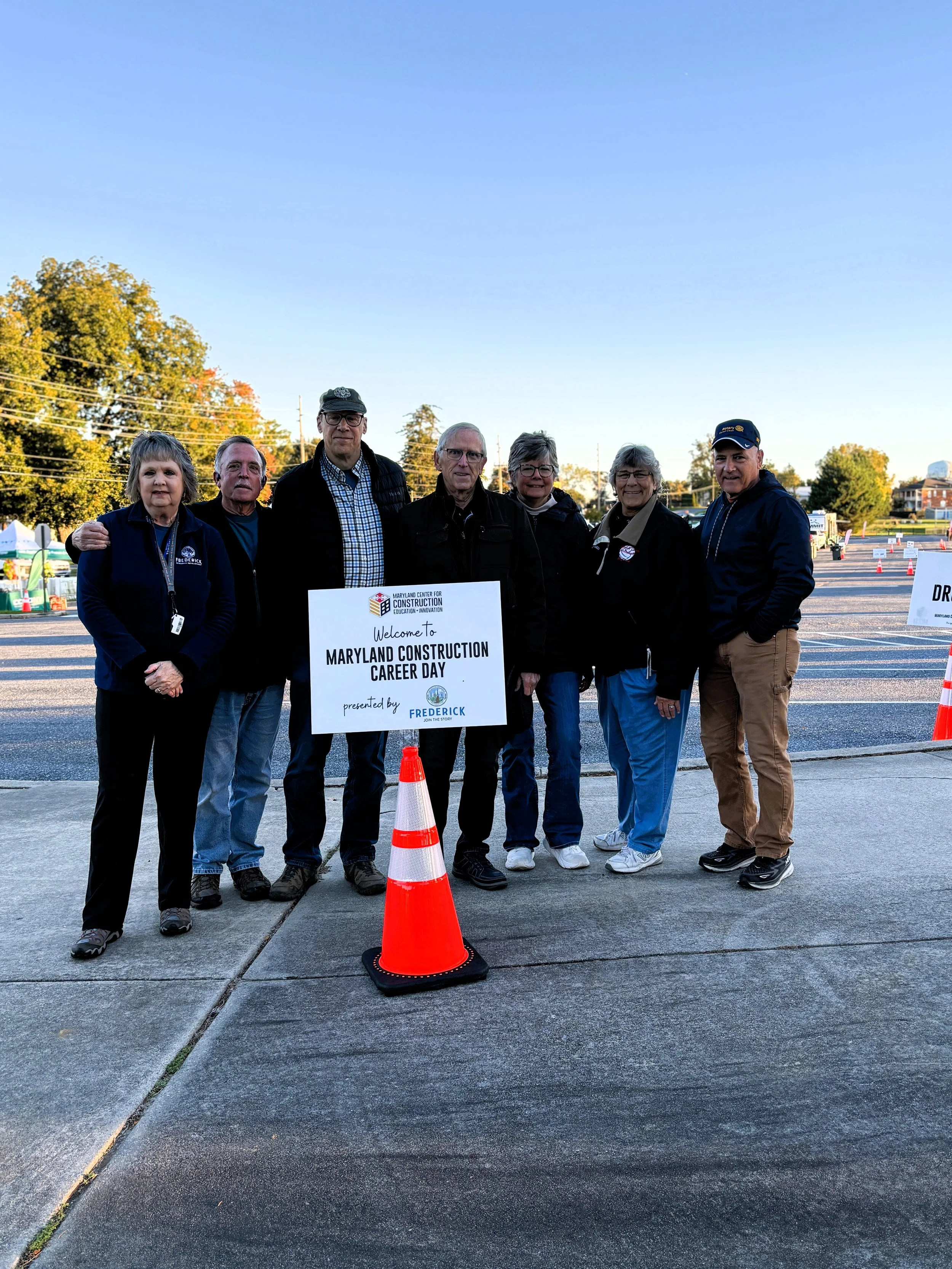
Adams along with members of Frederick County Women in Trades recently participated in the Construction Career Trades event at Harry Grove Stadium to showcase opportunities for future graduates that include on-the-job-training, apprenticeships and more. Learn about the Frederick event sponsored by the Maryland Center for Construction Education and Innovation here.

Frederick County Women in Trades

Follow the web and social media pages to learn more about future networking and educational events in Frederick focused on the construction trades:


Reach out to learn about other workforce initiatives in Frederick, including apprenticeships, internships and more! 301.600.6360 or businessinfrederick@cityoffrederickmd.gov .

Construction Trades: Next Gen Career Pathways

Maryland’s construction industry is grappling with a critical shortage of skilled tradespeople, a challenge that’s driving up project costs and threatening the pace of economic development across the state. With a staggering 3.1 job openings for every job seeker (Capital News Service)—more than double the national average—employers are struggling to find qualified talent for increasingly complex infrastructure demands. This labor gap stems from a confluence of factors: an aging workforce nearing retirement, limited interest from younger generations, and a widening skills mismatch that leaves many workers unequipped for modern construction roles. Organizations such as the Maryland Center for Construction Education & Innovation (MCCEI) are dedicated to bridging the gap between education and industry, advocating for career pathways within the construction trades industry.

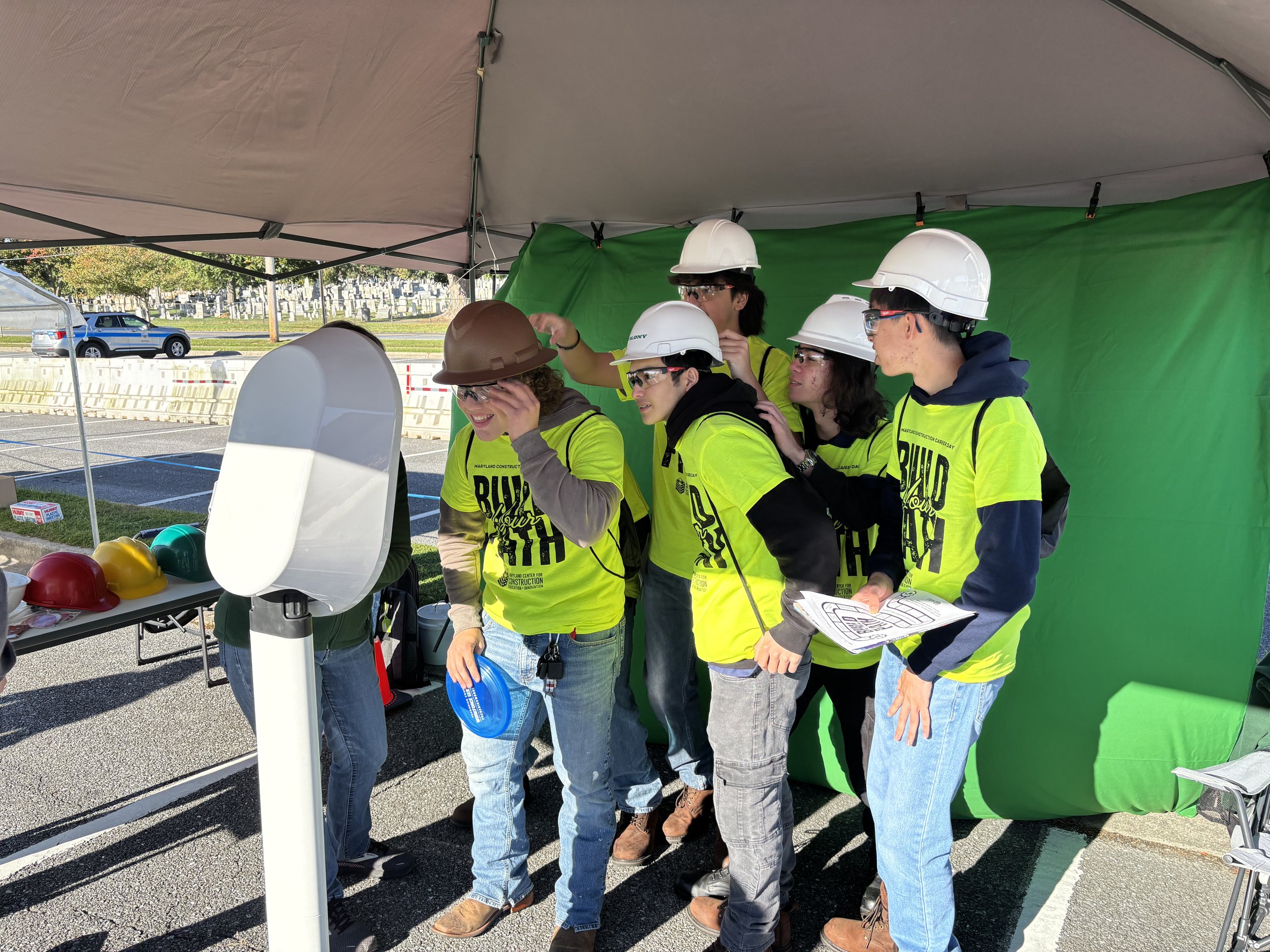
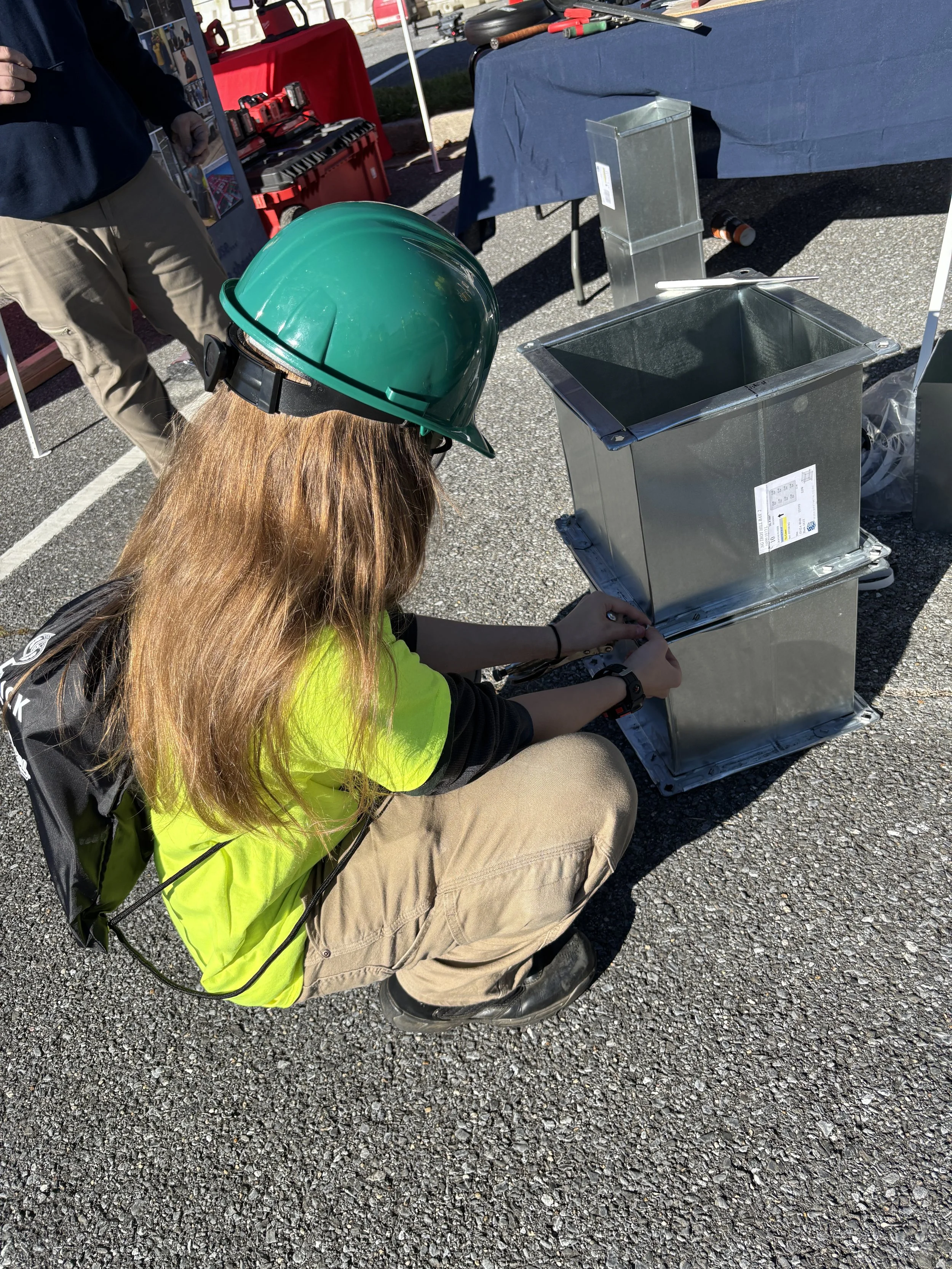
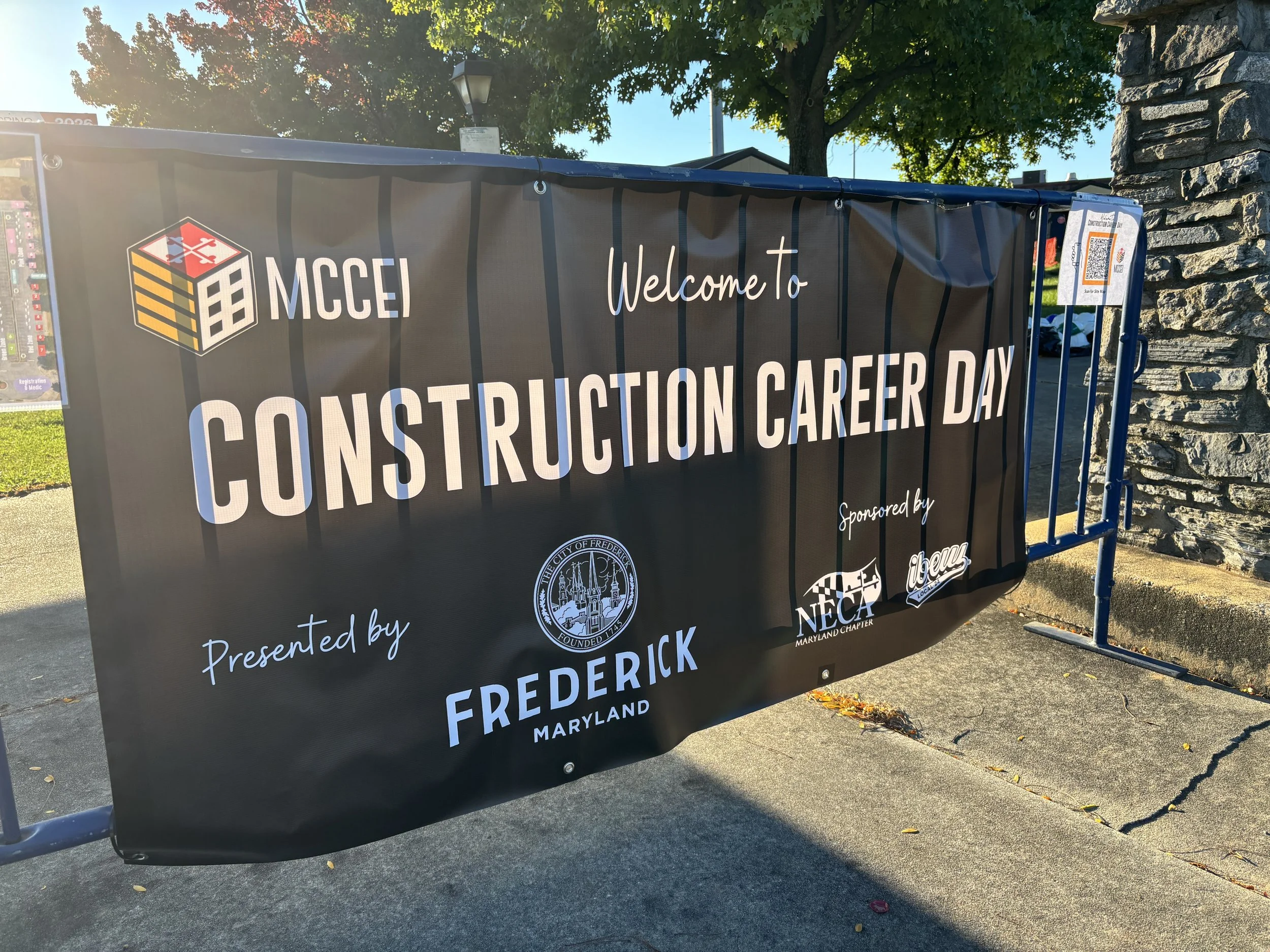
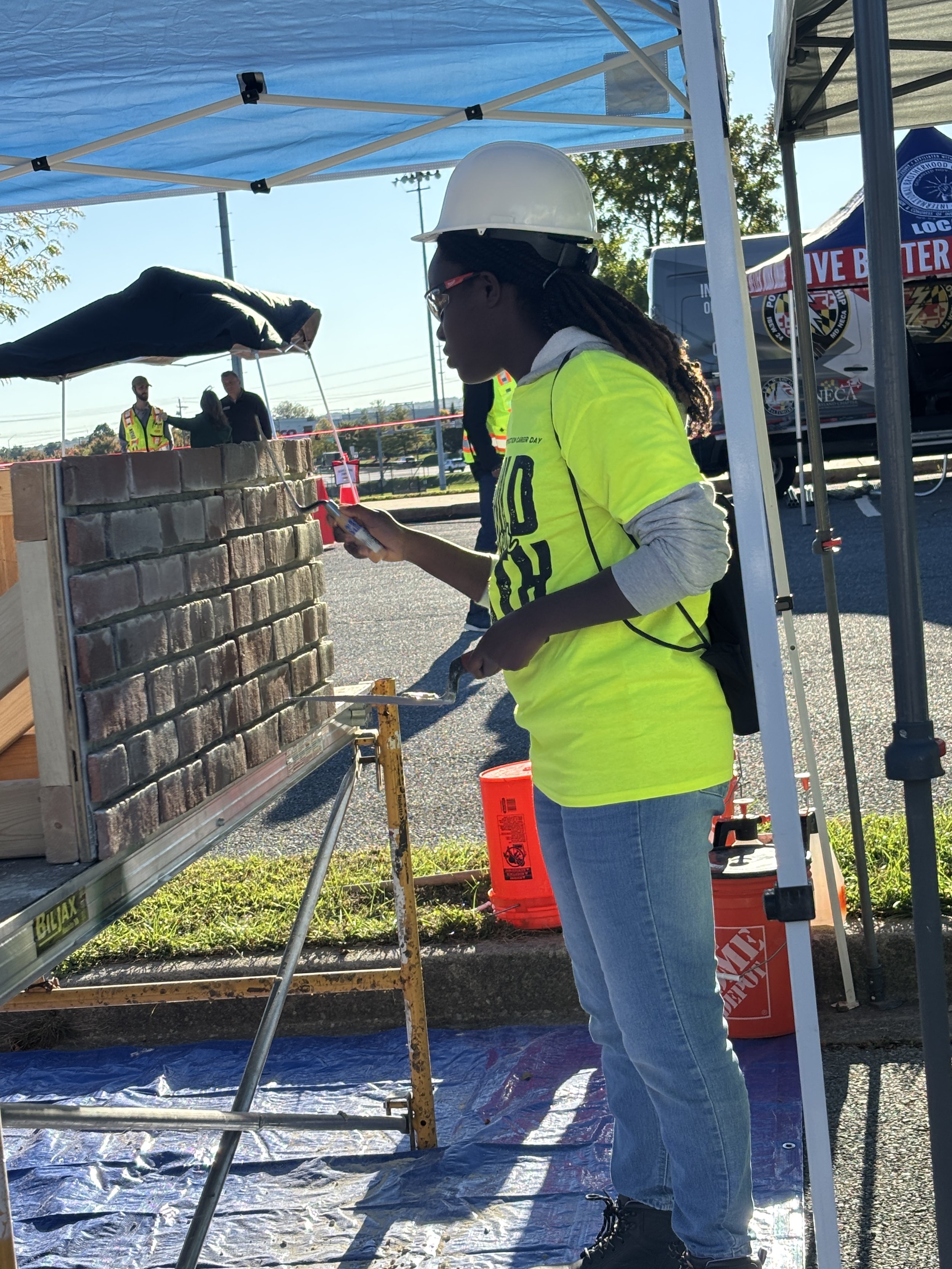
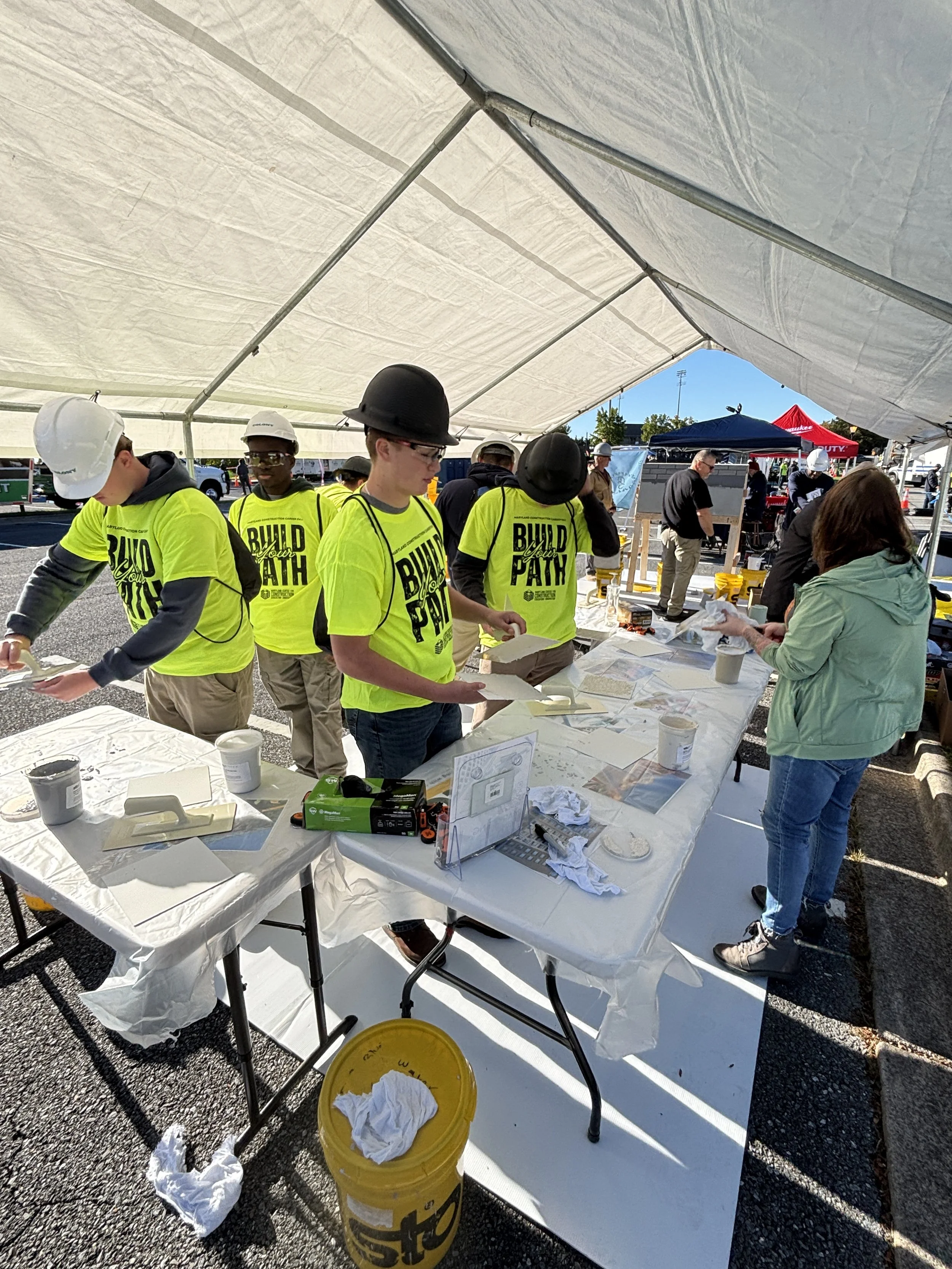
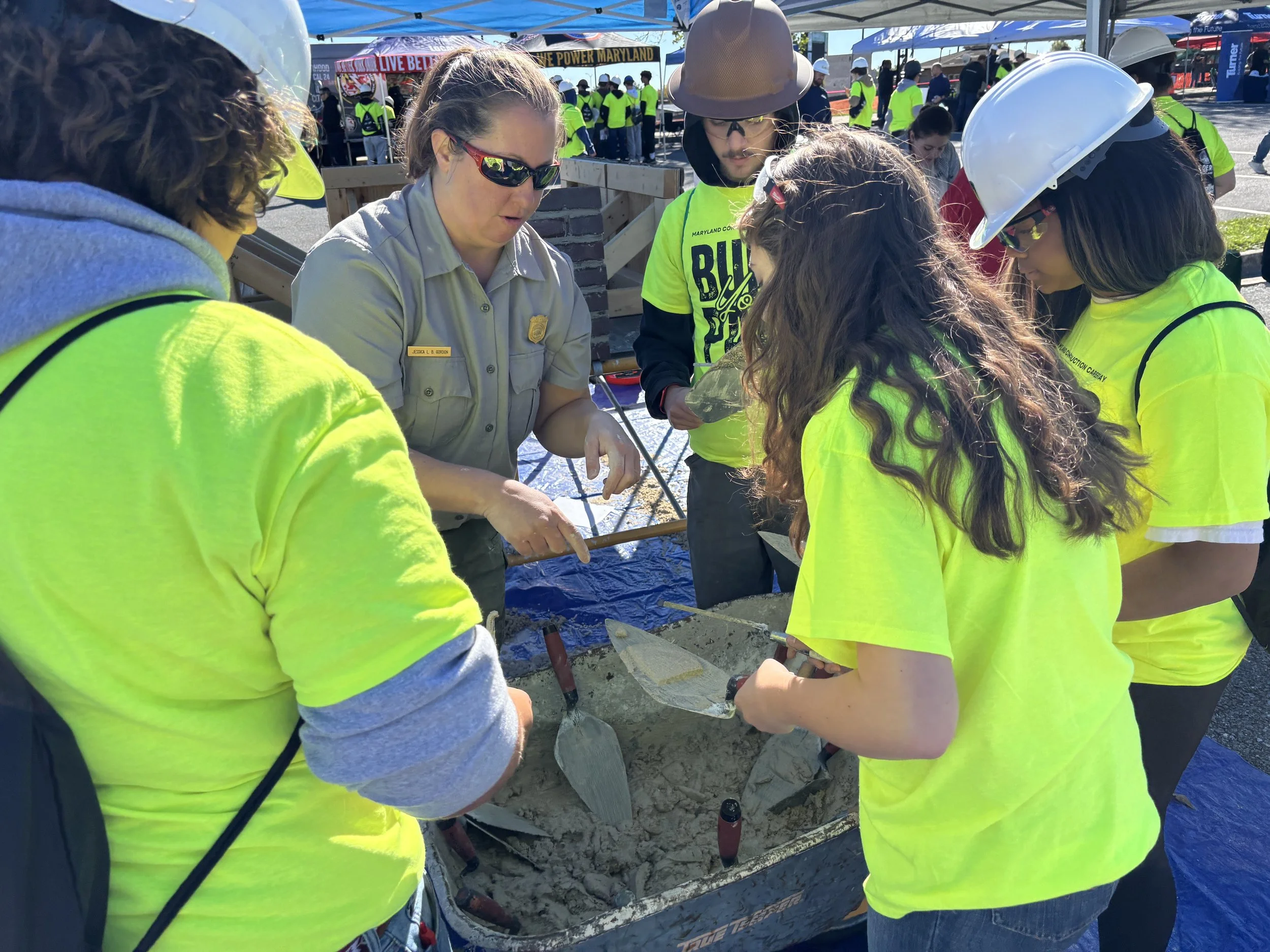
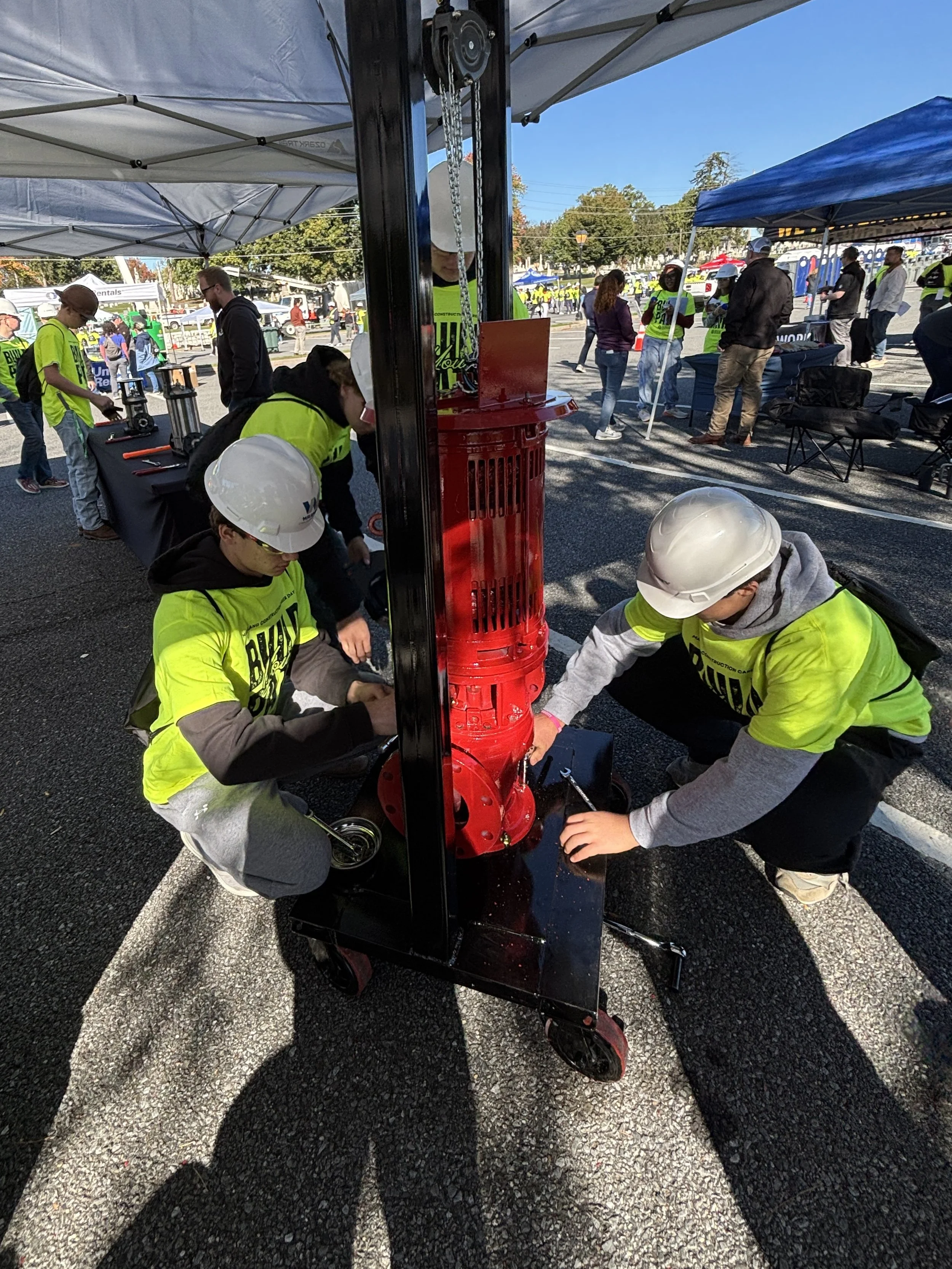
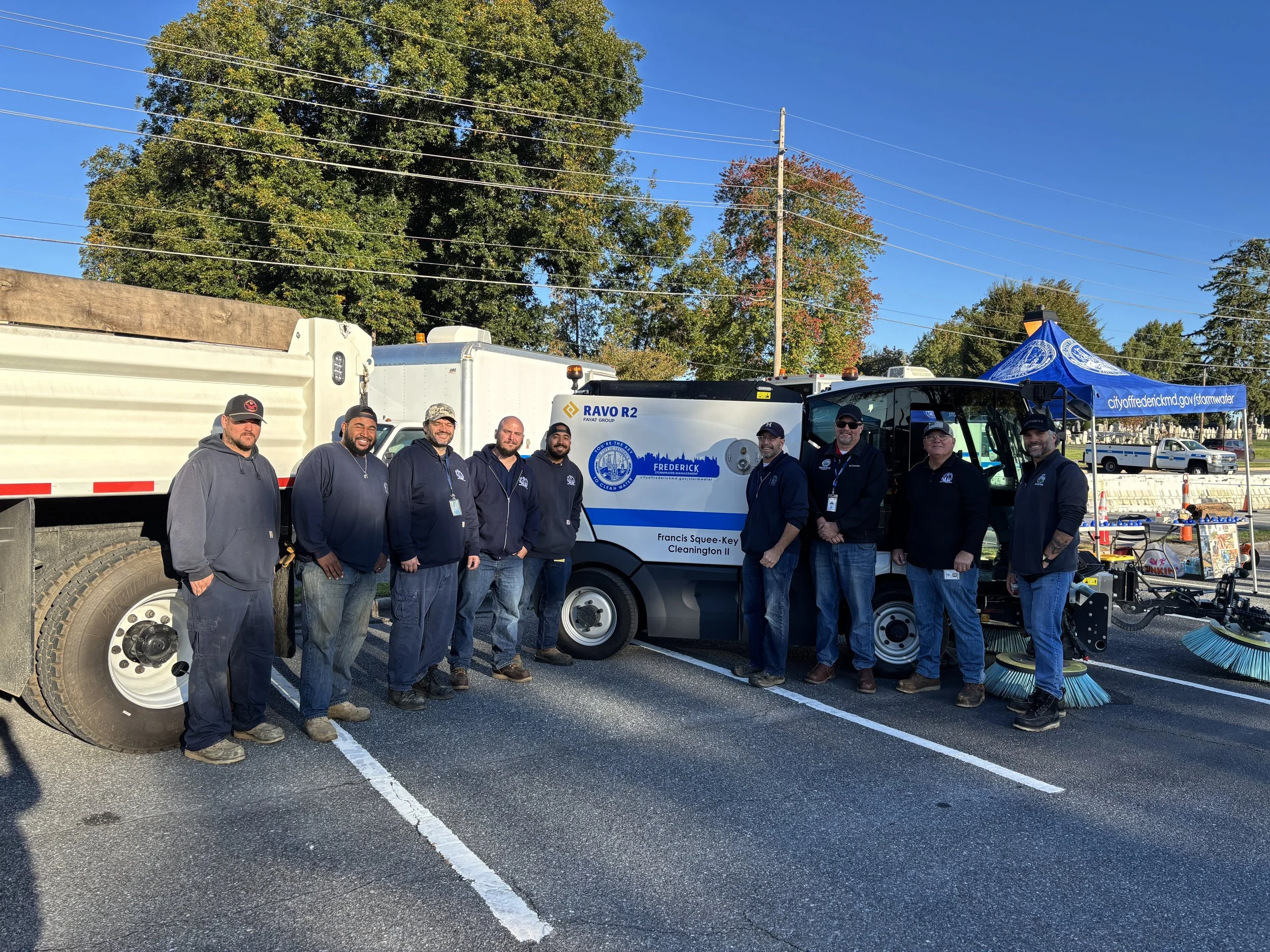
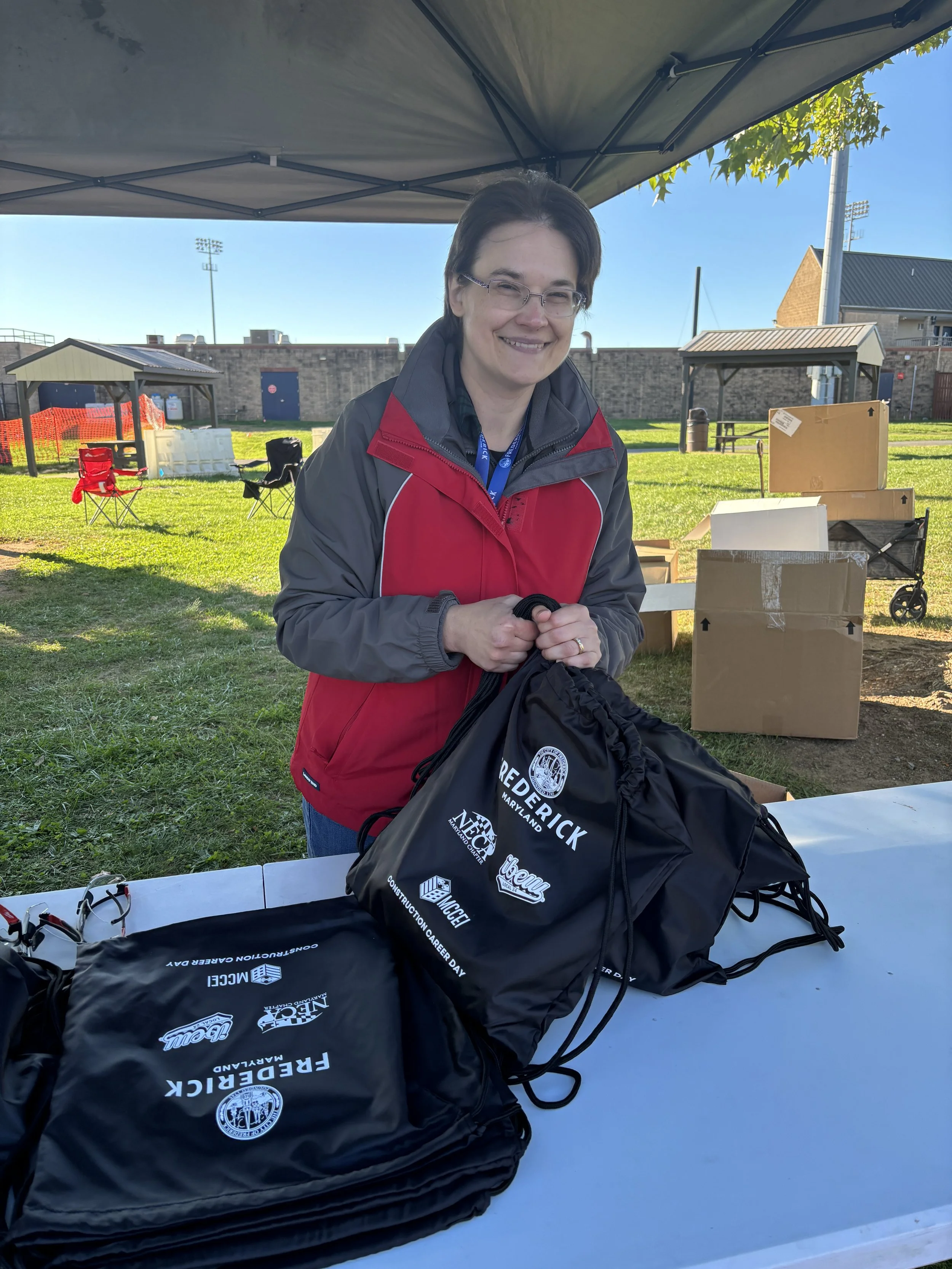
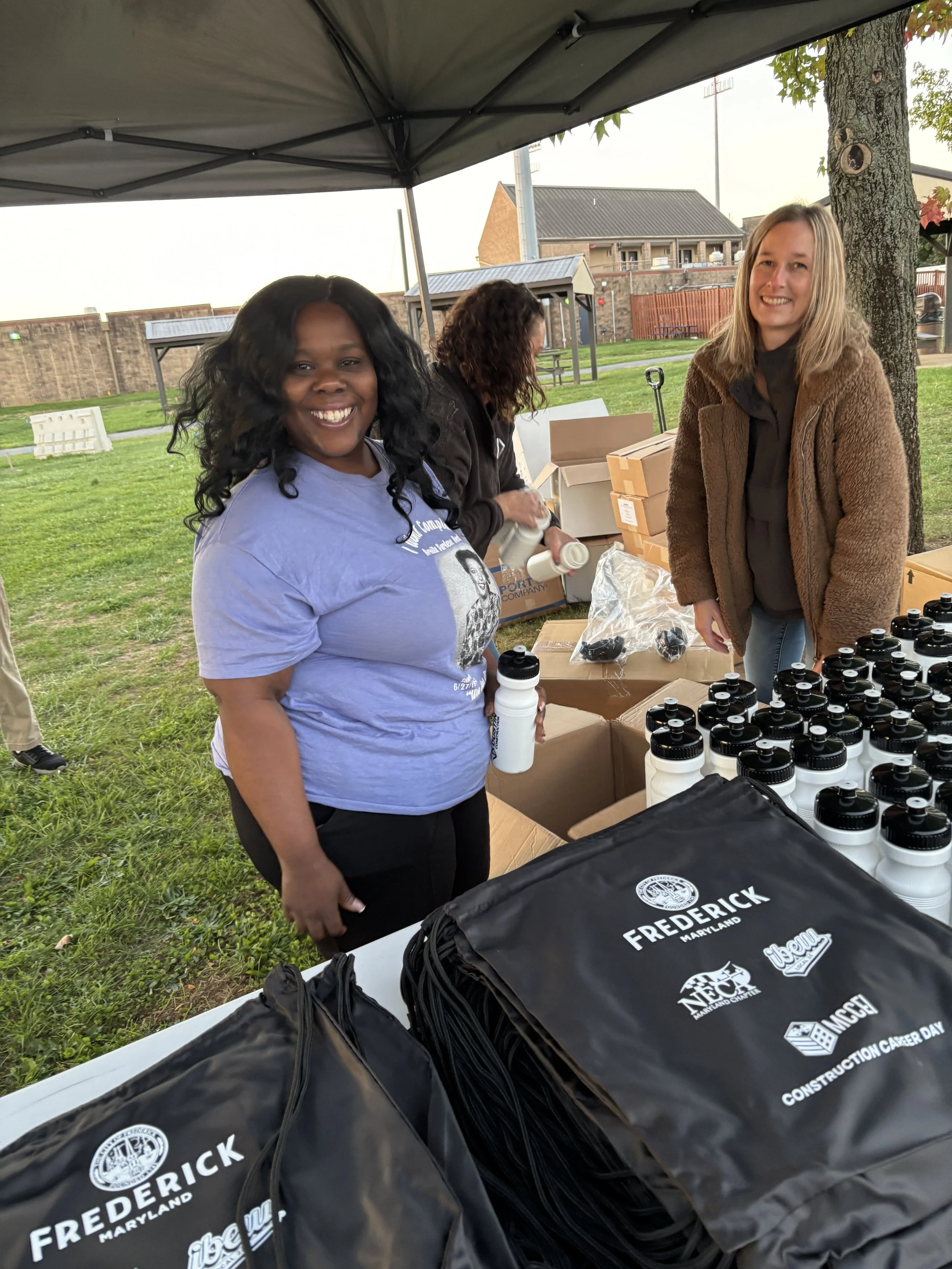
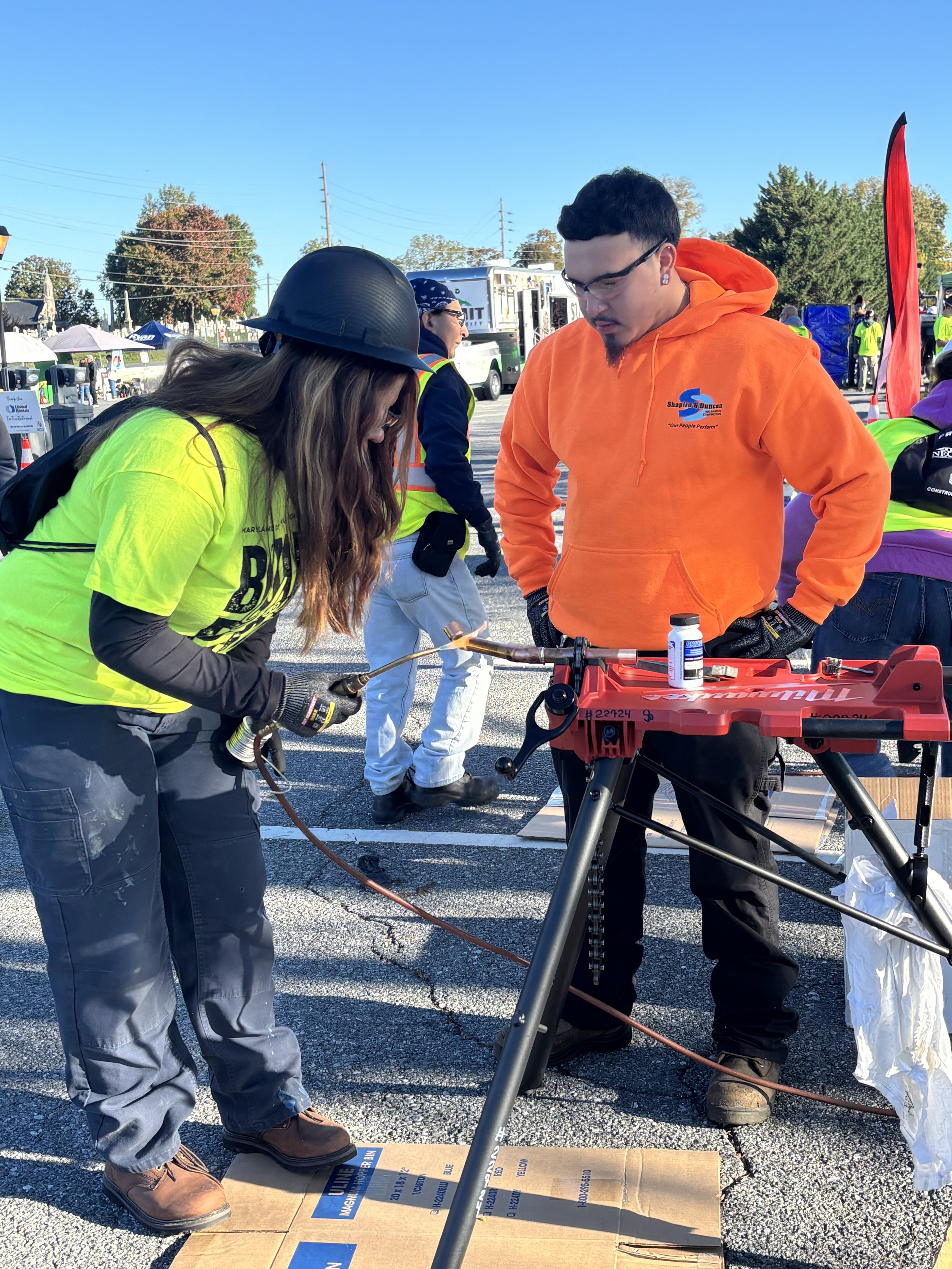
Recently, MCCEI hosted the inaugural Frederick Construction Career Day events at Harry Grove Stadium and over 500 high school students from Frederick and Washington Counties were in attendance to learn about career pathways in the trades. Students were able to participate in hands-on activities using equipment, meet with local, regional and national construction industry companies and interact with the local workforce development team. The City of Frederick was an event sponsor, and members of the city’s DPW crew showcased career paths within its department. Several city construction trades businesses were on hand throughout the day to display opportunities for future careers at their respective companies. Community volunteers with and without construction experience contributed to the event’s success.

According to MCCEI Innovation Program Director, Jazmin Rodriguez, the Construction Career Day helps to:

Increase awareness and pathway access: These events bring together industry partners, universities, apprenticeship and training programs to provide direct links from high school to in demand careers. MCCEI’s exit poll data shows a 50 % jump in students willing to “seriously consider” a construction career after just one day.

Address workforce need: The construction industry across the US will need to attract an estimated 439,000 net new workers in 2025 to meet anticipated demand according to an ABC News Release. Based on AGC’s 2024 Workforce Survey Analysis, 94% of firms with craft worker openings report those positions are hard to fill; similarly, 92% of firms with openings for salaried workers report they are hard to find.

Challenge preconceived notions about the industry: Through 1:1 engagement, these events help challenge outdated stereotypes of construction work, highlighting that the industry offers good wages, has strong advancement opportunities for men and women, and uses advanced technologies.

Build collaboration: By involving schools, employers, unions, and state partners, MCCEI's events foster partnerships that help align education with industry needs, ensuring students are better prepared for real careers and employers have better access to talent.

Ms. Rodriguez shared, “MCCEI uses Construction Career Day as a proactive strategy–free for students and teachers, aiming to serve hundreds (500 1000) of students at each event–to connect youth to opportunities in the built environment, build the future workforce, and support Maryland’s economy and infrastructure through skilled talent.”

The City Department of Economic Development team was thrilled to support this important workforce development event! Stay tuned for details about the 2026 Career Day will be hosted on October 22, 2026 in Frederick. Follow the city’s event calendar at www.businessinfrederick.com for details on this event and others in the Frederick community.

Smart, Strategic, and Showing Up: Women in Economic Development 2025

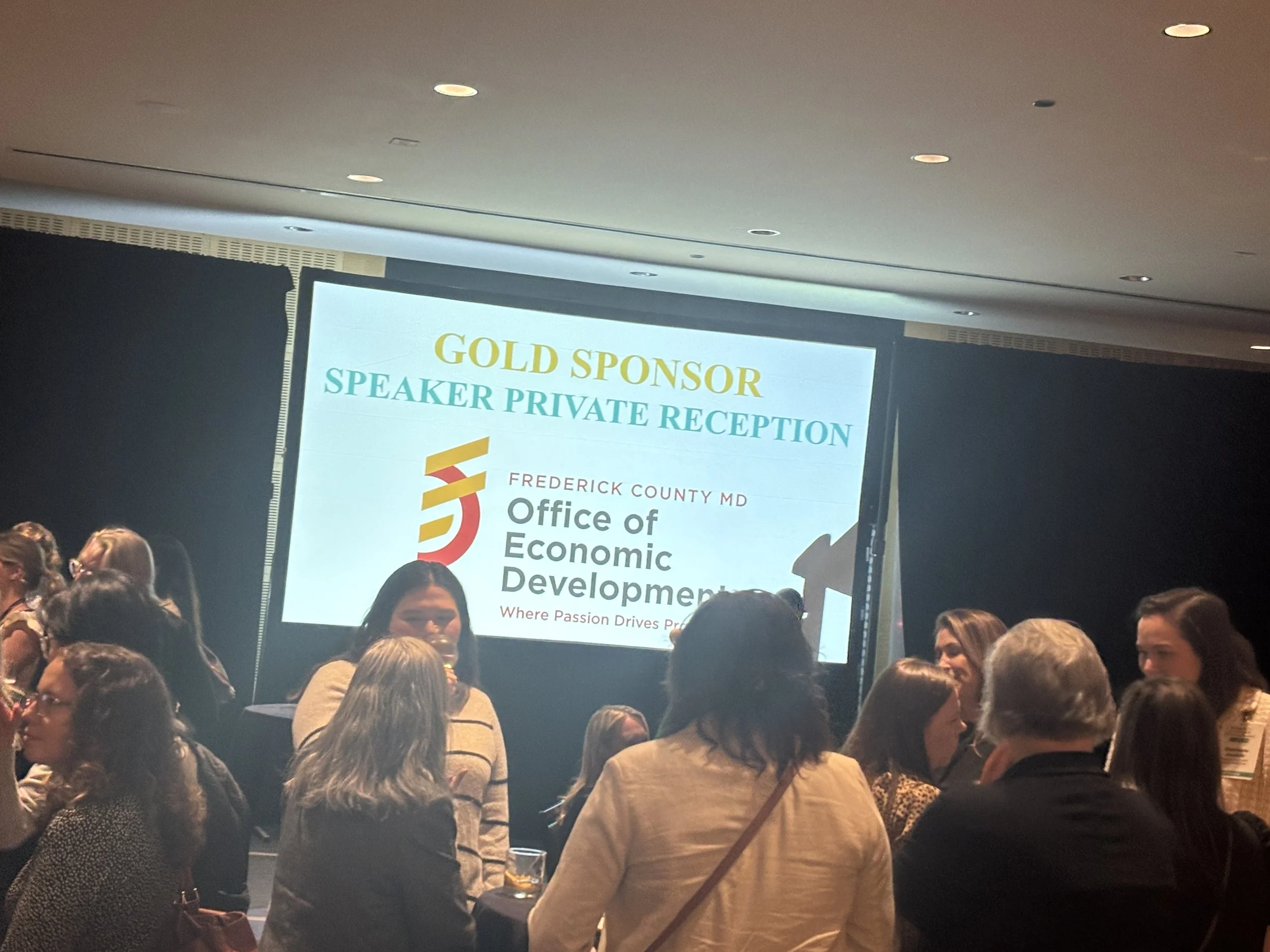
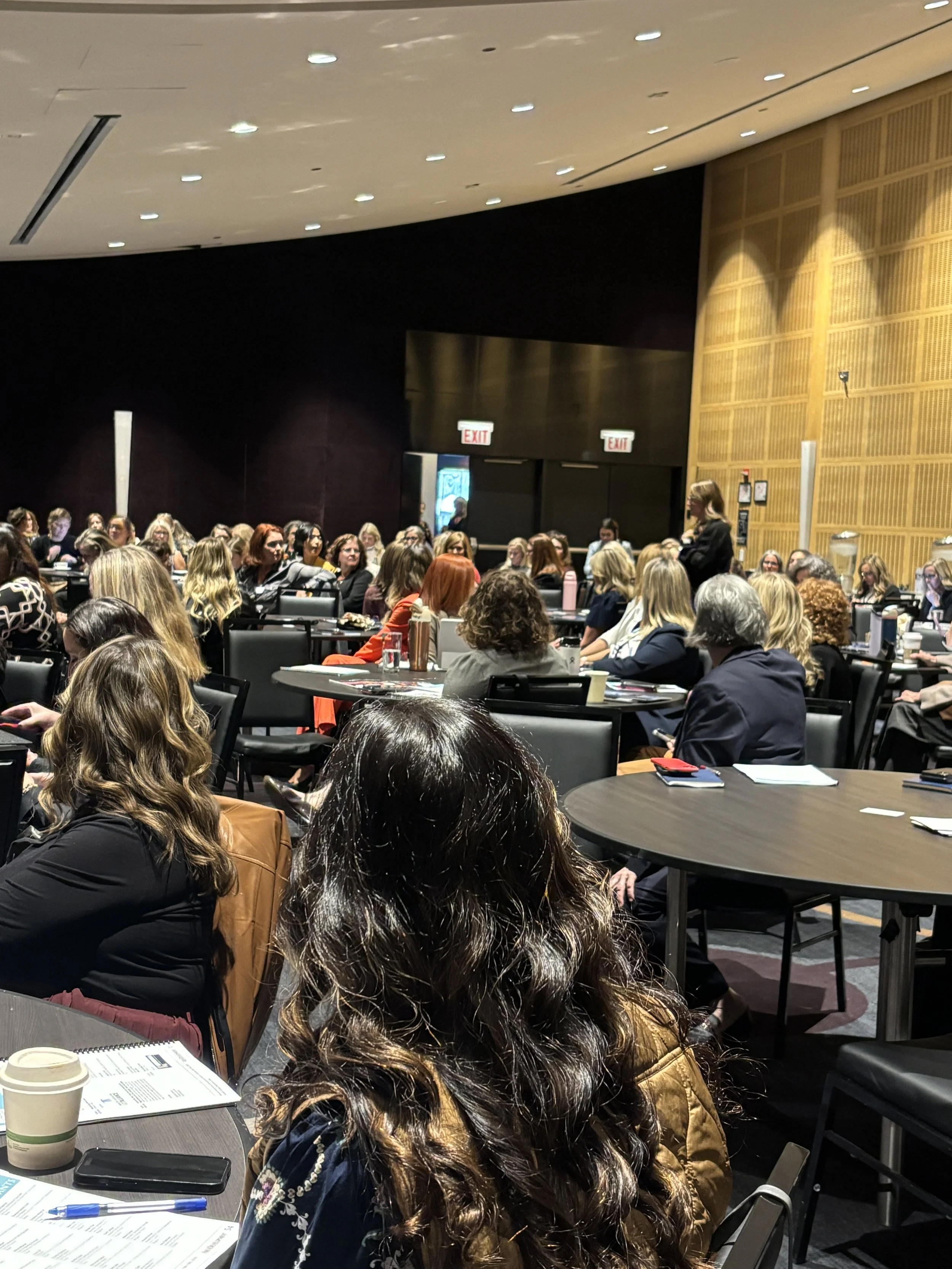
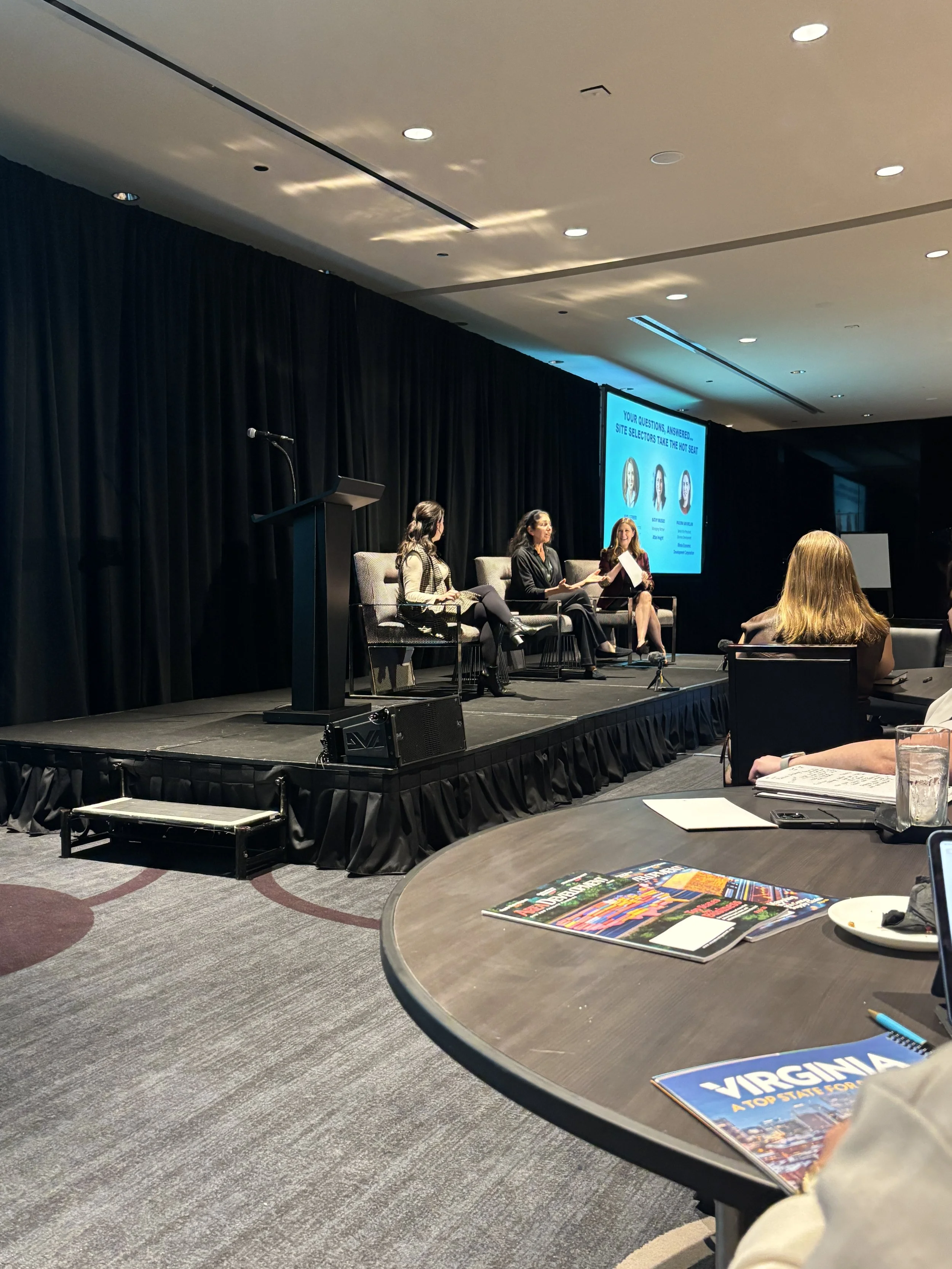
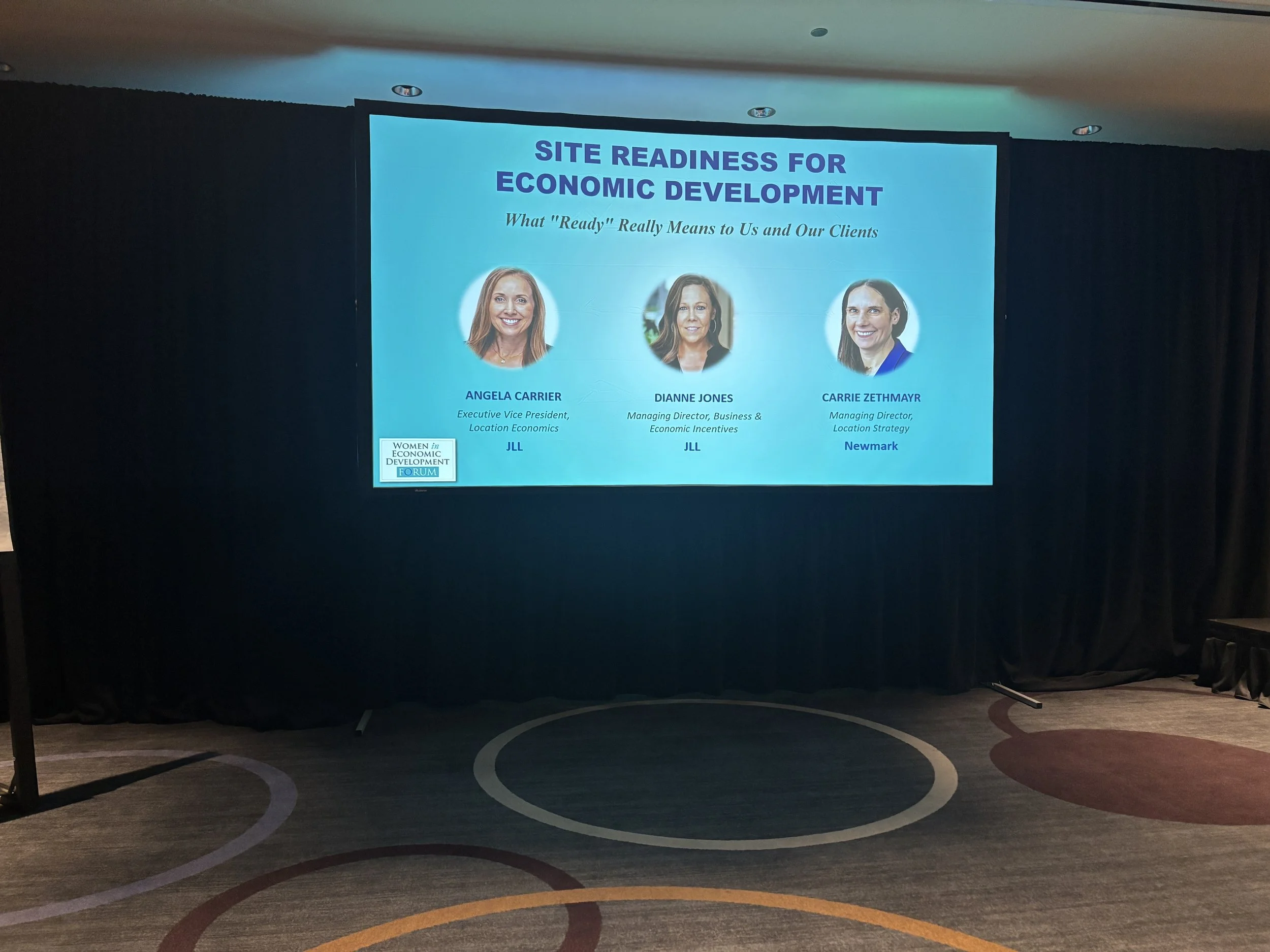
Area Development’s Women in Economic Development Forum brings together women professionals in the economic development field to network, learn about the latest trends in site selection, business attraction and community growth, and exchange real-world strategies. Attending the Forum with our partner the Frederick County Office of Economic Development (FCOED) was nothing short of invigorating.

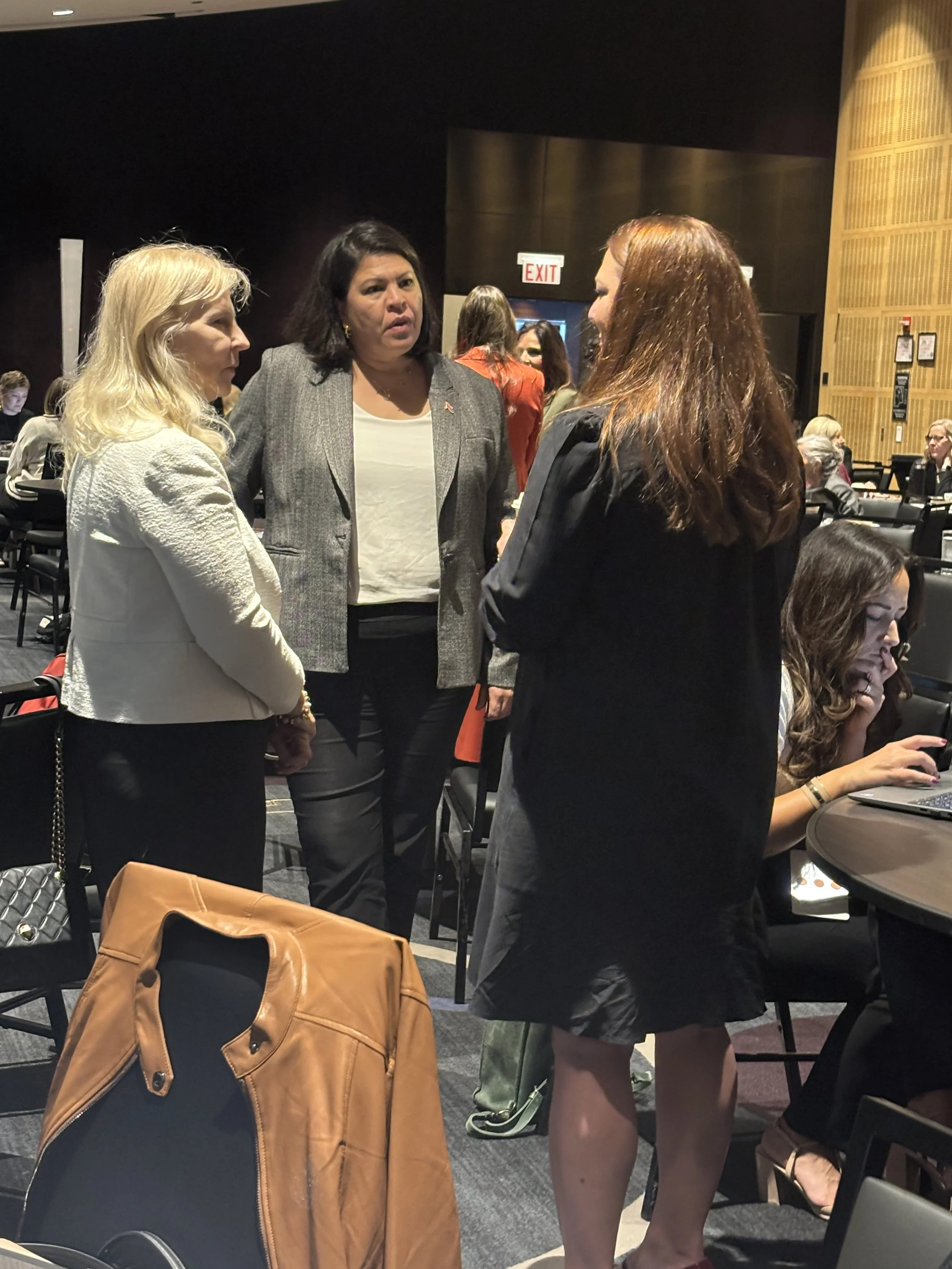
Kennedi Wilson, DED; Laurie Babb, Montgomery County Economic Development Corporation; Lara Fritts, FCOED

FCOED served as a sponsor of the opening-night Private Reception, helping to set the tone for an energizing and collaborative conference and giving the Frederick team access to site selectors from all over the country. This kind of connection is invaluable because it opens doors for one-on-one conversations about Frederick’s competitive advantages, helps strengthen relationships with national consultants who influence major location decisions, and ensures our community remains top-of-mind when companies are looking to expand or relocate. Building these networks directly supports long-term business attraction and retention efforts, fueling sustainable economic growth back home.

Naturally, those conversations carried into one of the conference’s key themes: site selection, defined by data-driven solutions, strategic partnerships, and project aftercare to ensure sustained success post-investment. Speakers emphasized the importance of aligning real estate opportunities with workforce analytics, infrastructure readiness, and sustainability goals.

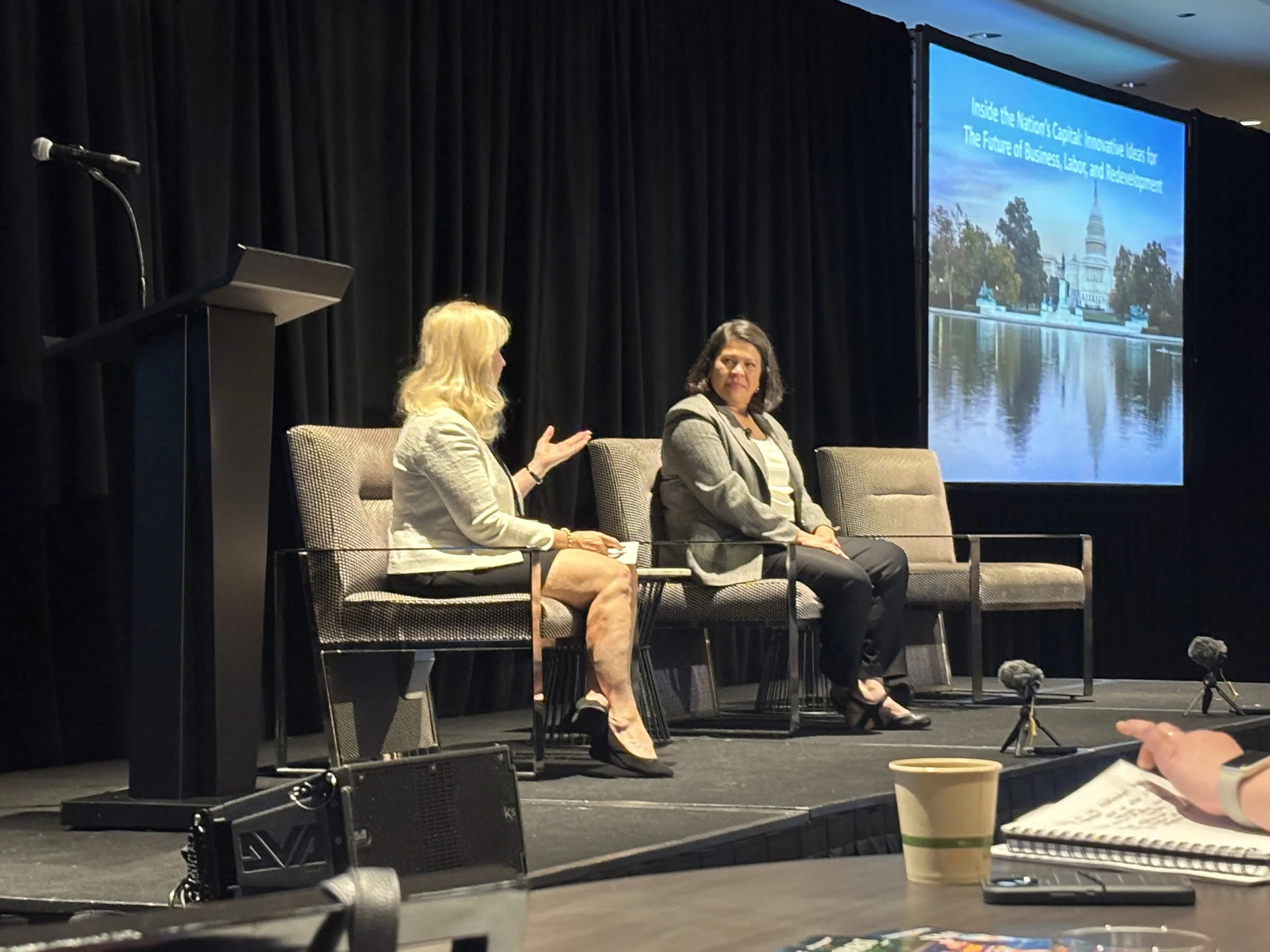
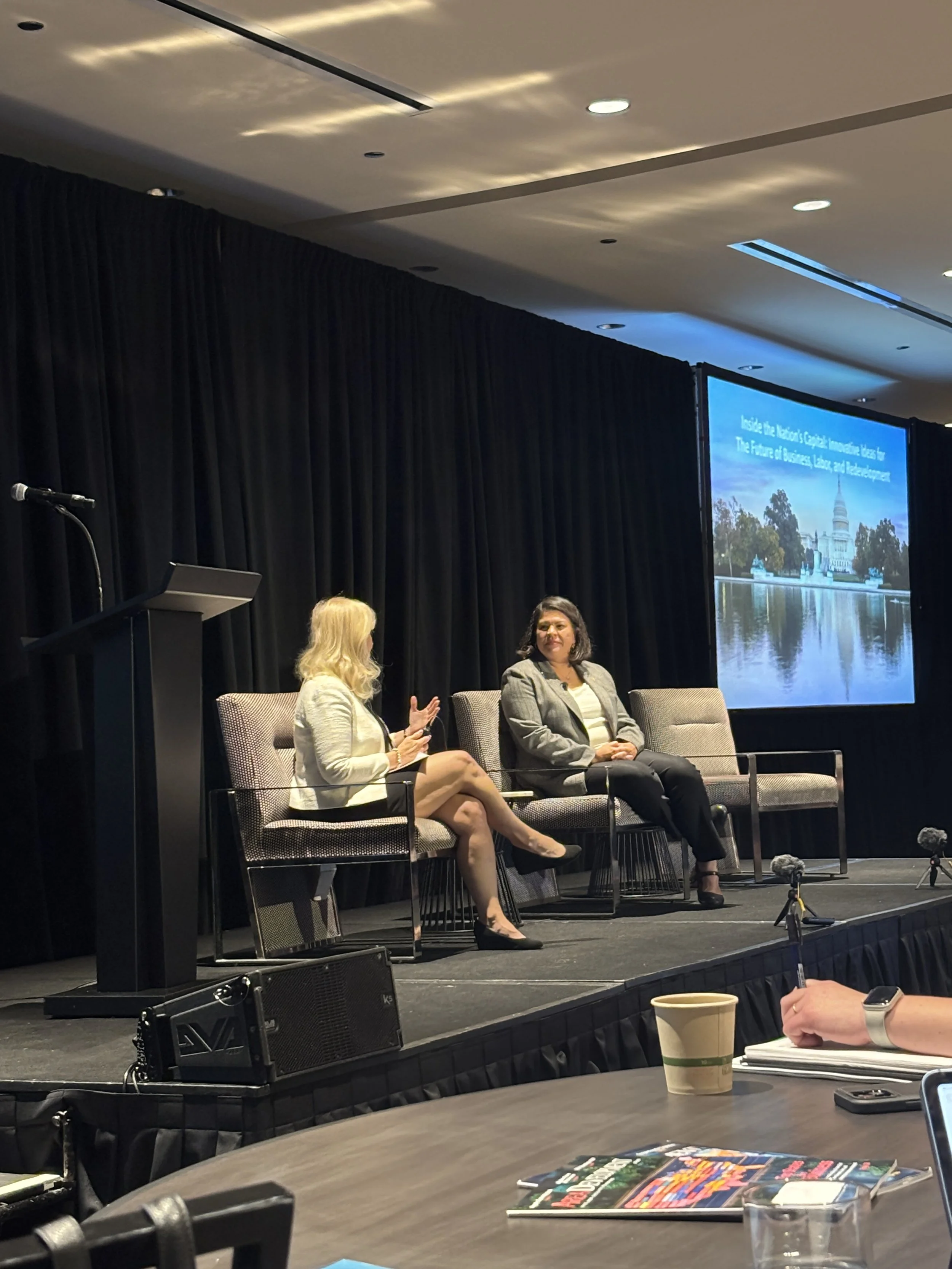
Nina Albert, DC Deputy Mayor of Economic Development

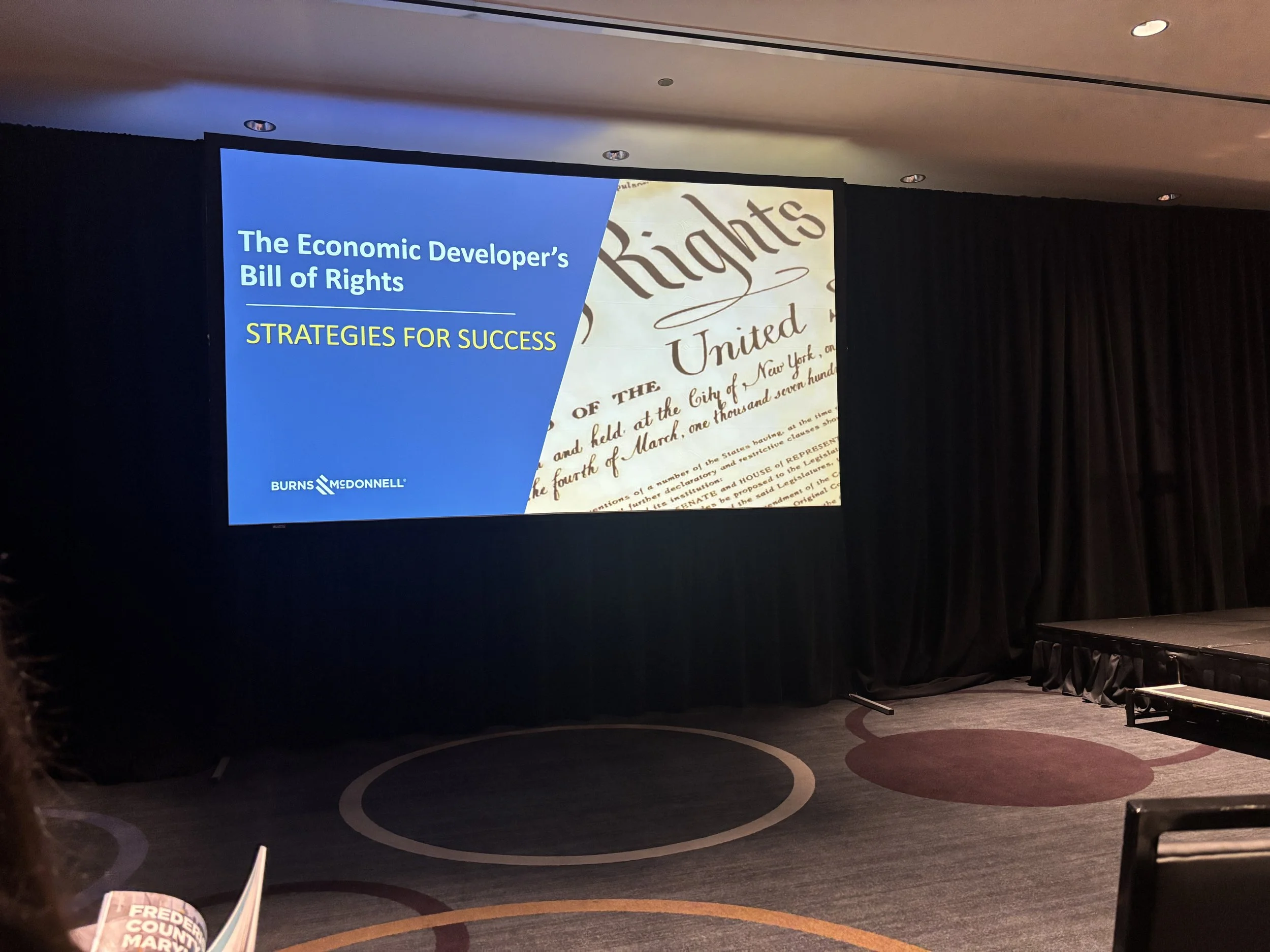
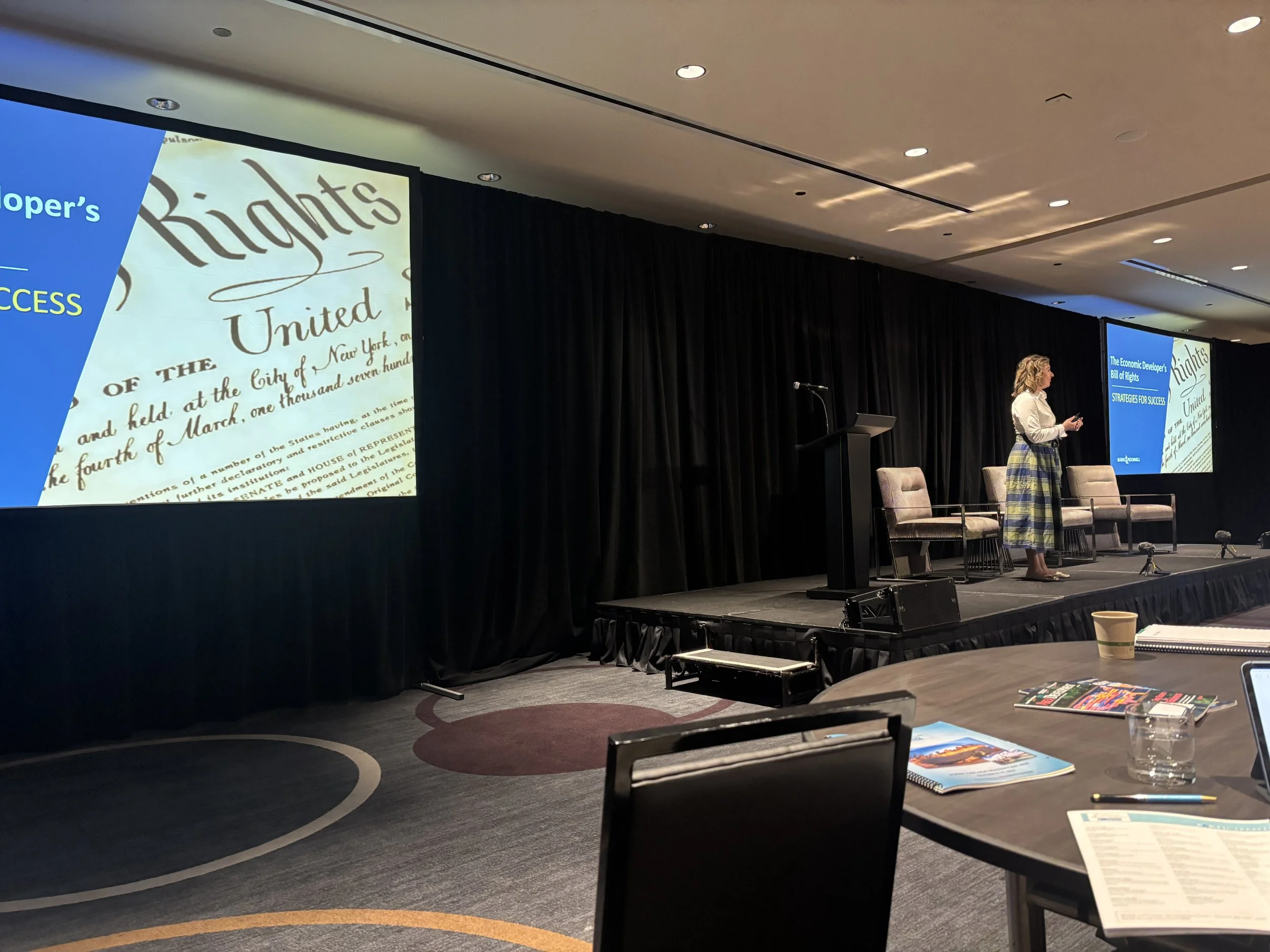
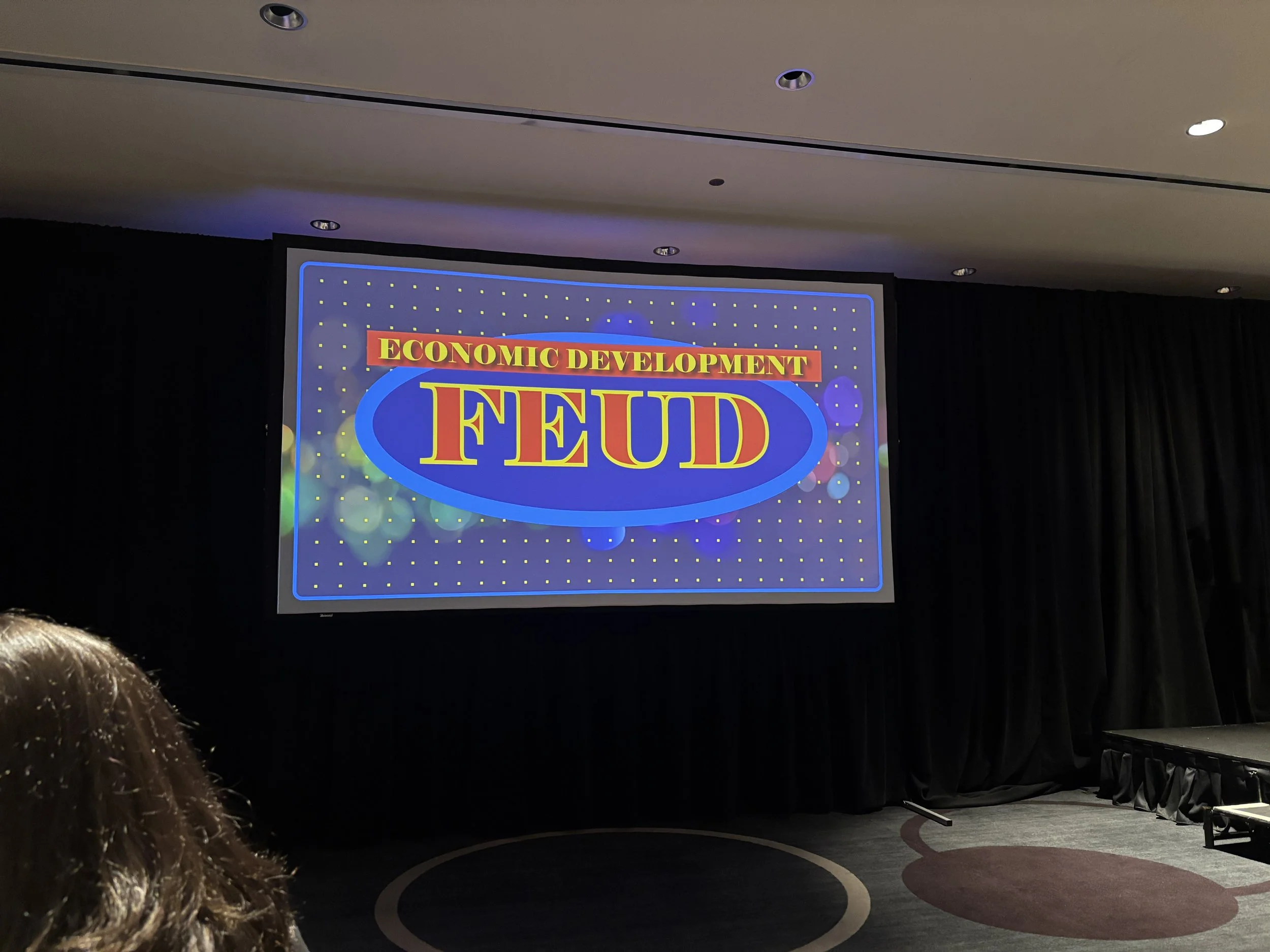
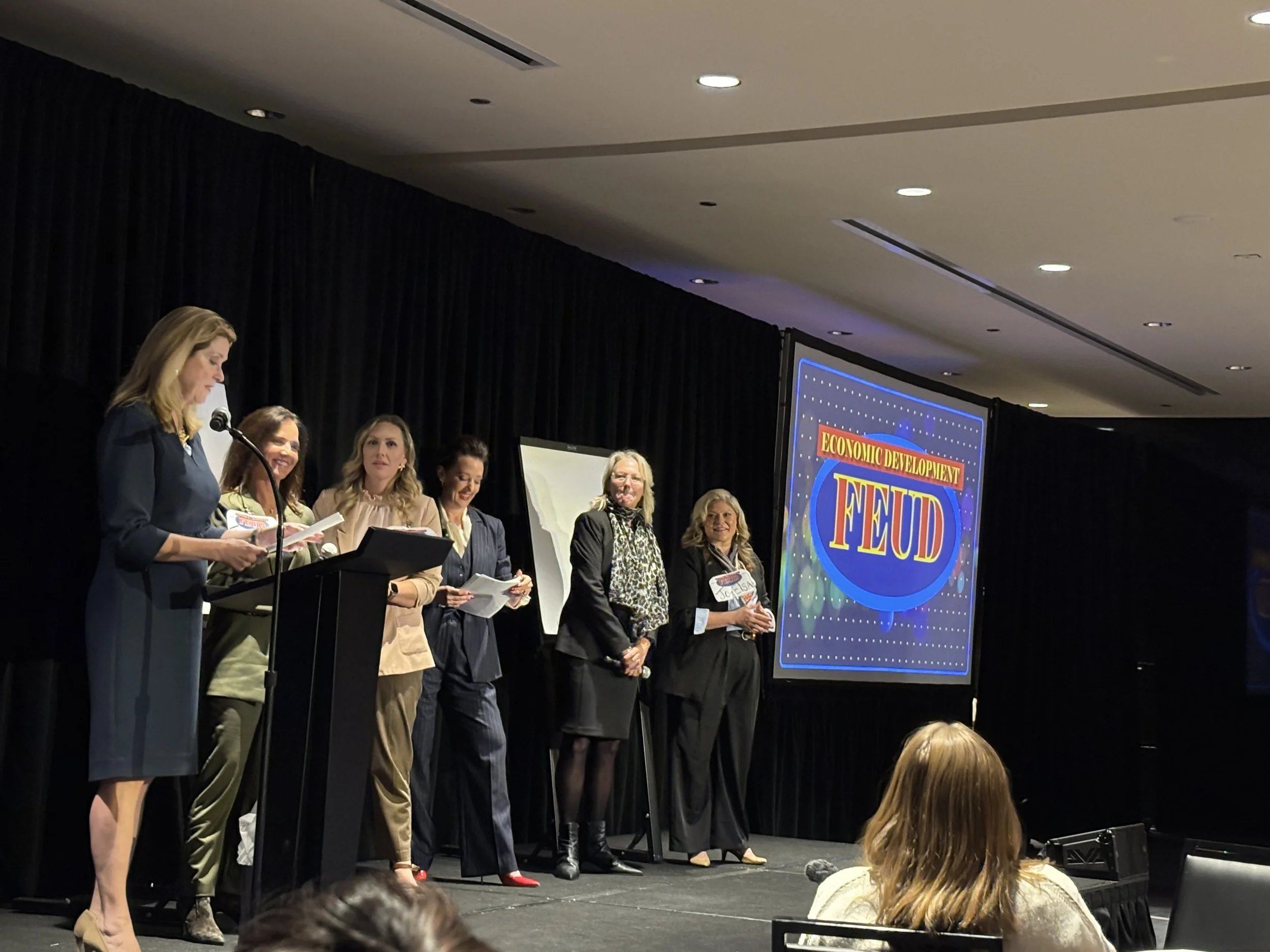
Highlights included DC Deputy Mayor Nina Albert’s fireside chat “Inside the Capital: Innovative Ideas for the Future of Business, Labor, and Redevelopment,” plus energizing sessions like “The Economic Developers’ Bill of Rights.” From data-driven site selection to project aftercare and fun moments like “Economic Development Feud,” every discussion sparked fresh ideas to bring home to Frederick.

Throughout the conference, many best practices and success stories were shared, challenges were worked through, and spirits united. The sense of community, expertise, and purpose was palpable and DED was glad to take part in the program.


To learn more about how the City’s Department of Economic Development supports businesses, innovators, and community partnerships, visit businessinfrederick.com.


IEDC Conference in Detroit: A Celebration of Collaboration, Innovation, and Impact

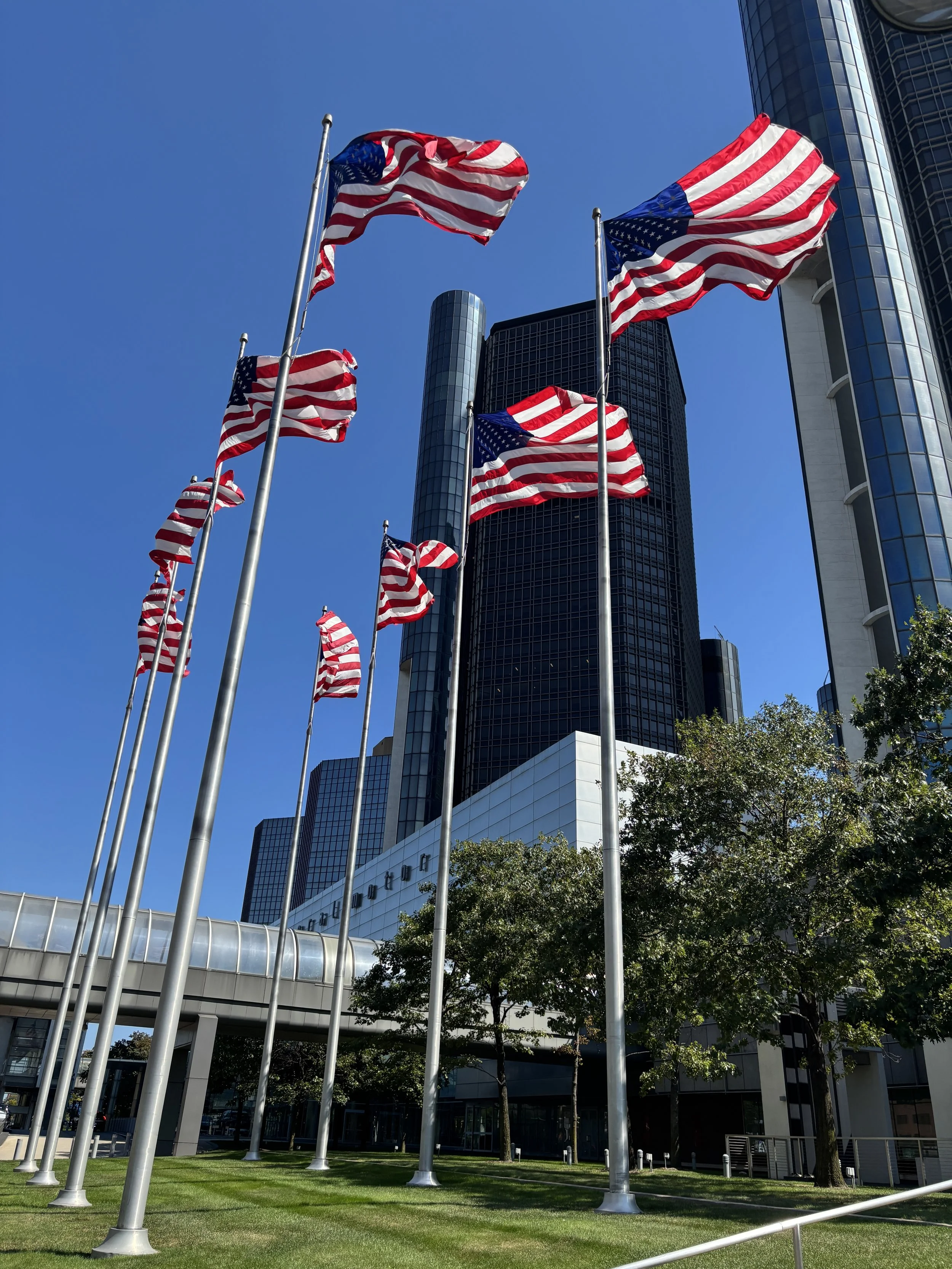
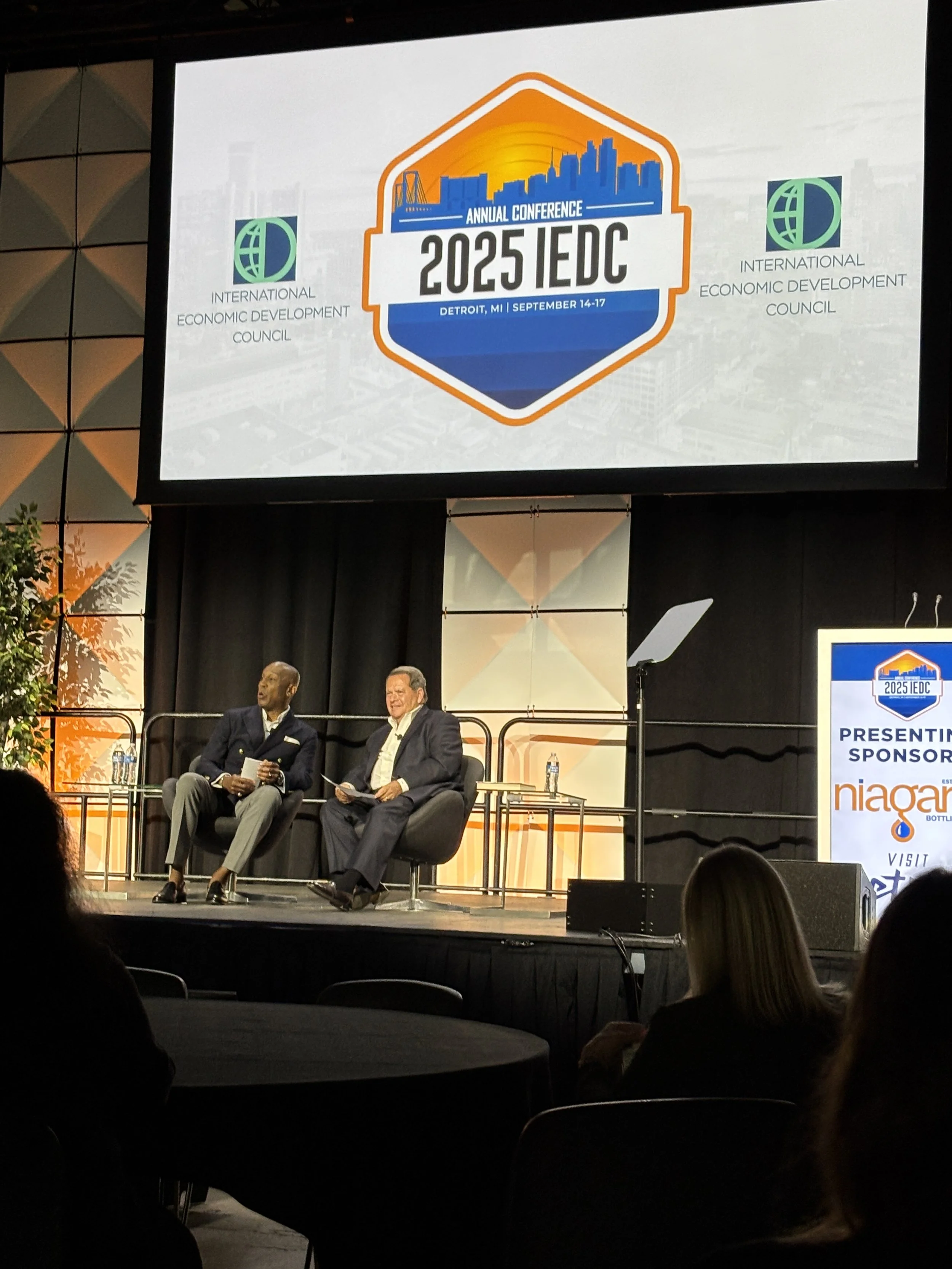
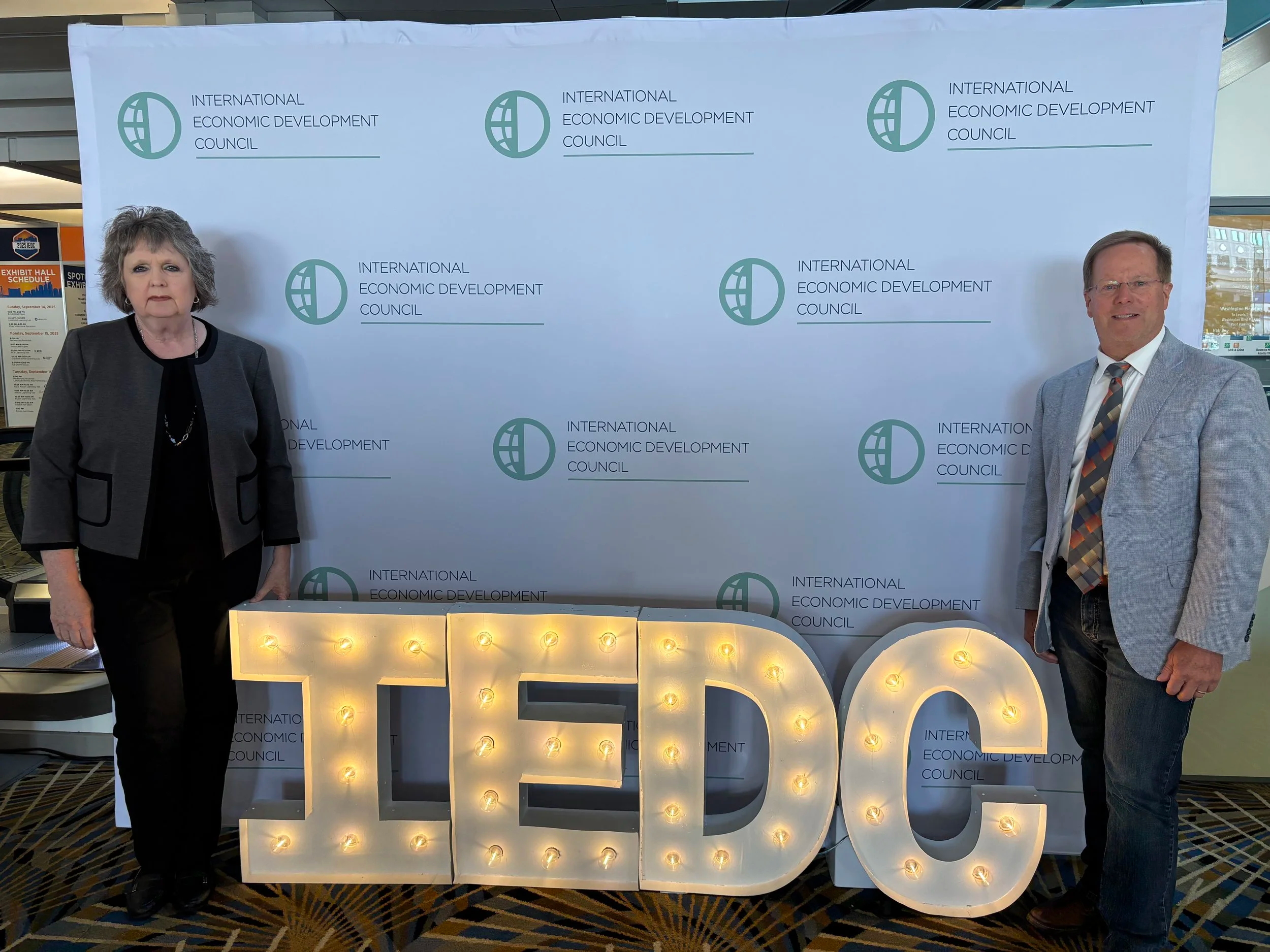
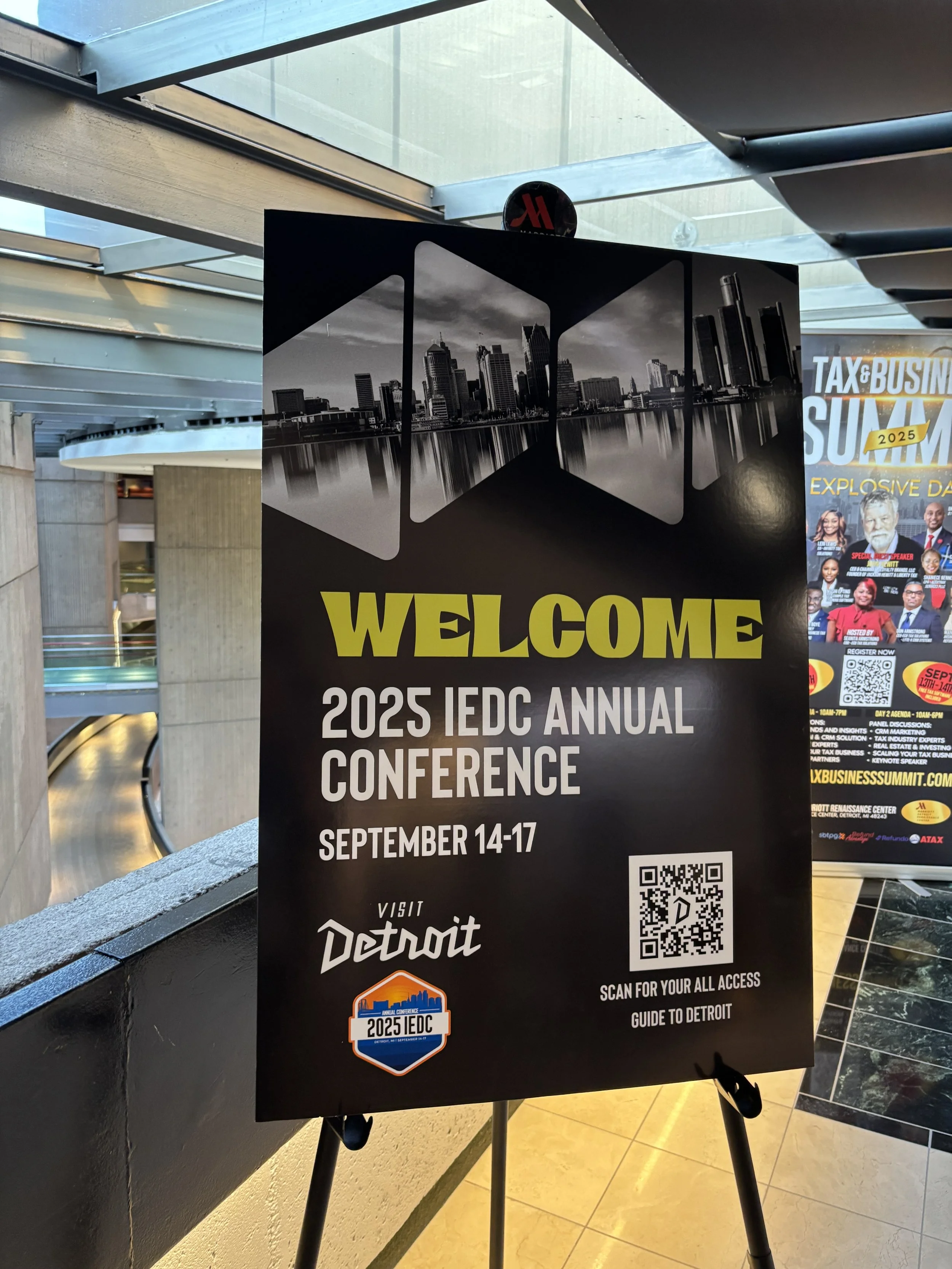
The synergy in Detroit was inspiring as economic developers from across the nation gathered for the 2025 International Economic Development Council (IEDC) Annual Conference. With over 4,500 members, IEDC is the leading nonprofit organization dedicated to advancing economic prosperity and quality of life in communities large and small. This year’s conference was a powerful reminder of the transformative work happening across the country—and Frederick is part of that narrative.

A Golden Moment for Frederick

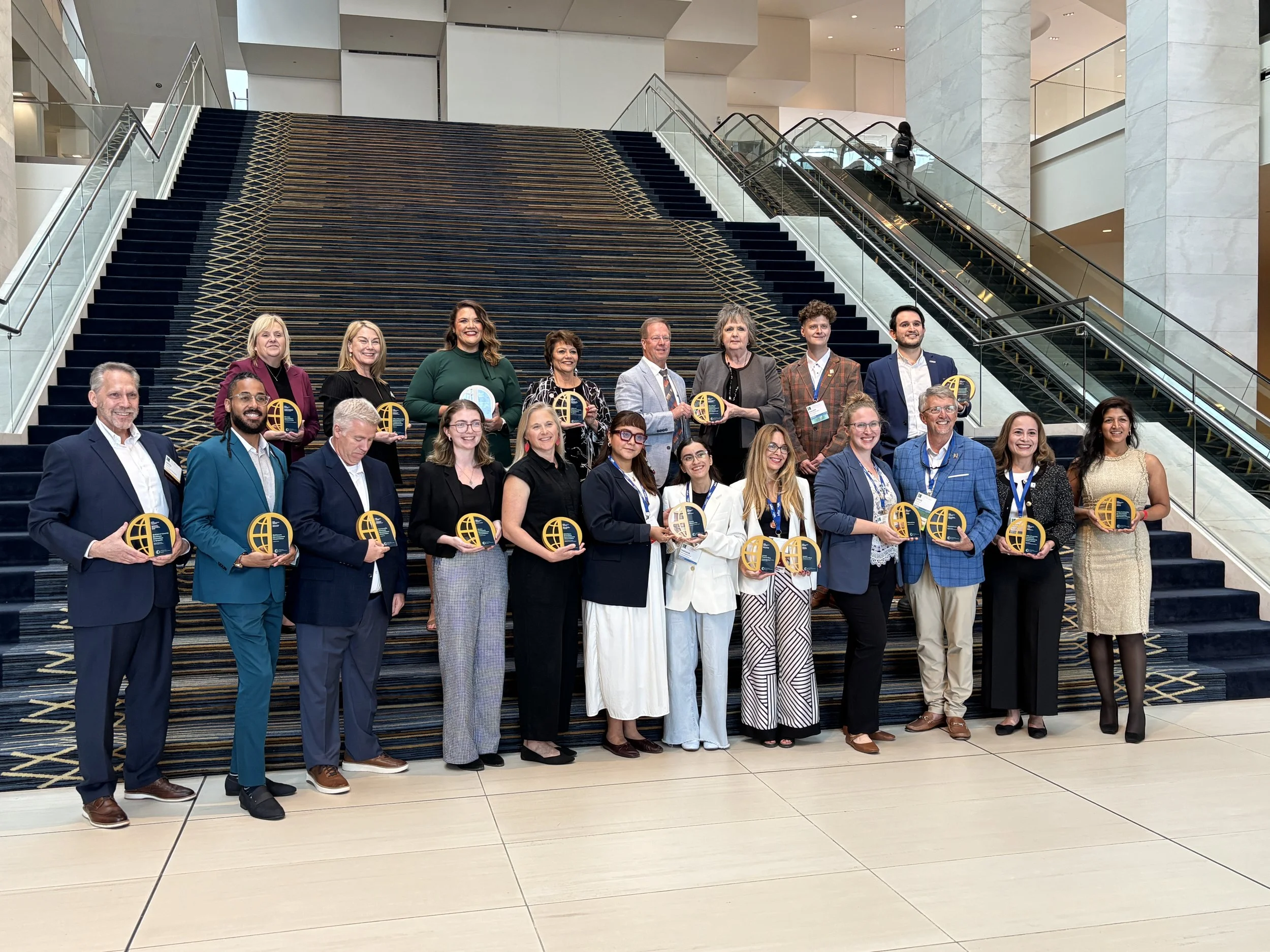
One of the most exciting highlights from the conference was the City of Frederick’s Department of Economic Development receiving a prestigious Gold Award for its collaboration with Frederick Community College and the Frederick County Office of Agriculture. The award recognized the innovative Food Business Entrepreneurship Program, a free initiative that equips aspiring food entrepreneurs with hands-on training in culinary arts, business management, and marketing. Earning top recognition in the Secondary Institution Partnership category, this program combines academic training, industry expertise, and community resources, equipping aspiring food entrepreneurs with the tools to launch and grow successful food businesses—strengthening both Frederick’s food economy and its culture of entrepreneurship.

Hosted at FCC’s Hospitality, Culinary & Tourism Institute (HCTI), the program culminates in a “Shark Tank”-style pitch competition, where participants present their business ideas for funding and mentorship. Thanks to the training received at FCC and the support from City and County teams, several graduates have already launched successful ventures in Frederick—proof that strategic partnerships can spark real economic growth in our community.

2025 IEDC Gold Award Recipients

Economic Development Takeaways from Detroit

Throughout the conference, Detroit itself served as a living case study in urban renewal. Once teetering on the edge of bankruptcy, the city has undergone a remarkable transformation fueled by over $2 billion in public-private investment. From revitalized neighborhoods to a reimagined waterfront along the Detroit River, the city’s renaissance is a testament to the power of collaboration, vision, and long-term commitment.

Conference attendees explored themes that are shaping the future of economic development, including:

  • Placemaking & Infrastructure Investment

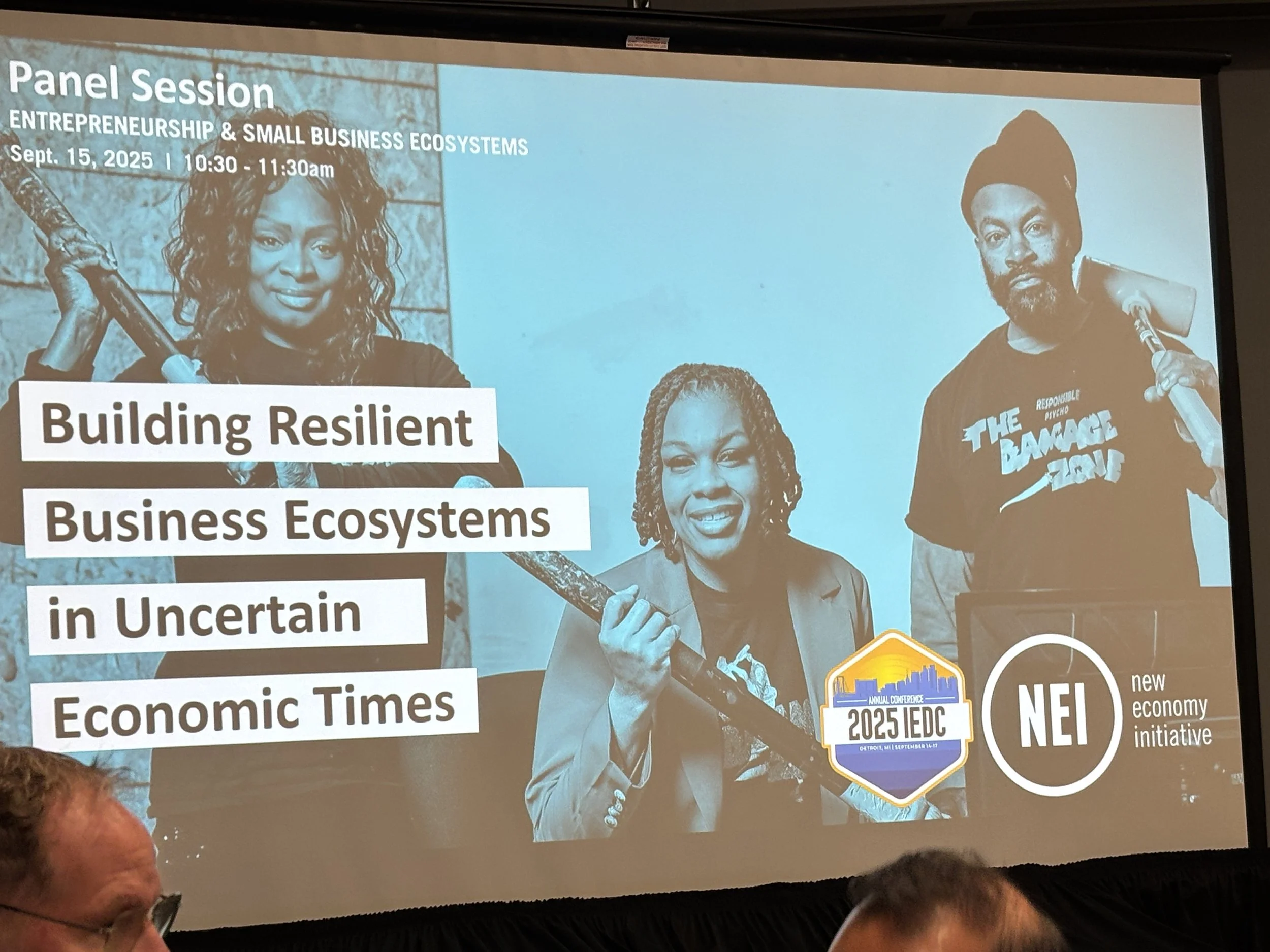
  • Entrepreneurship & Small Business Ecosystems

  • Communications & Storytelling for Impact

  • Talent & Workforce Transformation

  • Innovation & Industry Evolution

  • Capital Access for Communities

Additionally, attendees learned about a new tool for measuring impact that will be launched this month.  One of the biggest challenges in economic development is proving impact to stakeholders. To fill this gap, IEDC will be launching the State of the Field Survey Dashboard, a new member-exclusive tool to help organizations better understand and communicate results—an essential step in creating impactful programs, securing support and scaling success.

Maryland in the Mix

The Maryland Economic Development Association (MEDA) had a strong presence at the conference too, with Frederick represented by both City and County teams. It was energizing to connect with peers, share best practices, and bring home fresh ideas to fuel our local efforts.

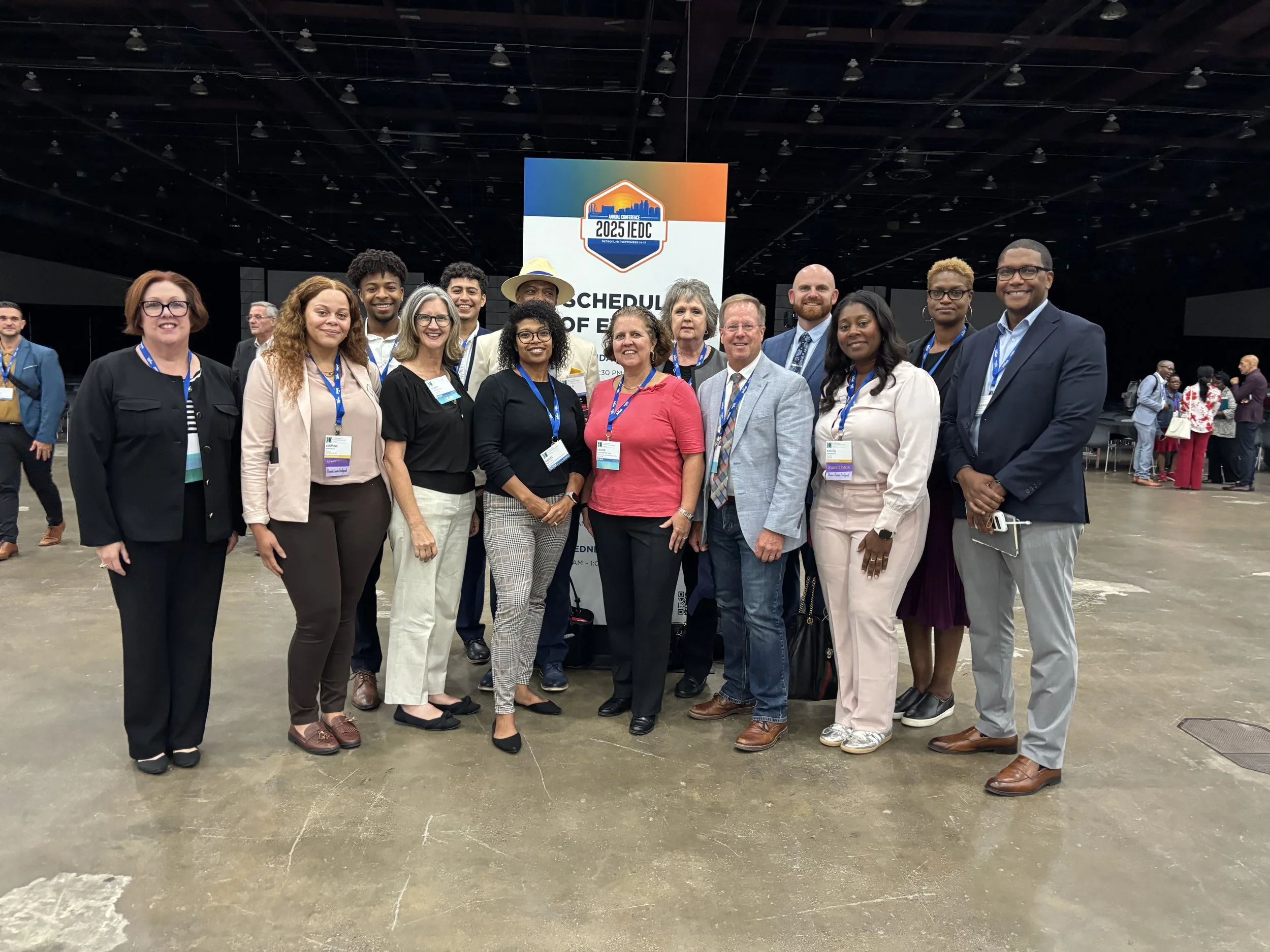
MEDA Members at the IEDC Conference in Detroit.

As we look ahead to IEDC’s 100th anniversary celebration in New Orleans next year, the momentum is undeniable. Frederick’s commitment to inclusive growth, entrepreneurial support, and regional collaboration continues to set a high bar—and we’re just getting started.

Whether it’s celebrating award-winning partnerships or learning from Detroit’s bold reinvention, the IEDC Annual Conference reminded us that economic development is more than policy—it’s a “team sport” about people, purpose, and possibility. Frederick is proud to be part of a dynamic community, and we’re excited for what’s next for our businesses. 

To learn more about taking advantage of economic development resources in Frederick, reach out to schedule a meeting with our team today: Schedule Meeting.

How LEDC Helps Entrepreneurs Navigate Financing

For many small business owners, the biggest challenges come down to planning and funding.

That’s why the City of Frederick’s Department of Economic Development (DED) is spotlighting one of our community partners this month: the Latino Economic Development Center (LEDC). Together, we’re working to ensure local entrepreneurs have access to the resources, guidance, and capital they need to thrive. The organization shared insight about its mission and services below:


The Latino Economic Development Center (LEDC) began its journey in Washington, DC, in 1991 with a clear and powerful mission: to drive economic growth by equipping Latinos and other community members with the skills and resources needed to achieve financial prosperity. More than three decades later, LEDC has grown its reach and deepened its impact, while remaining true to its roots. Our nearly all-bilingual staff welcome and serve anyone who walks through our doors, helping individuals build financial stability, purchase homes, and grow thriving businesses that strengthen our communities.

Our core programs: personal financial counseling, housing counseling, and small business support, are the foundation of this work.

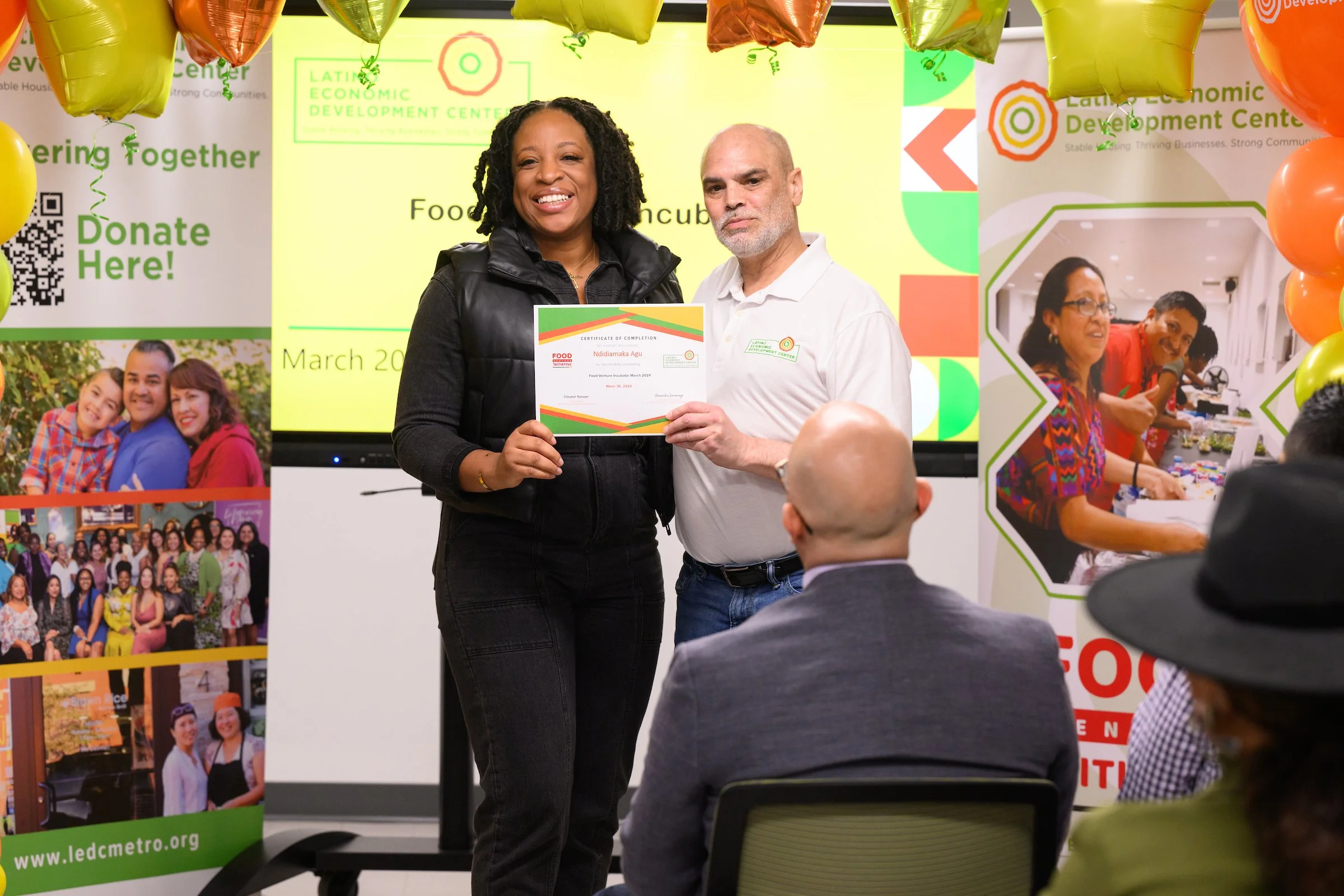
LEDC Food Venture Incubator Graduation 2024

LEDC launched its loan programs in 1997 and became a certified Community Development Financial Institution (CDFI) by the U.S. Department of the Treasury in 2003. As a mission-driven nonprofit lender, we expand access to capital for small businesses, provide resources and guidance for aspiring homeowners, and offer programs that help individuals build and improve their credit.

Our small business loan programs serve entrepreneurs at every stage, from startups to established enterprises, with fixed-rate term loans ranging from $500 to $250,000 and repayment terms of 6 months to 10 years. To date, LEDC has delivered more than 2,800 loans, channeling over $50 million directly into the hands of entrepreneurs who are fueling local economies and creating jobs.

These investments have translated into success stories of every size. LEDC provided an early expansion loan to Sweetgreen, which has since grown into a nationally recognized brand, while also empowering countless local startups to take their very first steps. And beyond financing, LEDC offers business training and coaching, giving entrepreneurs the tools, guidance, and sense of community they need along what can often be a challenging and lonely journey.

Most recently, LEDC partnered with Frederick County’s EmPOWER Program to create a special loan program tailored for local participants. Through this initiative, we have supported businesses like Serenity Swimming, founded by Jenny Hoover, who opened doors to a new swimming facility that fills an important community need. We’ve also helped Chiefstack LLC, a Frederick-based professional services firm offering C-suite-level support to growing companies, along with many other local entrepreneurs bringing their visions to life.

For more information about our programs and impact, please visit the LEDC website.

Information provided by: Latino Economic Development Council (2025)


To learn about more community partners that can help support business growth, check out the City of Frederick’s Economic Development Partner Directory.

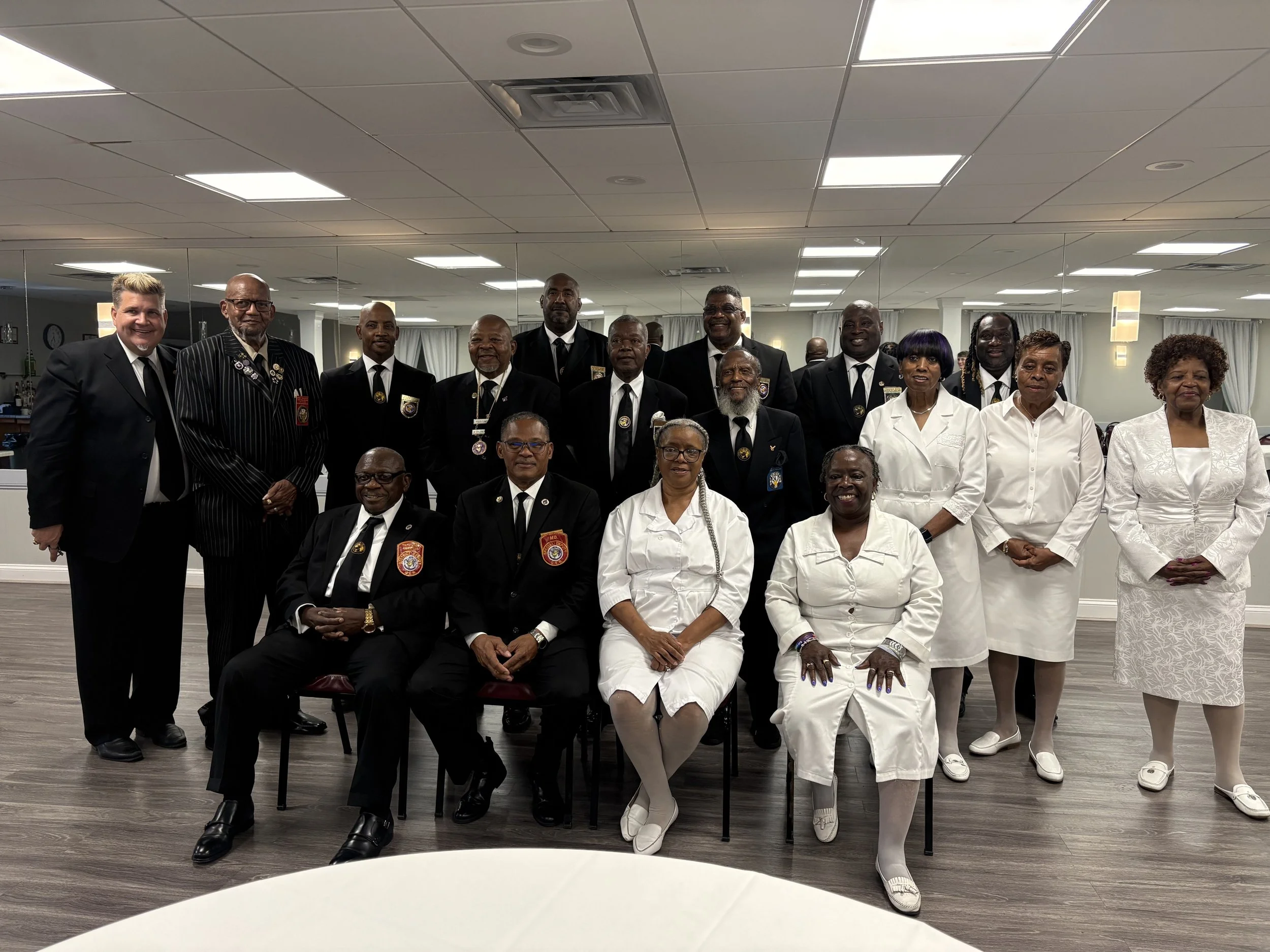
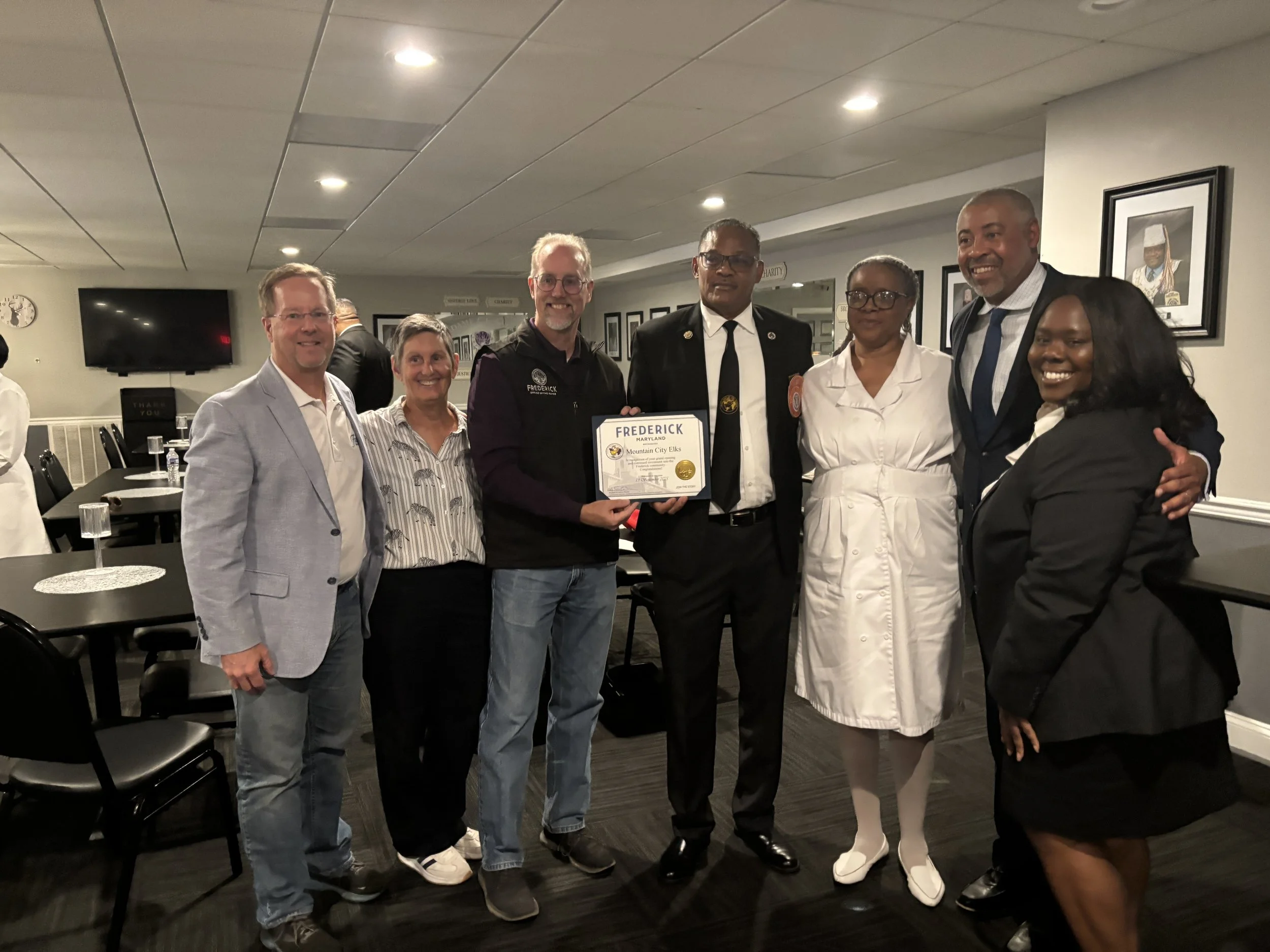
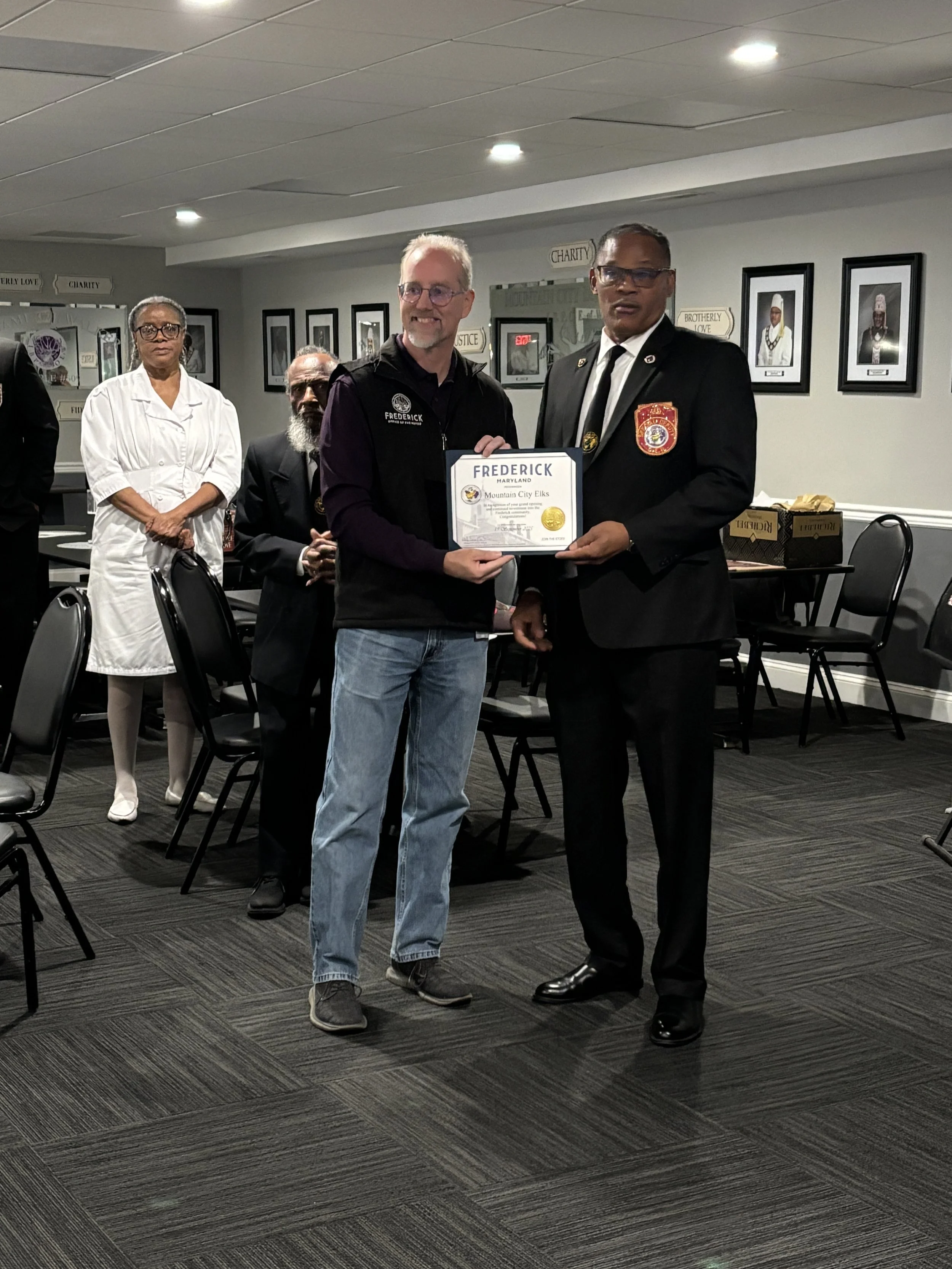
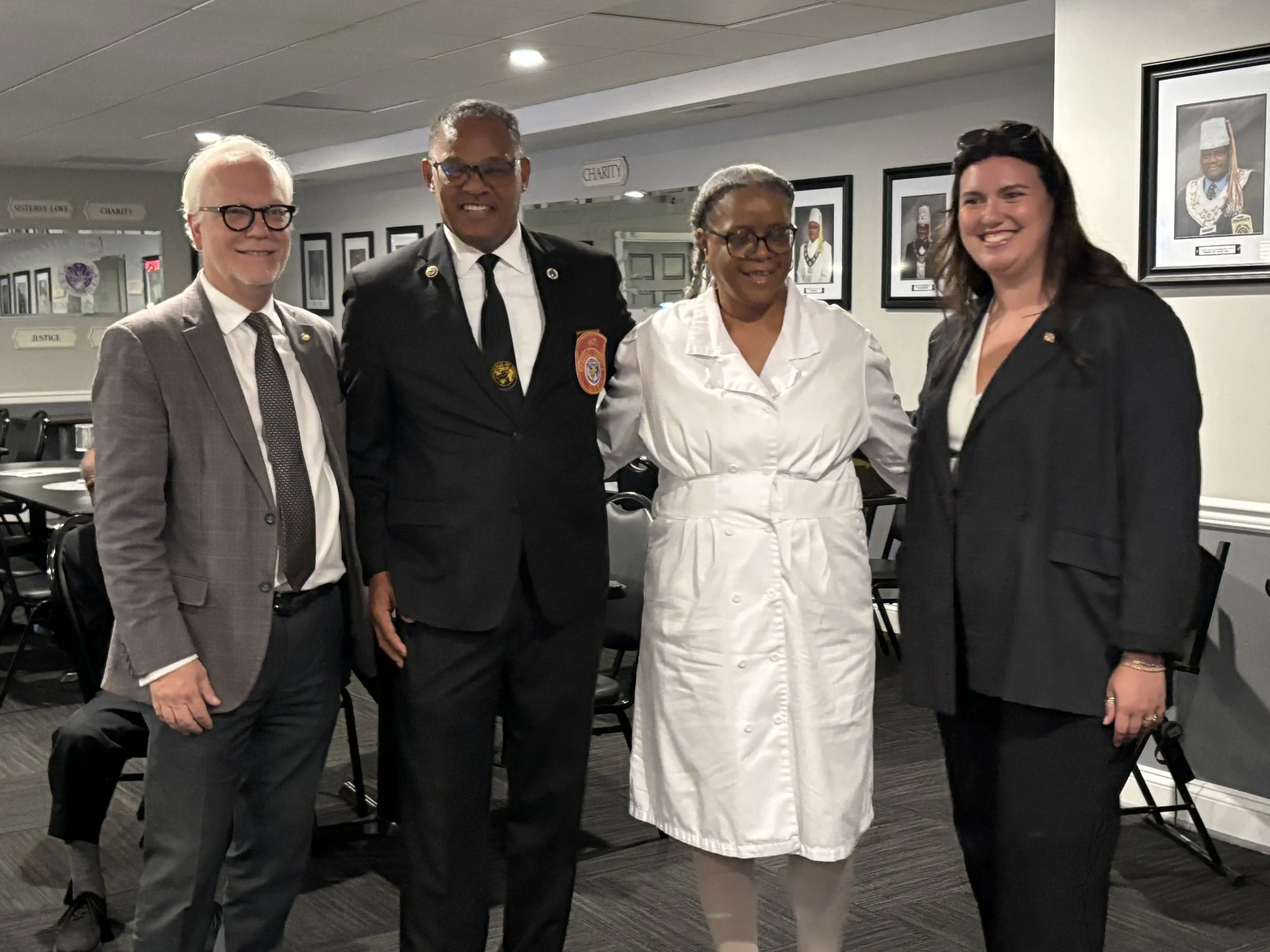
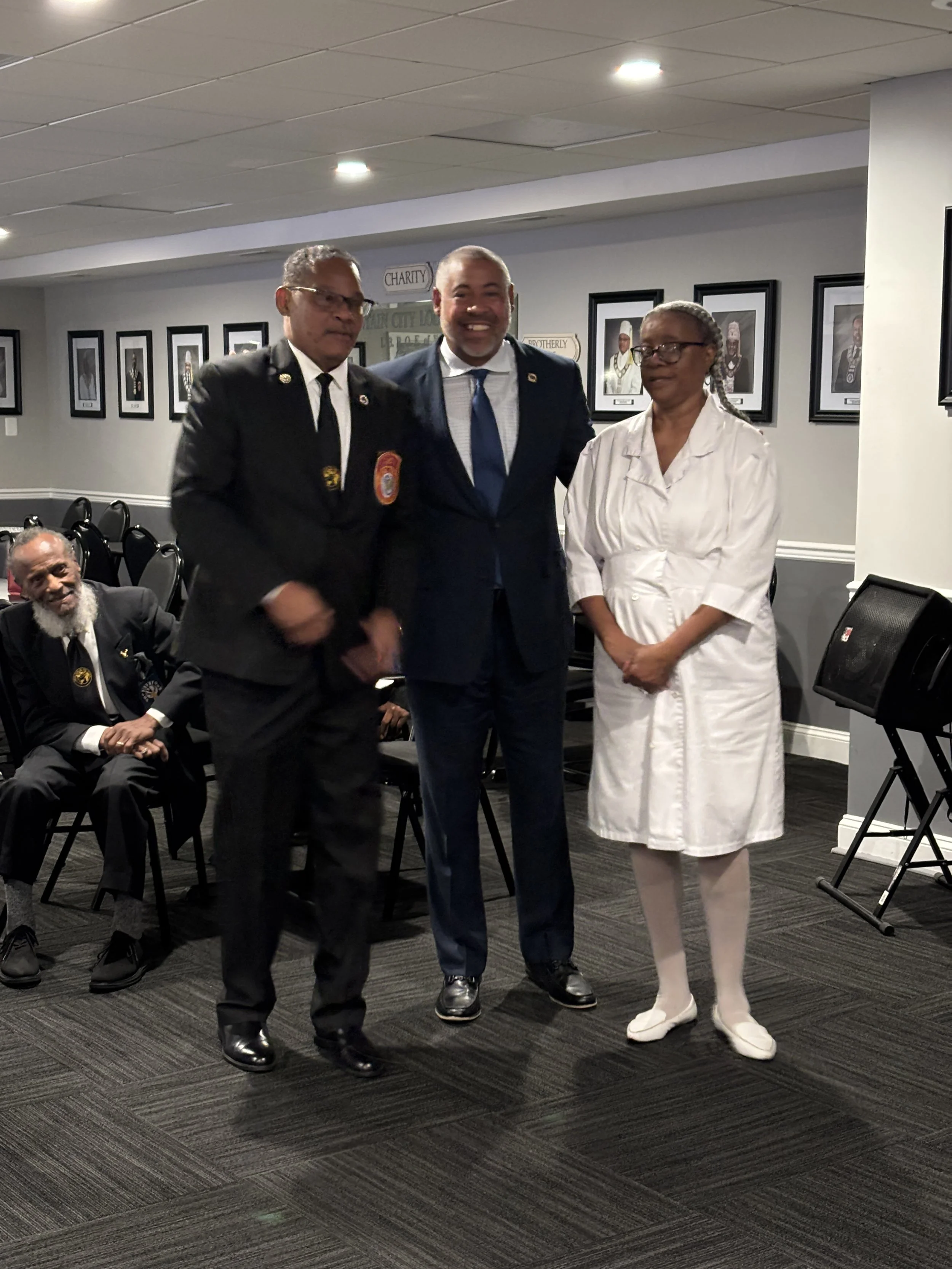
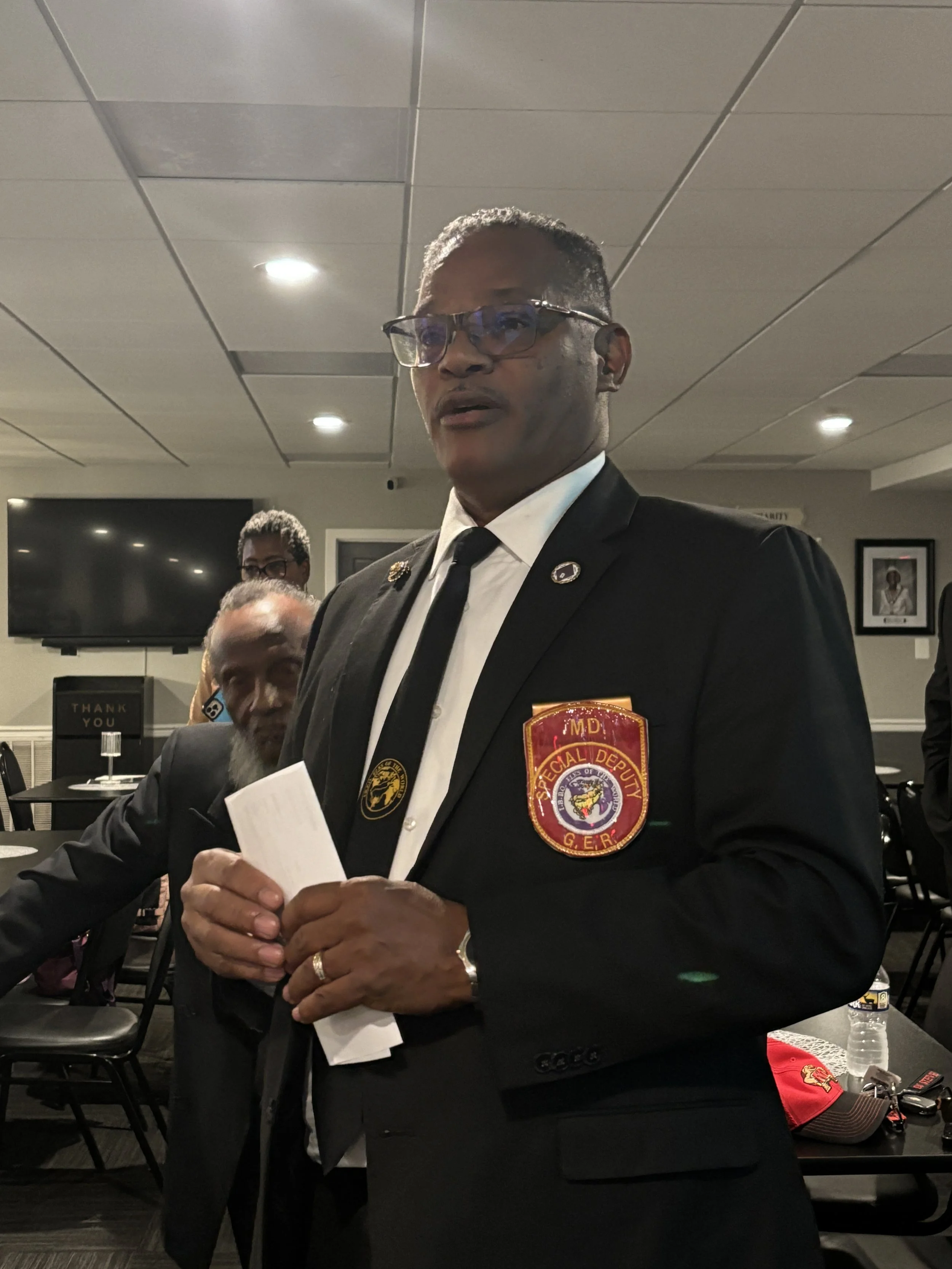
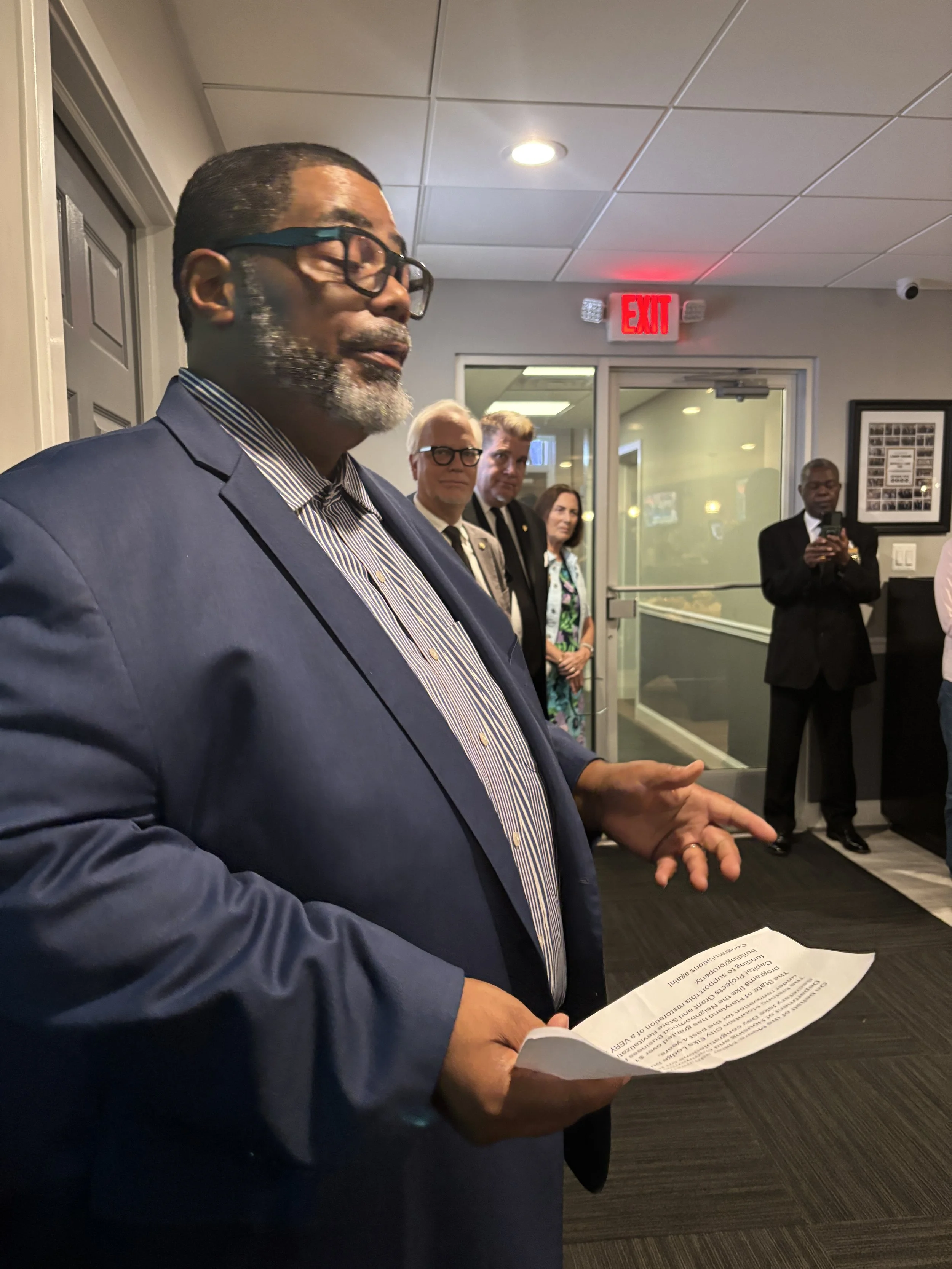
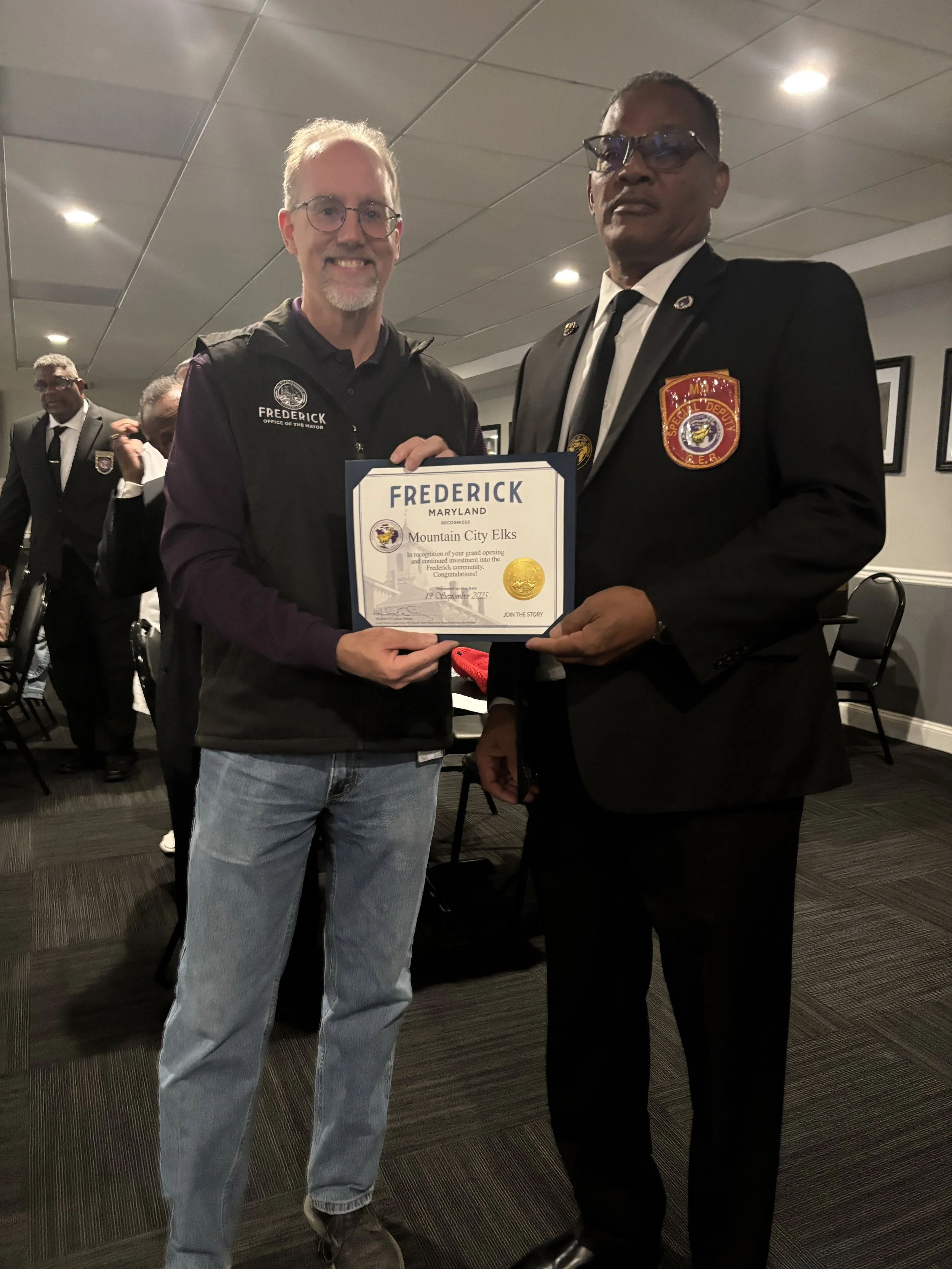
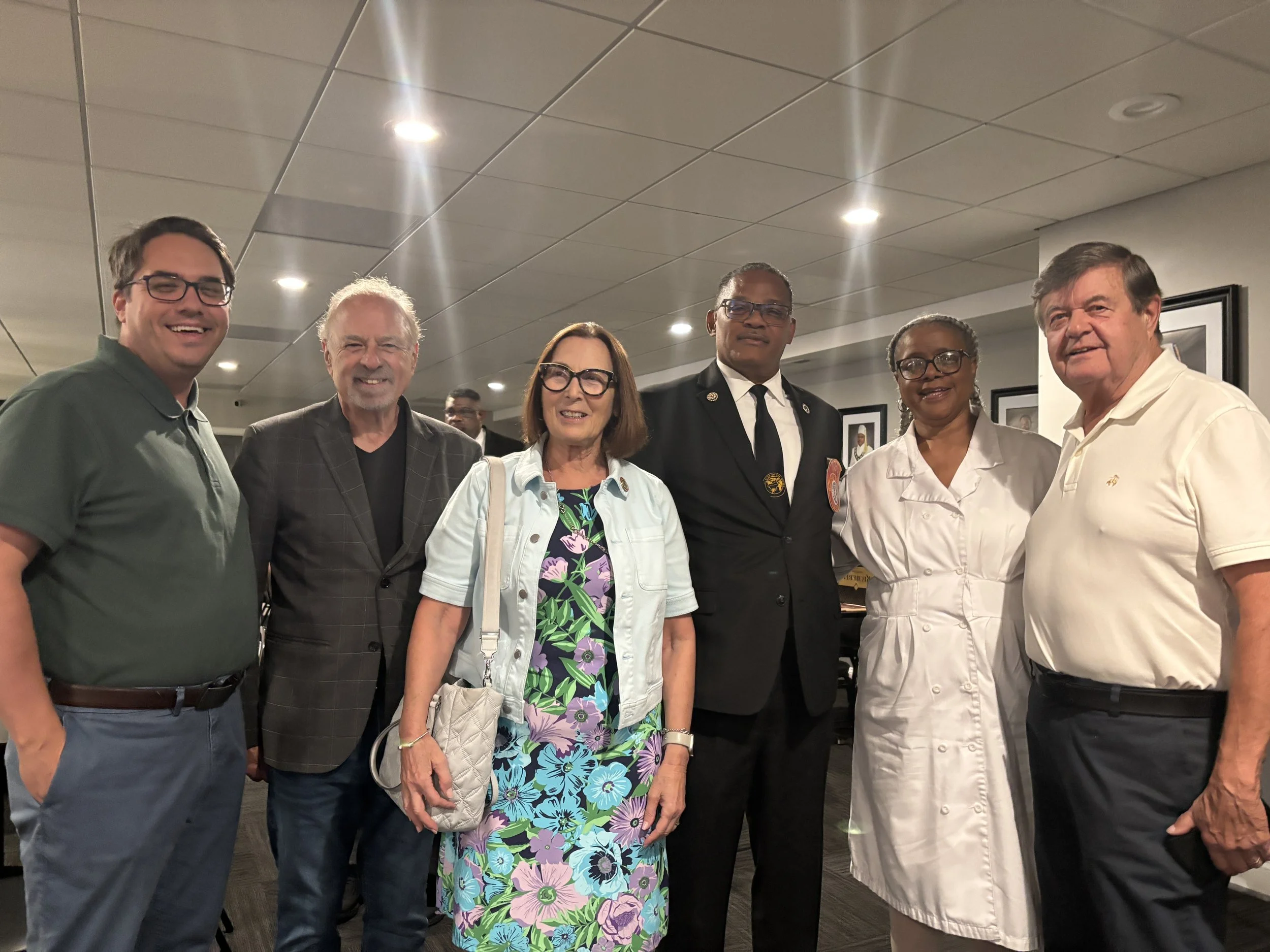
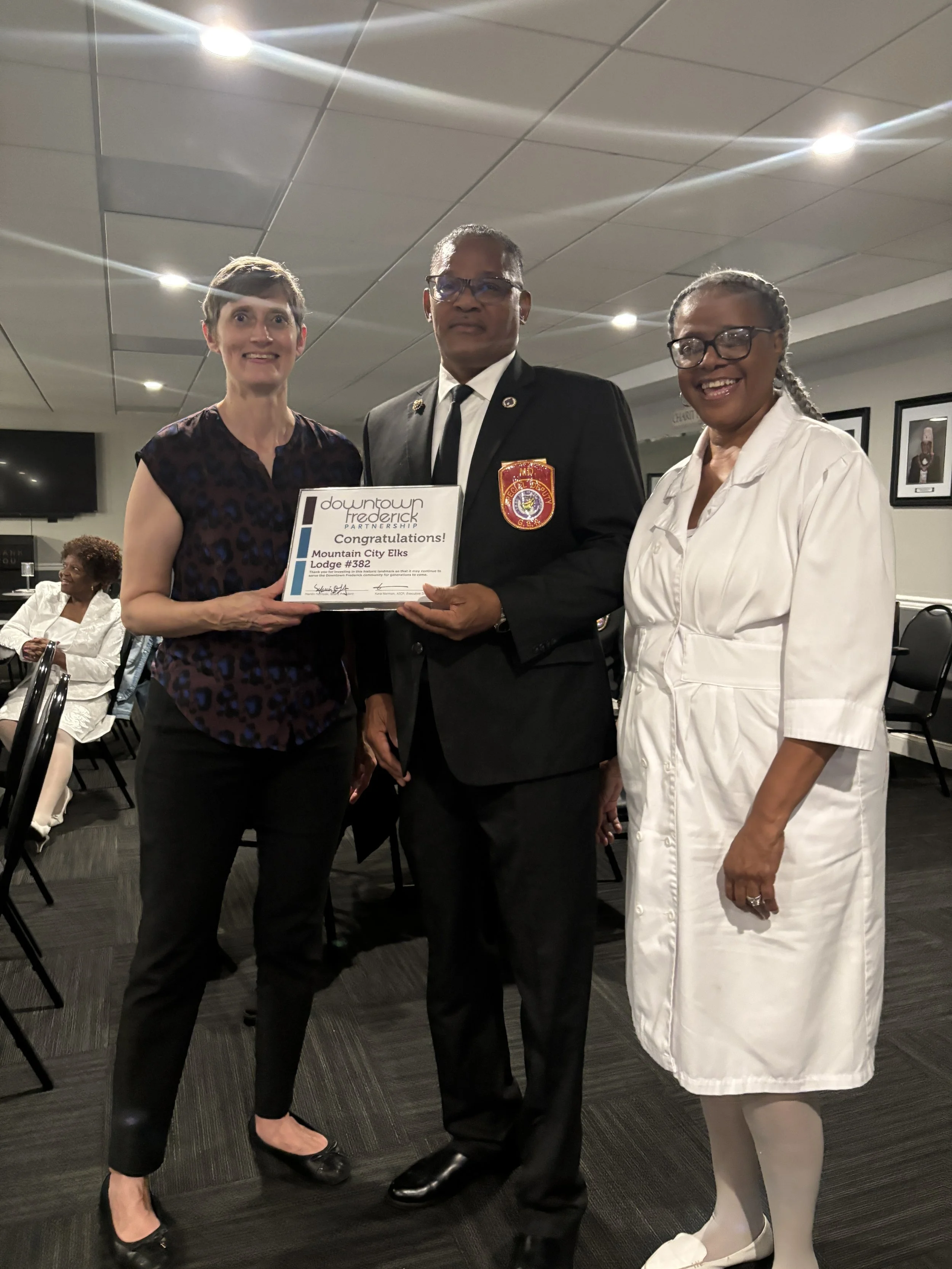
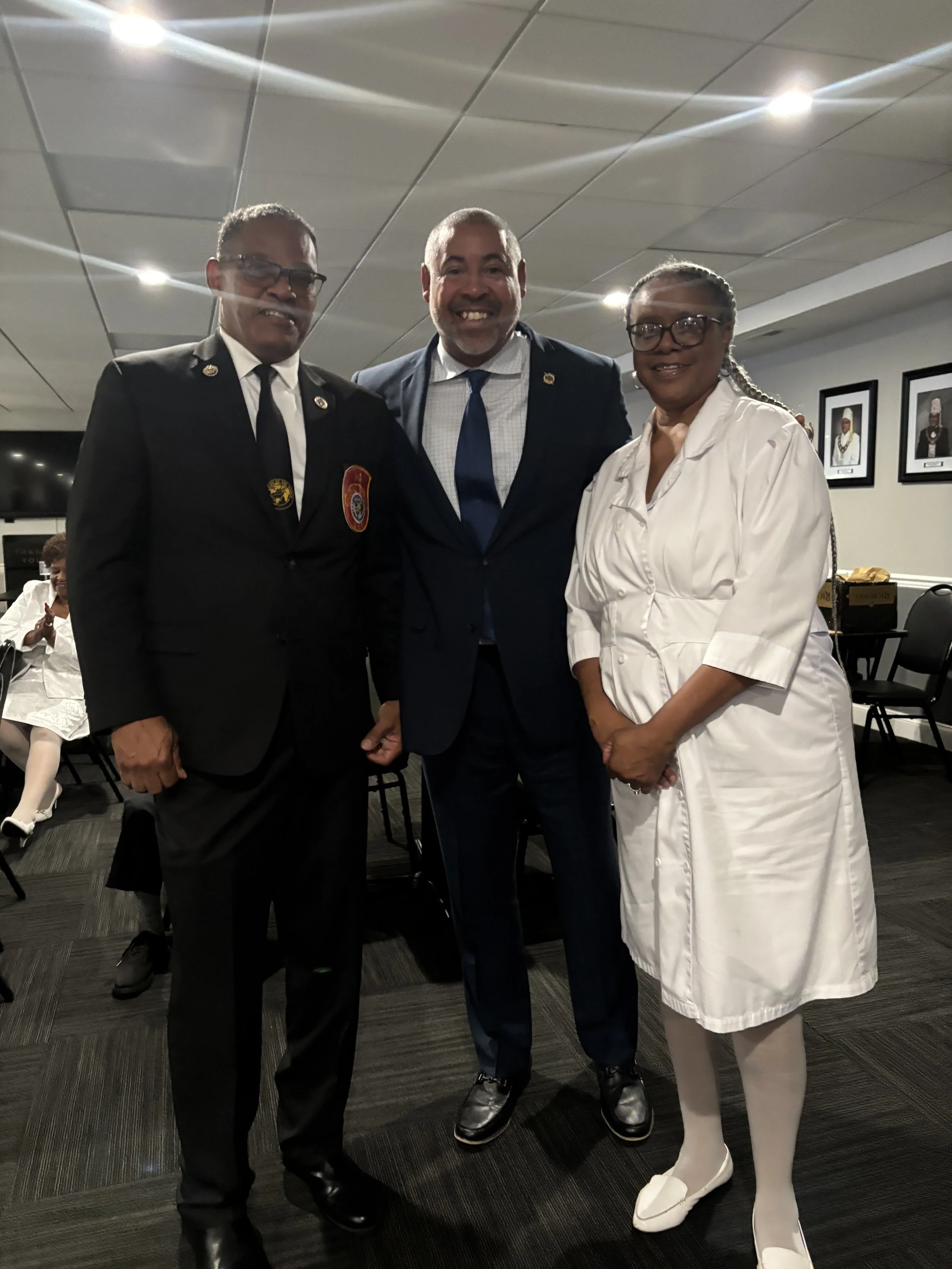
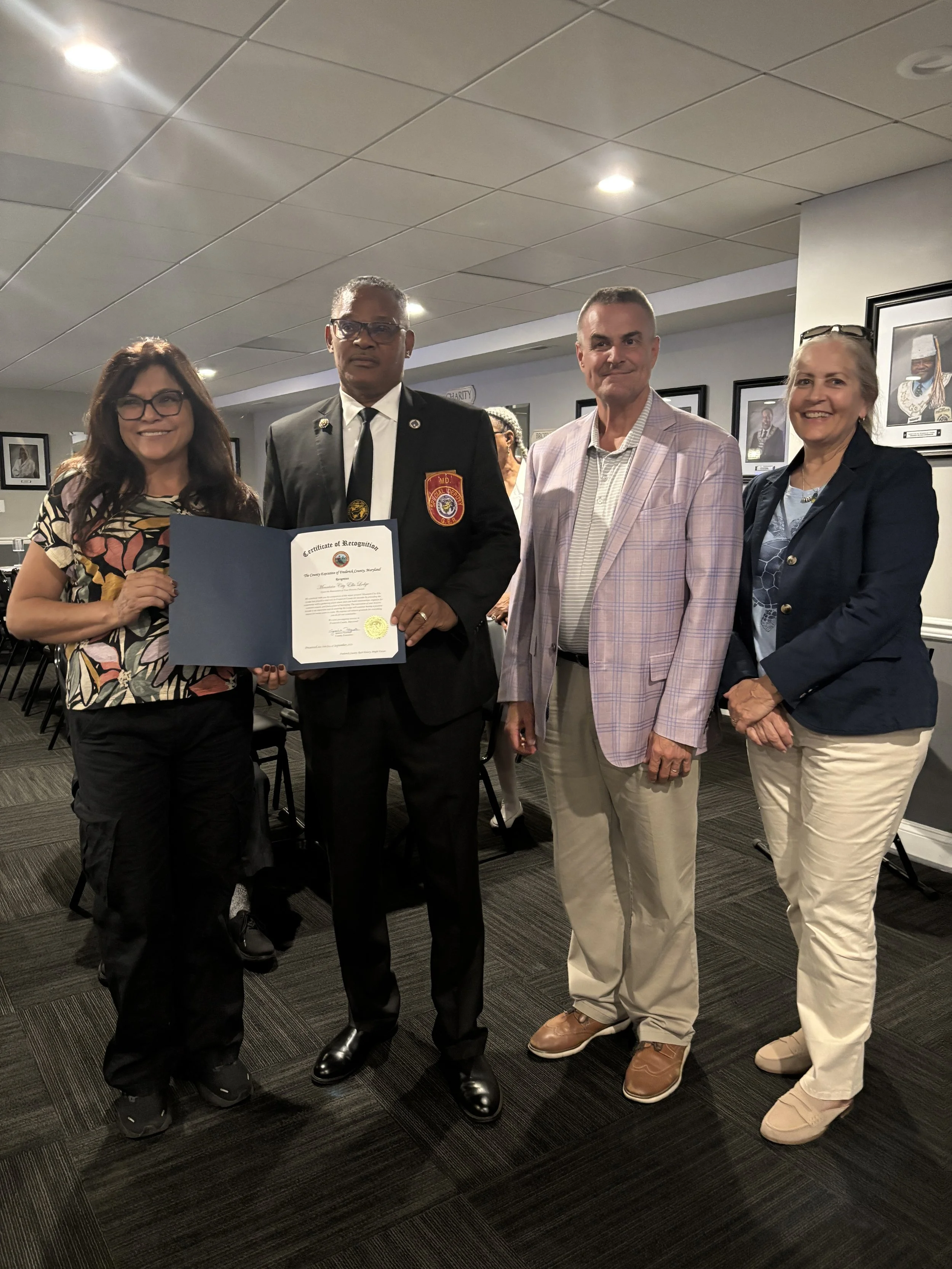
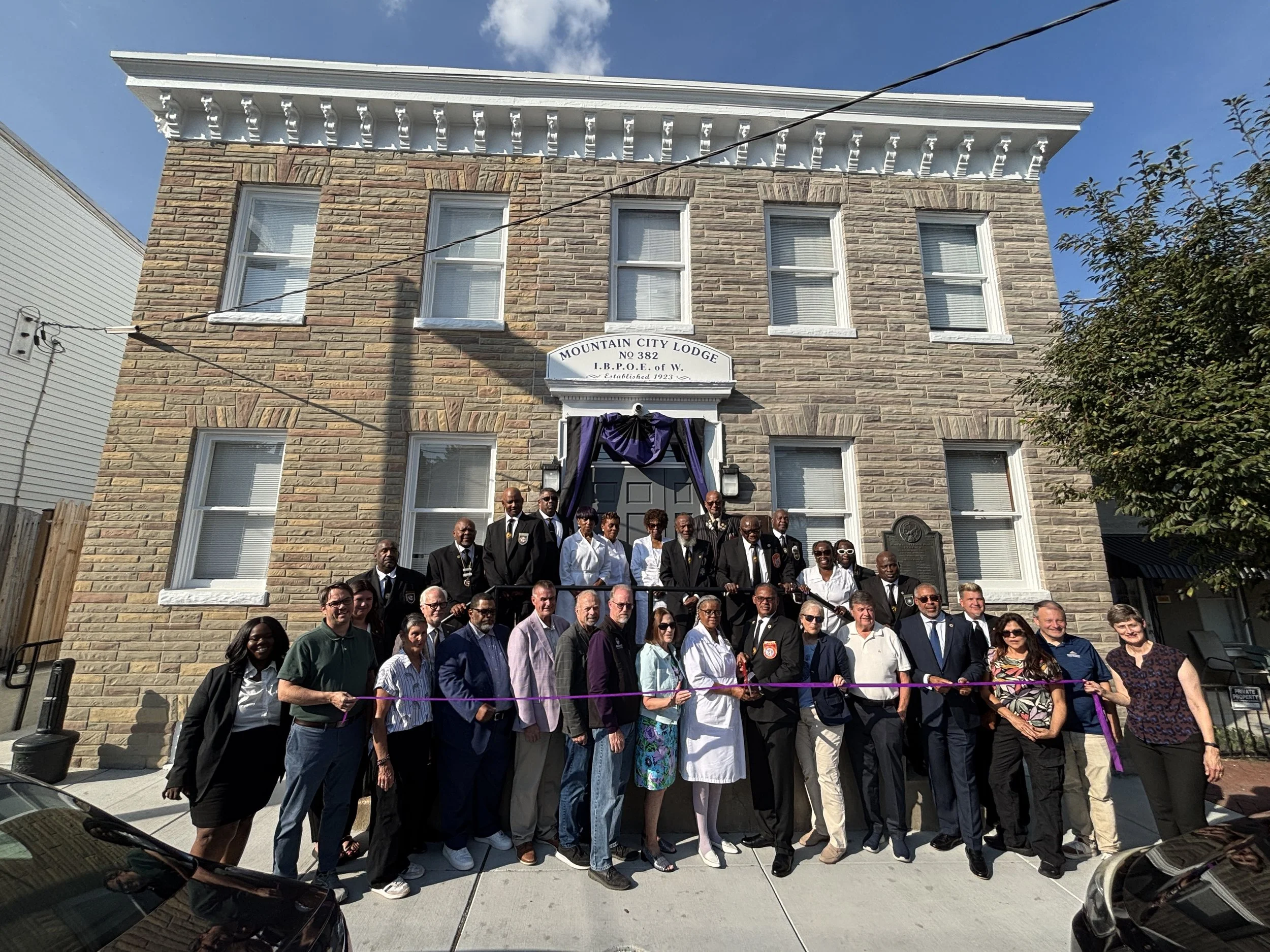
Mountain City Elks Lodge #382 Celebrates Historic Restoration

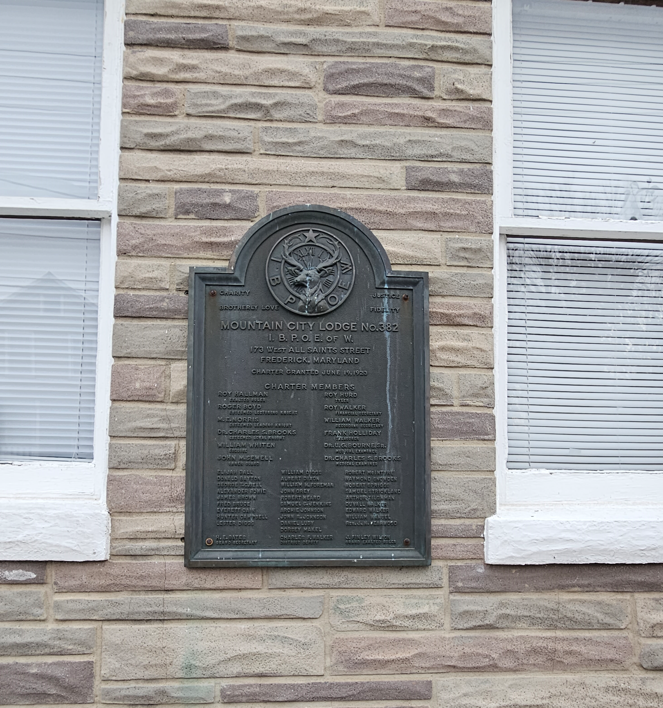
For more than a century, Mountain City Elks Lodge #382 has stood as a cornerstone of Frederick’s African American community. Located at 173 W. All Saints Street, the lodge has been home to generations of fellowship, service, and history. This month, members and supporters gathered to celebrate the completion of a multi-year restoration effort that modernized the historic building. With support from the City of Frederick Department of Economic Development (DED), which applies on behalf of organizations to the Maryland Department of Housing and Community Development (DHCD) for project funding, the Elks have achieved an unprecedented milestone in preserving their legacy for years to come.

The Restoration Project

Since 2021, the Elks Lodge has undergone a $1.16 million transformation to revitalize its historic structure. The project included complete renovations of the first and second floors, a fully updated kitchen, upgraded lighting and security systems, and the addition of new ADA-accessible entryways to improve community access. The work was supported in part by two City of Frederick GROW Grants — one in 2021 for $5,000 and another in 2024 for $3,000 — along with significant public investment through DHCD programs, safeguarding the lodge’s historic legacy while enhancing the building’s functionality to meet present and future needs.

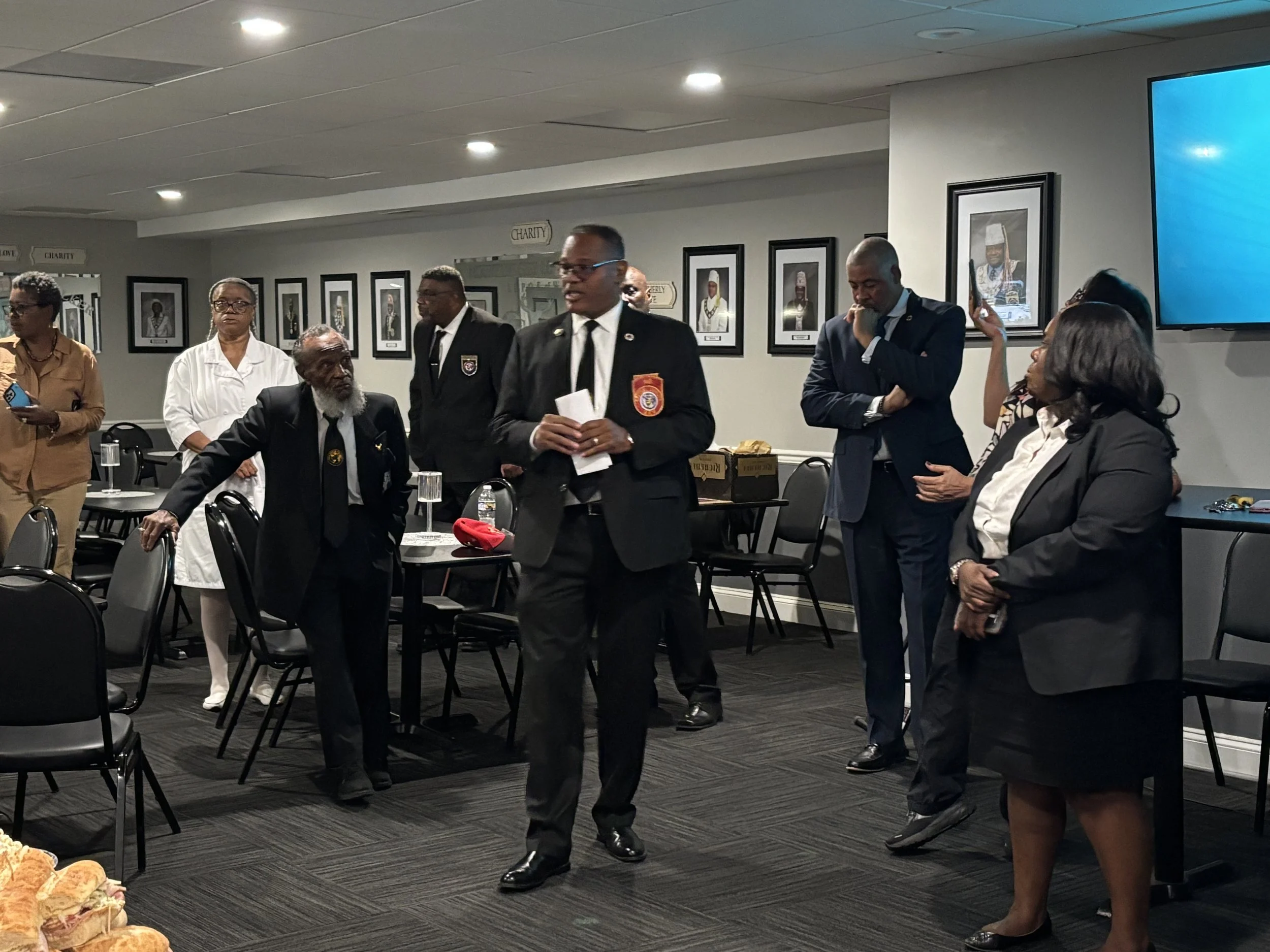
The celebration was marked with a ribbon cutting ceremony attended by city, county, and state officials, community leaders, and lodge members. Among the honored guests was former State Senator Ron Young, who initiated government support for the project during his time in office, and Garland Thomas from DHCD, who helped oversee the state’s involvement. Their presence, alongside representatives from Senator Alsobrooks, Senator Van Hollen, and state delegates highlighted the collaboration across multiple levels of government that made the project possible.

While the Elks and their partners rejoiced in this moment of achievement, they emphasized that the work is not over. Additional fundraising is still underway to complete remaining improvements and ensure for generations to come.


Learn more about other major development projects at www.businessinfrederick.com/153/Learn.

Frederick County Career Coaches Explore Local Economic Development

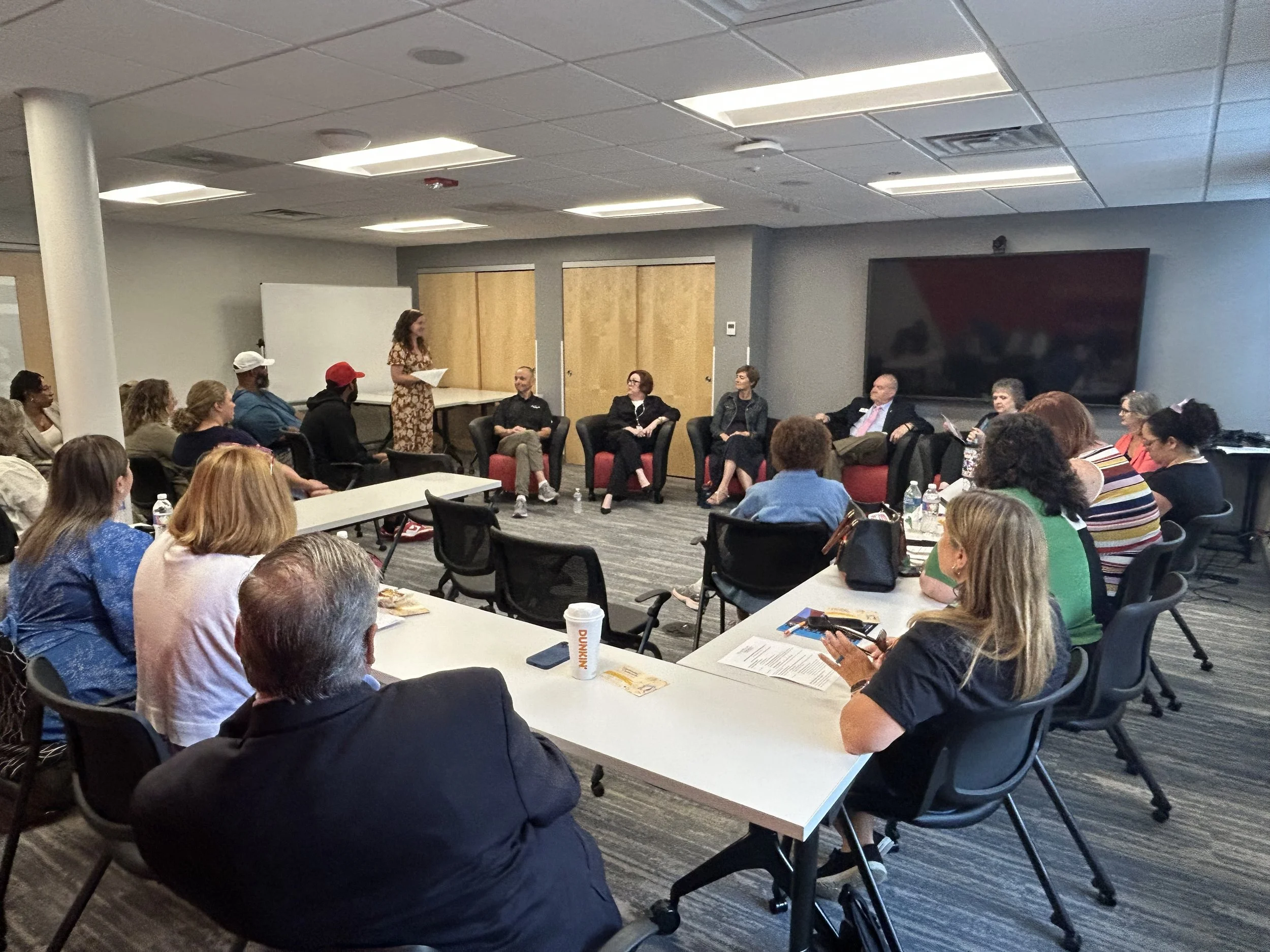
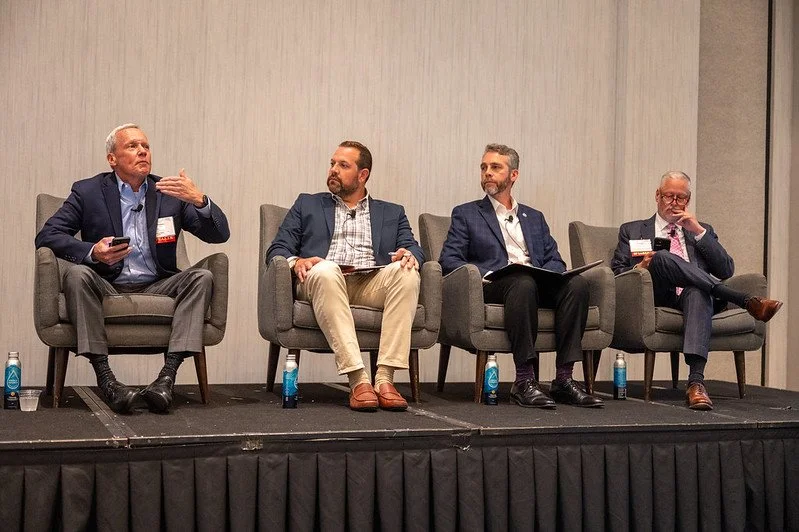
The Downtown Frederick Partnership recently hosted a professional development day for Frederick County Public Schools (FCPS) Career Coaching staff, offering a comprehensive overview of economic development in Frederick County through a panel of local partners.

Participants engaged in sessions covering historic preservation, Main Street communities, nonprofits, and the arts — key sectors that contribute to Frederick’s economic vitality. The program concluded with a panel discussion on economic development featuring Mary Ford-Naill, Manager of the Department of Economic Development for the City of Frederick, Lara Fritts, Director of the Frederick County Office of Economic Development, joined by representatives from Visit Frederick, Downtown Frederick Partnership, and the Frederick County Chamber of Commerce.

The event provided career coaches with a deeper understanding of the wide range of industries and employment opportunities available in Frederick County. This knowledge will support their efforts to guide middle and high school students as they explore potential career pathways and equip them with fresh insights that will help set them up for success.

To learn more about the FCPS Career Coaches Program, visit Career Coach Program - Frederick County Public Schools. For more workforce resources, go to Workforce Resources | Frederick Business, MD.

2025 S.H.E. Pitch Recap: Construction and Cookies Win First Place

The 2025 S.H.E. Pitch competition put Frederick’s women entrepreneurs in the spotlight once again, with finalists pitching ideas and established businesses before a live audience and panel of judges.

Hosted at Hood College’s Hodson Auditorium, the annual S.H.E. Pitch event is part of the Frederick County Chamber of Commerce’s S.H.E. Week. A long-time event sponsor of S.H.E. Pitch, the City of Frederick’s Department of Economic Development (DED) was honored to serve on both the judging panel and selection committee again this year.

Why S.H.E. Pitch Matters

The pitch competition amplifies the visibility of women-led businesses and connects them with mentors, resources, and the greater Frederick community as female entrepreneurs compete for cash prizes in either the “idea stage” and “growth stage” of business. Winners are awarded over $10,000, offering vital financial support and investment in their business success.

Meet the Winners

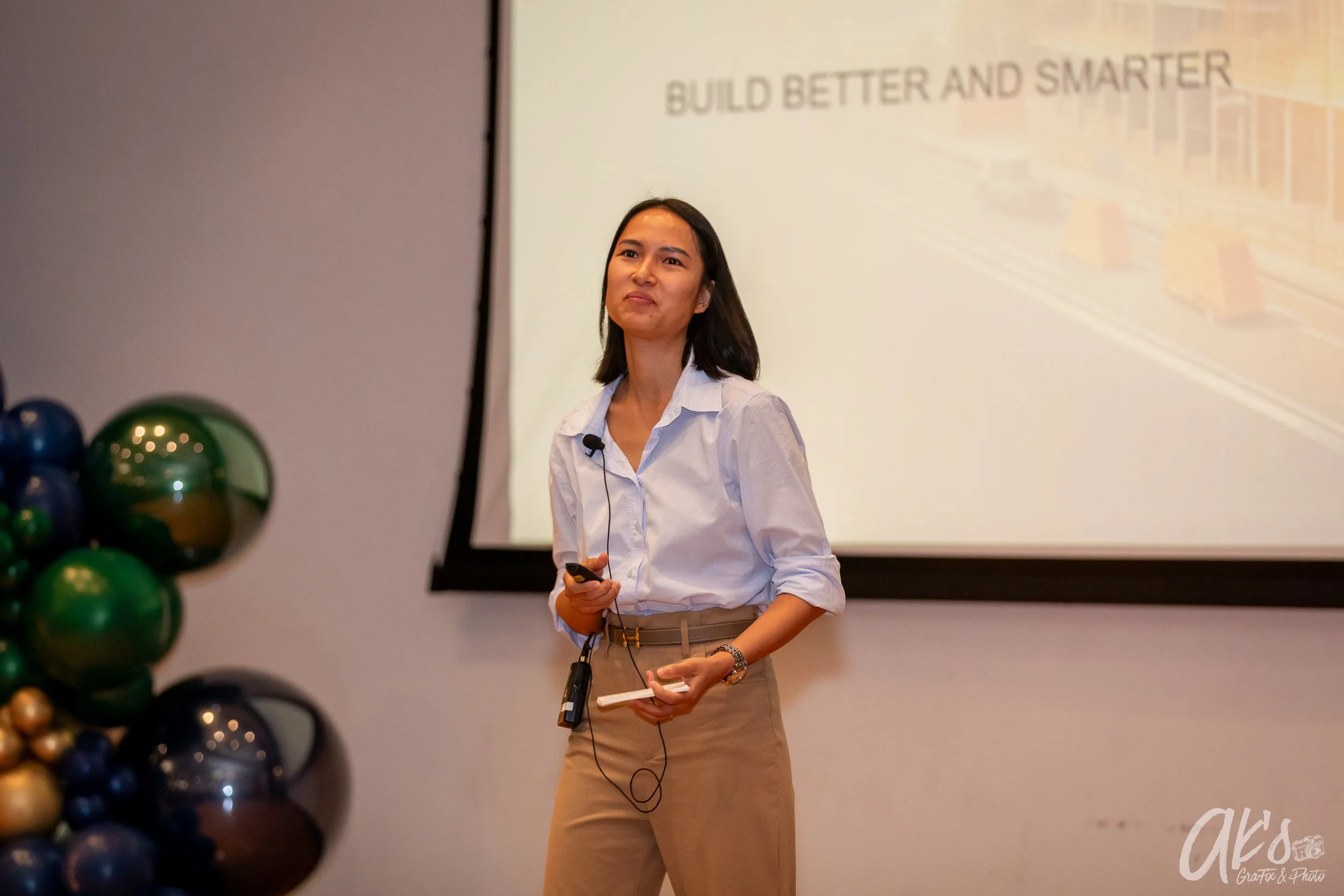
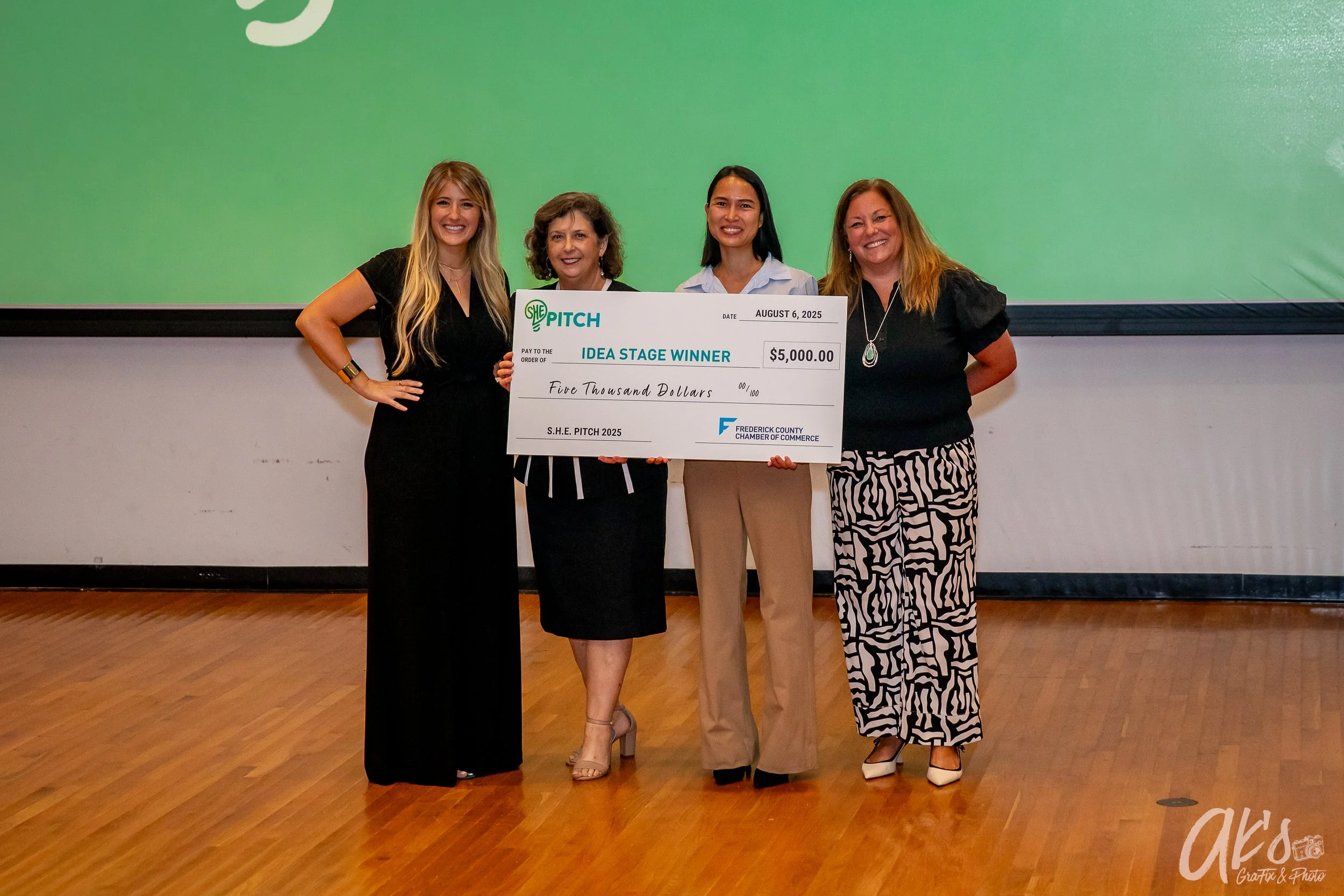
Two Frederick City businesses walked away with the win. Sweet Maddie’s – Cookies on Demand, founded by Michelle Bryan, won the Growth Stage prize in addition to the People’s Choice Award. NCE BIM Consulting, led by Ngoc Chau, earned first place in the Idea Stage category.

Ngoc Chau, NCE BIM Consulting

Idea Stage Winner: Ngoc Chau, NCE BIM Consulting

About NCE BIM Consulting: NCE BIM Consulting is a forward-thinking construction company that focuses on leveraging cutting-edge technology to excel in both commercial and residential building projects. The company’s expertise lies in the strategic application of 3D technologies, revolutionizing workflows and productivity, particularly in managing large-scale endeavors. Founded in 2020, NCE BIM Consulting enhances the construction process through innovative Building Information Modeling (BIM) solutions that elevate construction projects with confidence and precision.

Ngoc Chau, NCE BIM Consulting


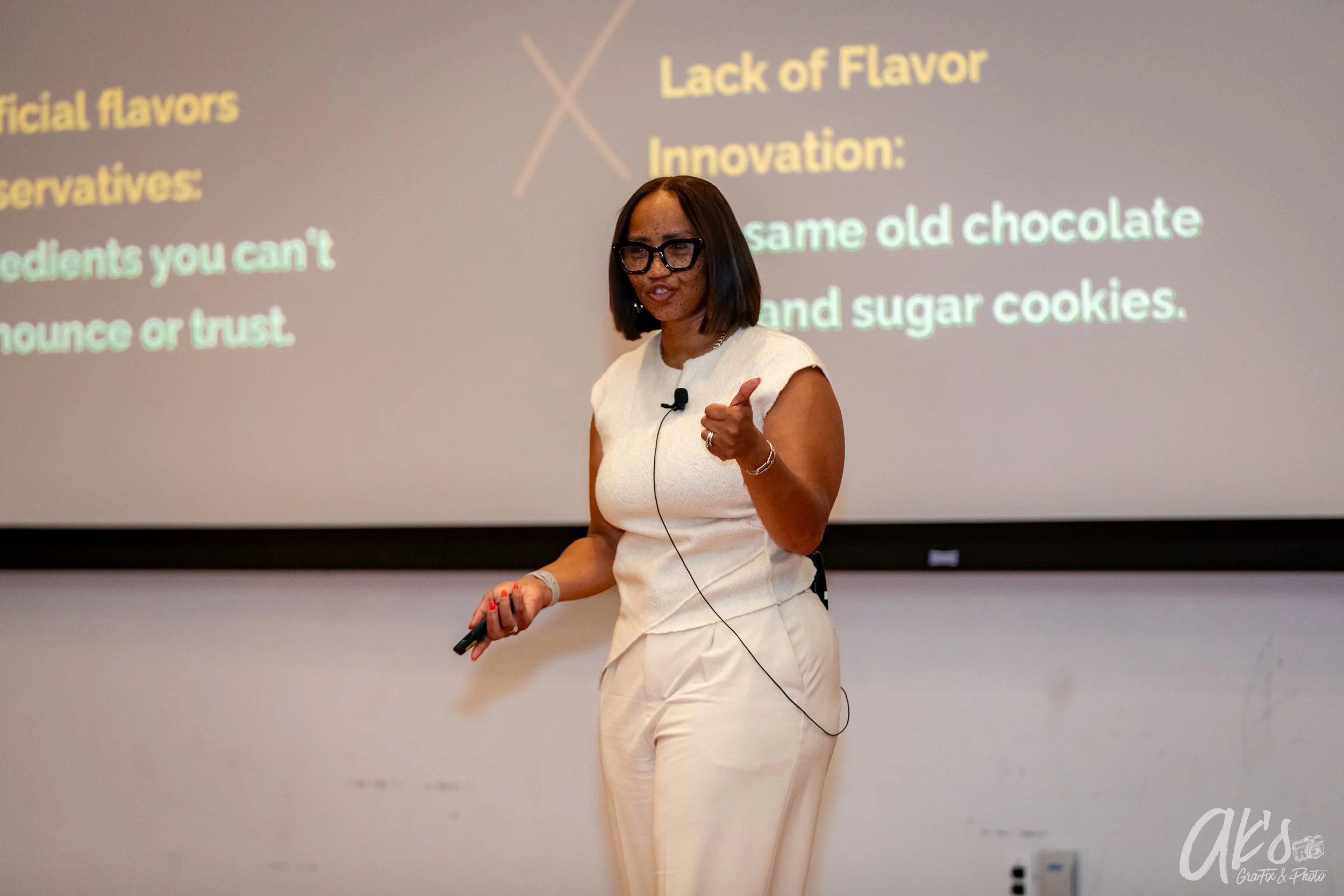
Michelle Bryan, Sweet Maddie’s – Cookies on Demand

Growth Stage Winner: Michelle Bryan, Sweet Maddie’s – Cookies on Demand. Michelle also took home the People’s Choice Award, securing an additional $500.

About Sweet Maddie’s – Cookies on Demand: Sweet Maddie’s Bakery has created gourmet cookies, desserts, and from-scratch cakes for lovers of sweet things for over a decade. A family-run business, Sweet Maddie’s is dedicated to providing fresh-baked goods that are made with all-natural ingredients, free from preservatives and additives, with many ingredients sourced from small, local businesses whenever possible. Today, Sweet Maddie’s operates as a fully licensed online bakery, baking out of the commercial kitchen The Cutting Board.

Michelle Bryan, Sweet Maddie’s – Cookies on Demand

For the DED, continued support reflects a long-term commitment to cultivating diverse entrepreneurship and supporting businesses at phase.

A full recap of the event is available through the Frederick News-Post.

Photo credit: Acacia Bowens, AK’s GraFix & Photo

To connect about programs and resources supporting business growth and expansion, reach out to the City’s Economic Development team - businessinfrederick@cityoffrederickmd.gov

Frederick Receives 2025 Excellence in Economic Development Gold IEDC Award

The City of Frederick Department of Economic Development (DED), in partnership with Frederick Community College (FCC) and the Frederick County Office of Agriculture, has been awarded the 2025 Excellence in Economic Development Gold Award from the International Economic Development Council (IEDC).

The International Economic Development Council’s (IEDC) annual Excellence Awards honor the economic development organizations, government entities, initiatives, and programs that demonstrate consistent, exemplary performance in the profession.  profession. This collaborative Food Business Entrepreneurship Program received top honors in the Secondary Institution Partnership category for its innovative initiative that equips aspiring food entrepreneurs with the skills, resources, and mentorship needed to launch successful food businesses and strengthen Frederick’s food economy. The award will be presented at the IEDC 2025 Annual Conference in Detroit, Michigan, September 14-17.

 The Food Business Entrepreneurship Program combines academic training, industry expertise, and community support to help participants plan, start, and operate a food service business. The curriculum delivers foundational knowledge in entrepreneurship and food service management, covering financial management, front and back of house operations, marketing and sales, regulatory requirements, and kitchen skills. Unique components of the program include an industry panel workshop and a culminating pitch competition that recognizes winners with financial awards and business mentorship. The program combines academic expertise from FCC, business support and resources from DED, and agricultural connections through the Office of Agriculture to strengthen Frederick’s food economy.

Elizabeth DeRose, Program Director, Hospitality, Culinary & Tourism Institute, Frederick Community College shared, “Fostering local entrepreneurship, approximately 80 participants have gone through the program, gaining the tools, knowledge, and confidence needed to bring their food business visions to life. We are proud to share that several program graduates have gone on to launch successful ventures and others are making substantial progress toward launching their businesses, continuing the ripple effect of economic and community development.  This award is an acknowledgement of the value of collaborative partnerships in creating community impact.”

“Few things are more rewarding in economic development than witnessing entrepreneurs bring their dreams to life,” said Mary Ford-Naill, Manager of Economic Development, City of Frederick. “We’ve seen firsthand the transformative impact of the Food Business Entrepreneurship program. By equipping aspiring food entrepreneurs with essential tools, knowledge, and certifications, this initiative fuels local job creation and economic diversification. We are proud and enthusiastic collaborators, and this Gold Award is a testament to the collective effort of everyone who has contributed to the program’s success.”

“This award highlights how partnerships can turn big ideas into thriving local businesses that fuel our economy and community,” said Katie Stevens, Director of Frederick County Office of Agriculture.

Each year, IEDC honors economic development organizations, government entities, initiatives, and programs that consistently demonstrate excellence in the field. The honorees lead transformational projects that revitalize communities and advance the practice of economic development.

 “Frederick is leading the field of excellence in economic development with its Food Business Entrepreneurship Program,” said Nathan Ohle, IEDC President and CEO. “This award shines a spotlight on the City’s commitment to its community and showcases the significant impact of economic development. IEDC is honored to present this award to the City of Frederick and its partners to celebrate both their leadership and innovation in the field.”

 The next cohort for the Food Business Entrepreneurship Program and Pitch Competition launches in September 2025.  Program details may be found at https://frederick.edu/programs-tlss/businesshcti/food-business-entrepreneurship.aspx


About the City of Frederick Department of Economic Development:

The City of Frederick Department of Economic Development strives to increase economic opportunity for Frederick by supporting and promoting a community where businesses and residents can thrive. Learn more at https://www.businessinfrederick.com/.

 About Frederick Community College

Frederick Community College, with teaching and learning as its primary focus, strives to promote academic excellence in preparing an increasingly diverse student body to complete their goals of workforce preparation, transfer, career development, and personal enrichment with quality, innovative lifelong learning.

 About the Frederick County Office of Agriculture

The Frederick County Office of Agriculture is dedicated to preserving farmland through conservation easements, supporting agricultural operations with business support and technical assistance, and promoting local farms through initiatives like Homegrown Frederick, ensuring a vibrant and diverse agricultural community. Our mission is to preserve our farming heritage, assist farmers in their endeavors, and promote a thriving agricultural sector. Learn more at https://www.frederickcountymd.gov/8675/Agriculture.


Exploring Career Pathways Through Economic Development Tour

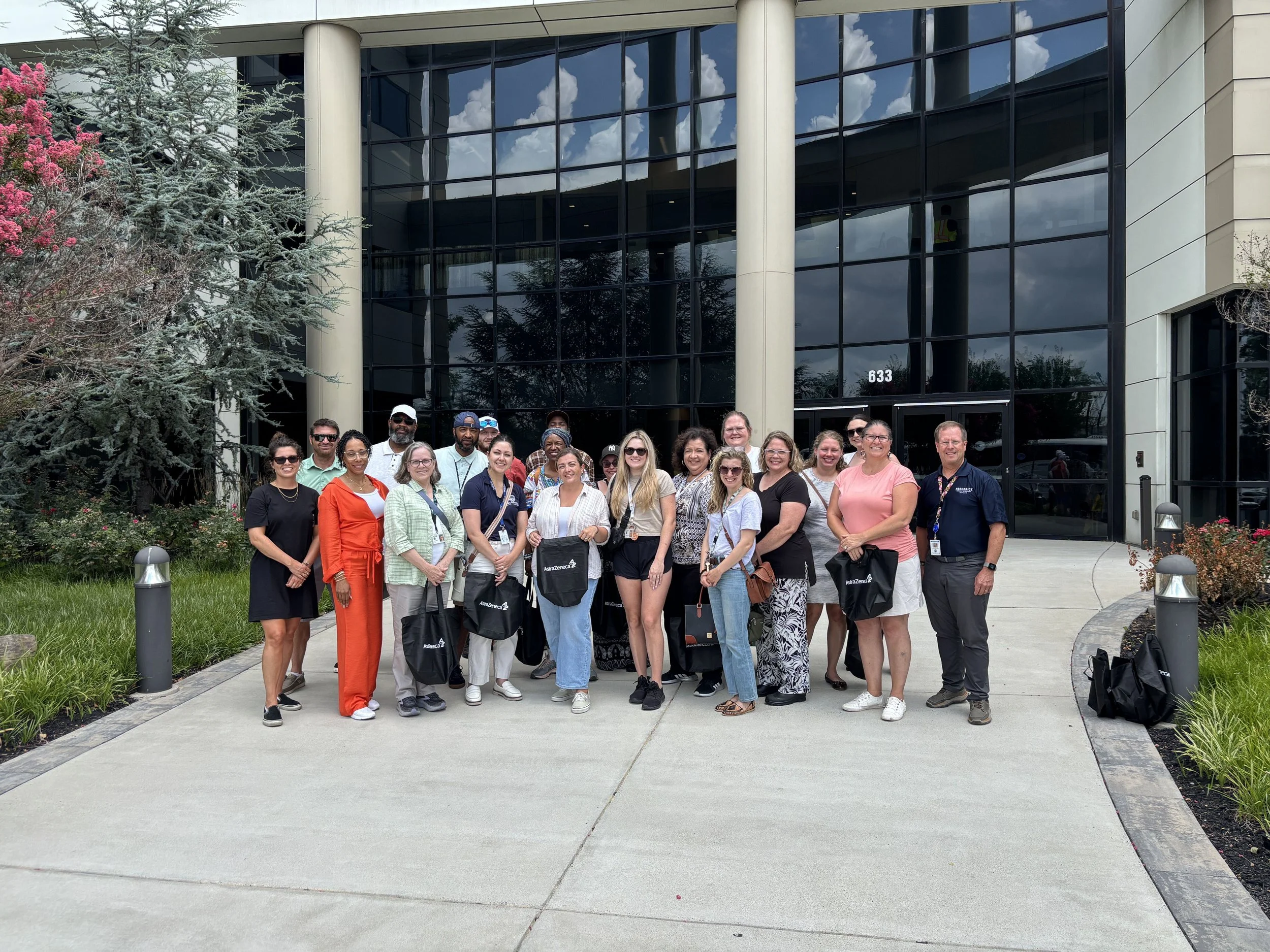
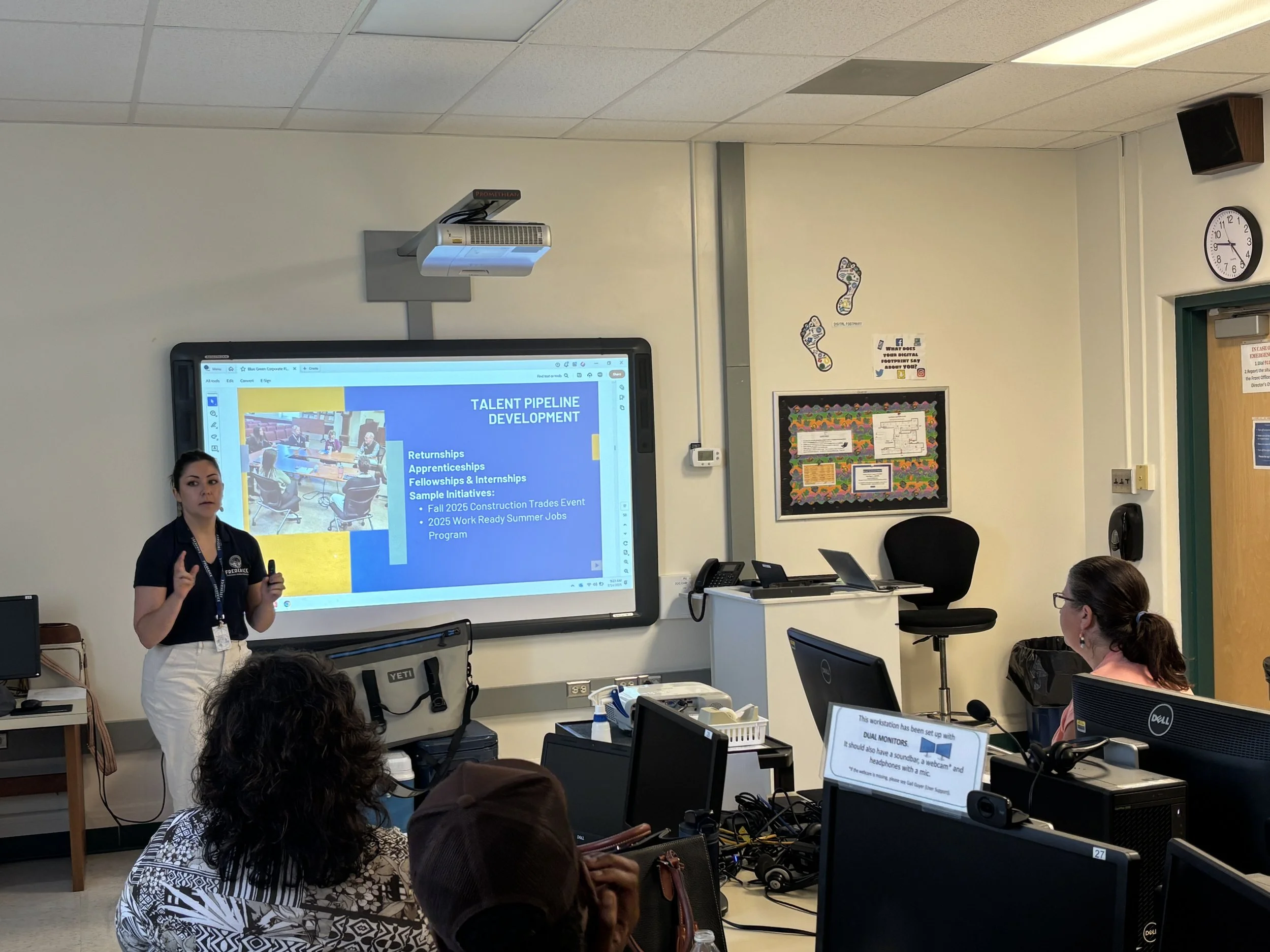
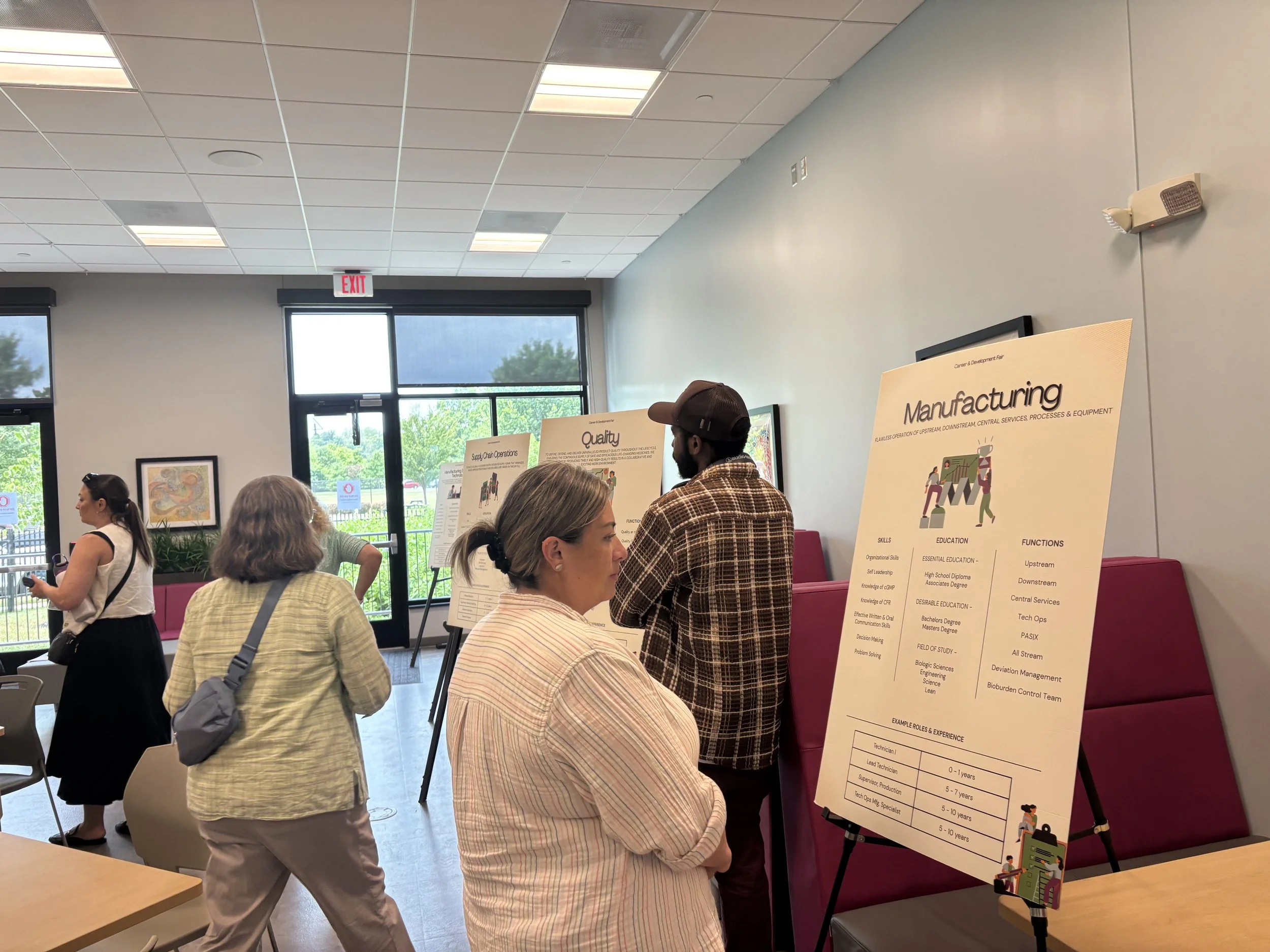
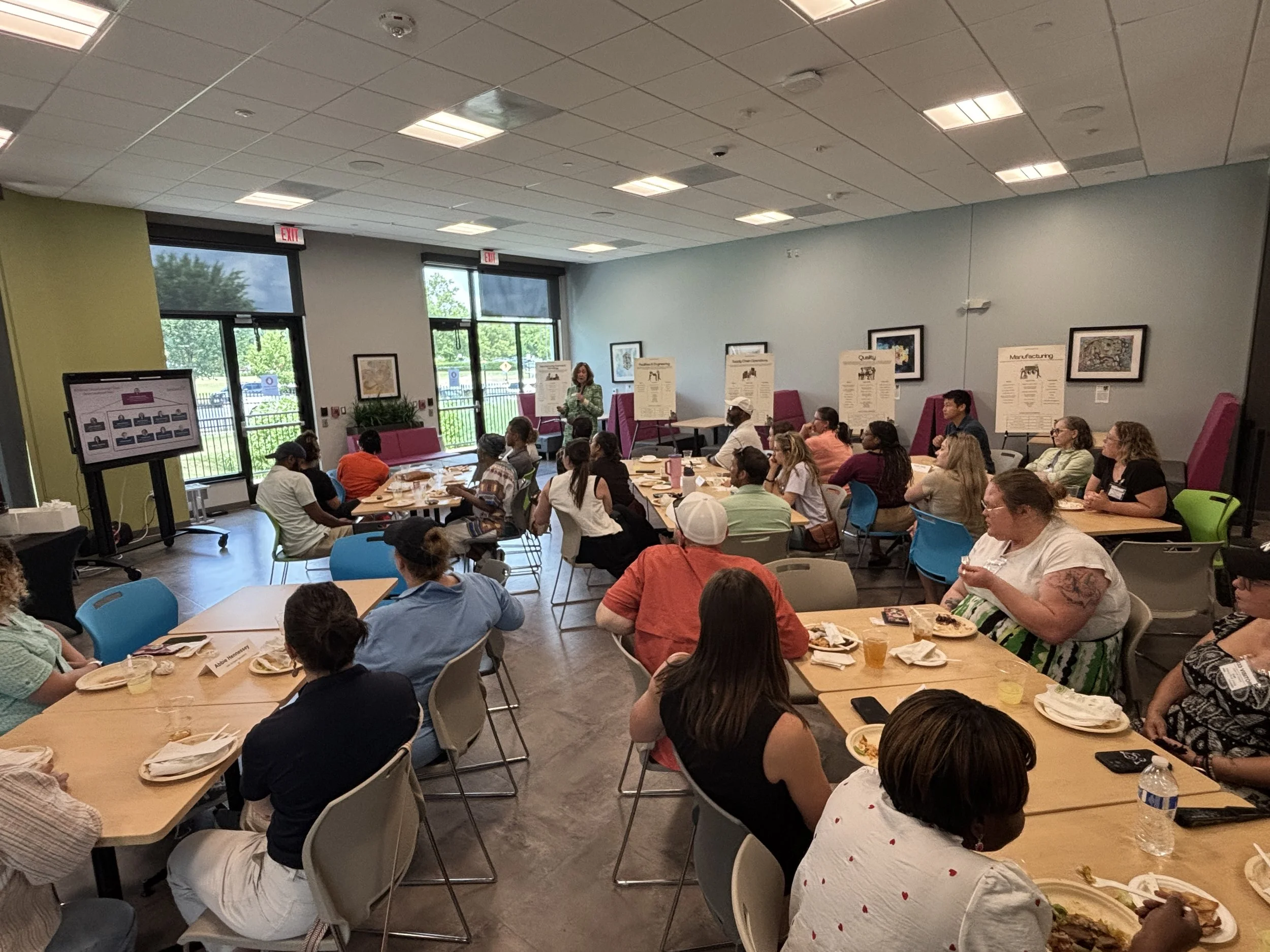
The City of Frederick’s Department of Economic Development and Office of Opportunity and Transformation recently hosted local staff from Frederick County Public Schools (FCPS) Career Coach Program for an economic development presentation and tour of major employers highlighting career opportunities across the city. The event was designed to expose career coaches to key local industries and help them have a better understanding of future career pathways available to their students.

The City’s economic development team presented an overview of Frederick’s diverse economy, the local job market, Frederick area business growth, and major commercial developments within Frederick.

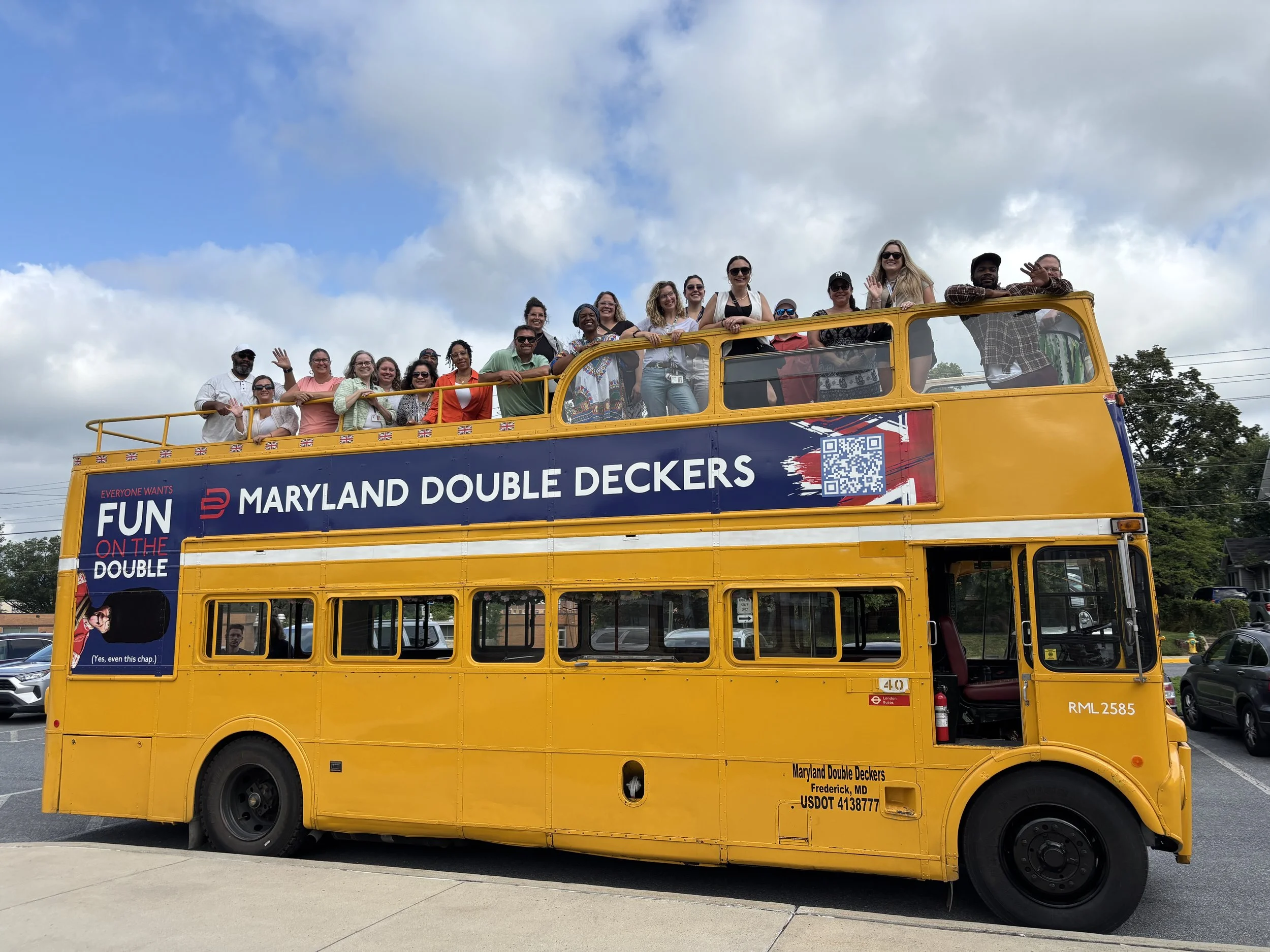
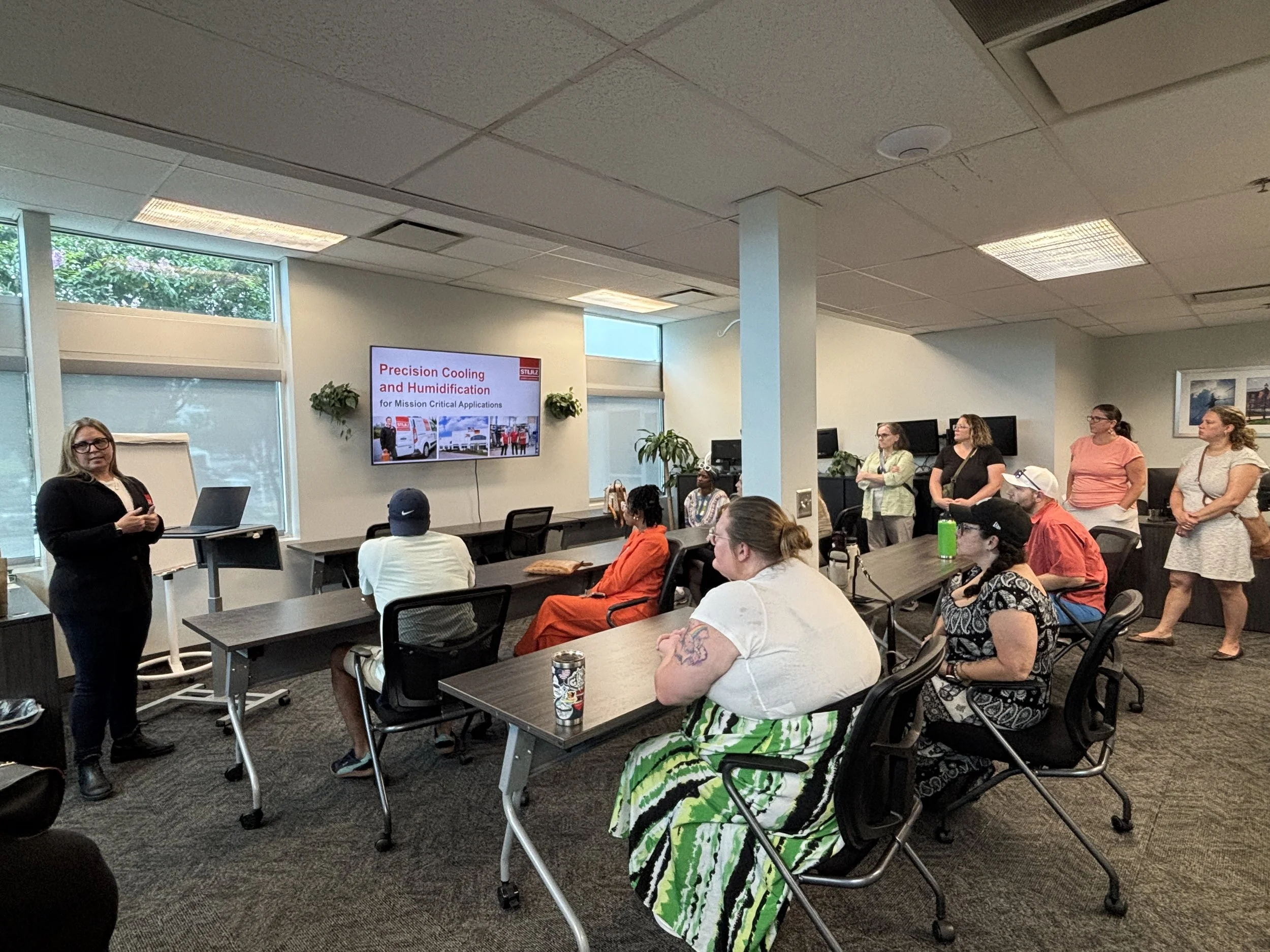
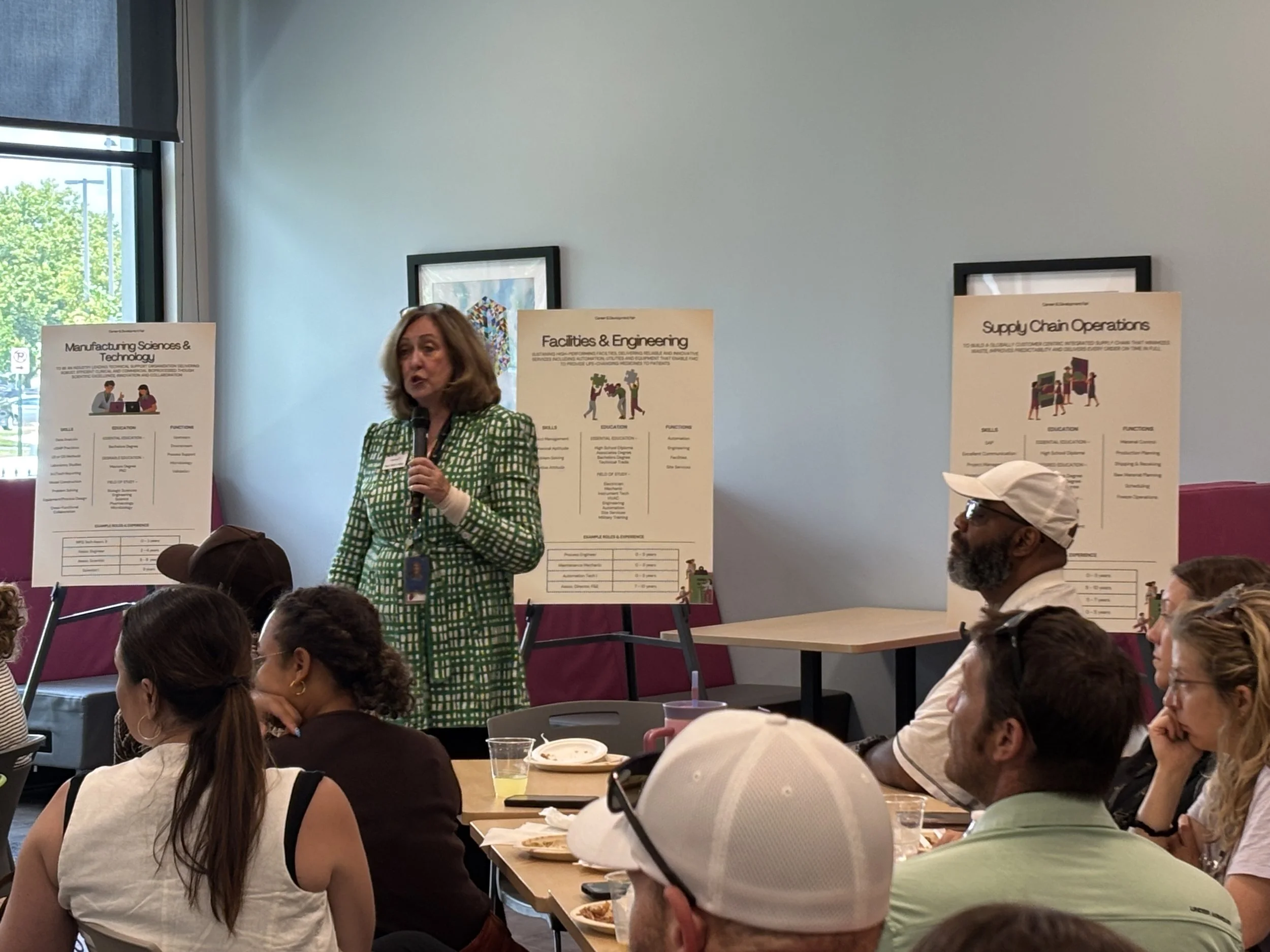
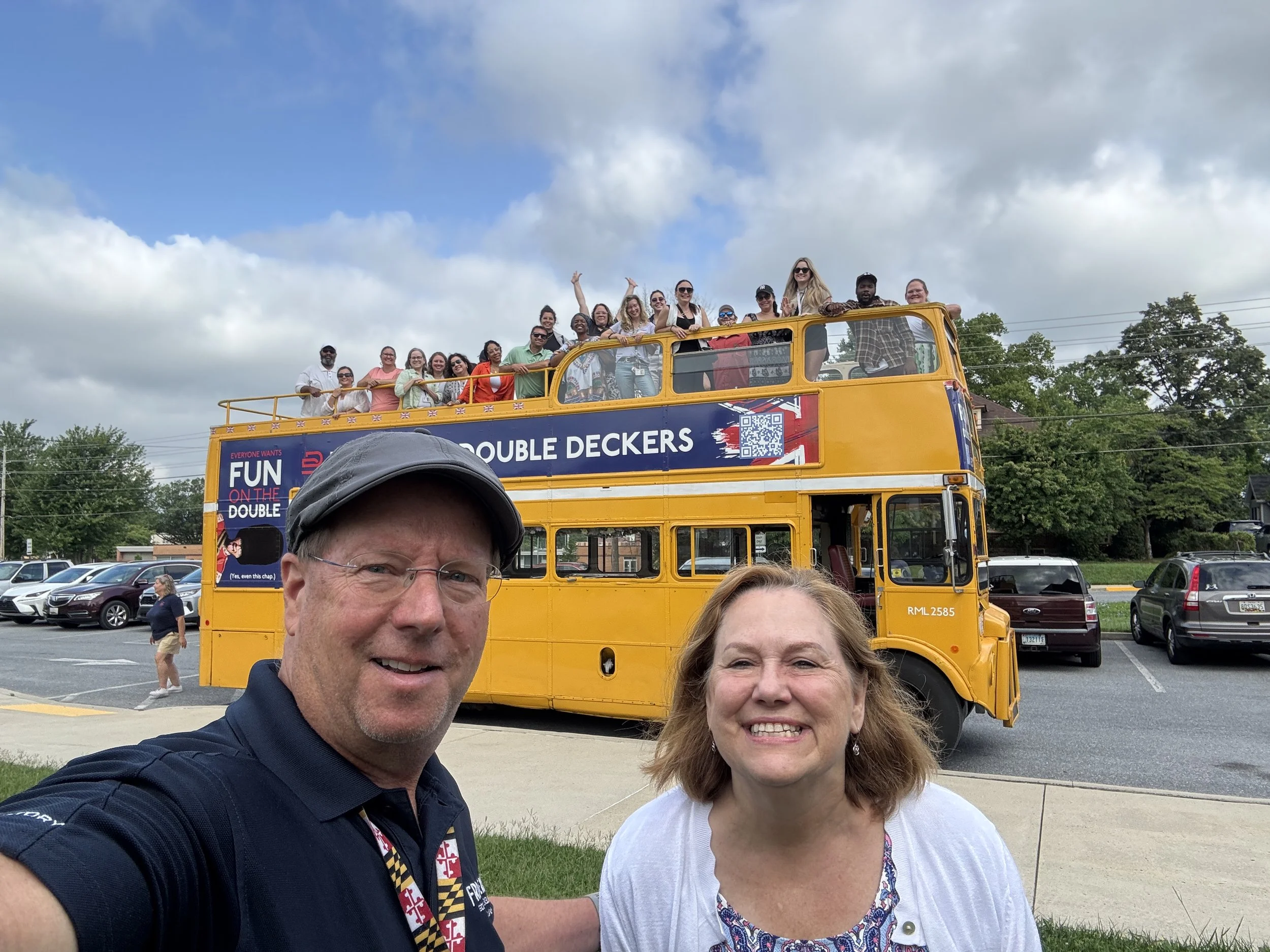
After the presentation, the coaches boarded a bus to tour three major employers: Stulz USA, AstraZeneca, and Frederick Health. The career coaches were treated to company presentations and tours and even engaged in a Q&A sessions with current employees.

The Blueprint for Maryland's Future legislation outlines the mandate to provide all FCPS middle and high school students with individualized Career Coaching services. The Career Coach Program is a partnership between Frederick County Public Schools, Frederick County Workforce Services, and Frederick Community College. There are currently 22 Career Coaches who serve Frederick County’s 10 high schools,13 middle schools, 4 charter schools, Heather Ridge School, The Career and Technology Center, Frederick Community College Dual Enrollment program, Virtual High School, and Remote Virtual program.

“Thanks to the invaluable partnership with the City of Frederick, Department of Economic Development and the Office of Opportunity and Transformation (Richard, Mary, & Ericka), the Career Coach team had the opportunity to delve into diverse career opportunities at three cornerstone Frederick City employers.

We deeply appreciate the business partners who opened their doors to our team. It was a wonderful day, both fun and educational!” -~Laura Brown, Coordinator, FCPS Career Coaches

The FCPS Career Coach Program supports middle and high school students in exploring career interests, building job readiness skills, and preparing for post-secondary success. This program helps to ensure young people are equipped with the knowledge needed to plan and succeed.

To learn talent pipeline initiatives and other workforce programs, reach out to the City of Frederick’s Department of Economic Development at businessinfrederick.com - 301.600.6360 or businessinfrederick@cityoffrederickmd.gov .

International Companies Landing in Frederick

For international companies looking to establish a foothold in the United States, Frederick, Maryland, is emerging as a strategic and welcoming first destination. The City of Frederick’s Economic Development team, in partnership with local, county, and state organizations, has played a vital role in helping foreign companies secure locations and successfully launch operations here.

Marketing Frederick as a Destination for International Expansion

Maryland’s Global Gateway – Soft Landing Program provides international companies with a streamlined path to launch their first U.S. operations. Frederick Innovative Technology Center, Inc. (FITCI) is an approved Soft Landing destination, offering companies use a state-of-the-art incubator/accelerator facility along with business mentoring, resources, and tailored support to ease their transition into the U.S. market.

Since launching Frederick’s Soft-Landing program at FITCI, Frederick has already welcomed several international companies through this initiative. According to FITCI CEO Kathie Callahan Brady, 14 international companies from countries including Ireland, Scotland, India, Colombia, Chile, Romania, Canada, Switzerland, and Nigeria have signed on. An additional 18+ companies are currently in the pipeline.

The Maryland Department of Commerce provides robust support and programming to promote foreign business expansion across the state. At the local level, the City and County Economic Development teams collaborate closely with the state to ensure that international companies receive comprehensive assistance—from site selection to integration into the regional business community.

Together, these efforts are making Frederick a launchpad for global innovation and business growth.

Connecting with Global & National Investors: Conferences, Programs, and Site Visits

The City of Frederick’s Economic Development team actively participates in key conferences across the region, nation, and globe to promote Frederick as a competitive location for business investment. Many of these events are industry-specific and focus on entrepreneurial growth across sectors like biotechnology, manufacturing, and technology.

One of the most impactful events is the SelectUSA Investment Summit, an initiative of the International Trade Administration that connects Economic Development Organizations (EDOs) with global investors. The 2025 Summit, held in National Harbor, Maryland, drew over 5,500 attendees, including 2,700+ international delegates and representatives from all 56 U.S. states and territories—making it the largest in SelectUSA history.

From an economic development standpoint, our team participated in SelectUSA to attract foreign direct investment (FDI) and raise awareness of Frederick’s strategic advantages. These types of conferences facilitate international partnerships, business expansions, and investment deals. Frederick has already seen direct results from the recent conference: one company from Turkey is preparing to enter Maryland’s Soft Landing Program as a result of connections made at SelectUSA.

In June, our team is attending the BIO International Convention in Boston alongside county and state economic development partners. As the world’s largest biotechnology conference—with more than 20,000 industry leaders—BIO provides powerful opportunities to showcase Frederick’s biotech strengths. With 130+ life science companies, a highly skilled workforce, collaborative academic institutions, and strong infrastructure, Frederick is well-positioned to attract new biotech investments and make new connections for its local biotech community.

Beyond biotech, our team attends a range of other conferences focused on entrepreneurship, advanced manufacturing, commercial real estate, site selection, and innovation ecosystems—helping our team connect with businesses at all scales, both domestic and international.

Customized Tours Showcasing Frederick’s Biotech and Innovation Ecosystem

In addition to conference participation, Frederick frequently hosts customized tours for visiting international delegations exploring U.S. business opportunities. These tours often include visits to leading biotech, tech, and manufacturing companies; meetings with local founders and executives; and tours of Frederick’s assets—from its scenic landscapes and historic downtown to its workforce and industry infrastructure.

These combined efforts—targeted marketing, global conference engagement, and on-the-ground business tours—are positioning Frederick as a launchpad for international growth and innovation.

To learn more about these initiatives, reach out to the City’s Economic Development team at 301.600.6360 or email businessinfrederick@cityoffrederickmd.gov .


Strengthening Economic Development Through Partnership with MEDA

At the City of Frederick’s Department of Economic Development (DED), we recognize that strong partnerships are essential to building a resilient and thriving economy. One of our most valued statewide partners is the Maryland Economic Development Association (MEDA), a key organization uniting economic development professionals across government, private industry, and nonprofit sectors. As an active participant in MEDA, the City of Frederick DED benefits from shared best practices, collaborative training opportunities, and a strong professional network that increases our ability to support local businesses and attract new investment.

Photo credit: Mary Gardella Photography

In this Q&A, we’re proud to spotlight Pamela Ruff, Executive Director of MEDA, whose leadership has helped shape the professional landscape for economic developers across Maryland. Pam shares insights on MEDA’s mission, how it supports professionals and communities, and how organizations like ours in Frederick can continue to benefit from this network.

About MEDA. The Maryland Economic Development Association (MEDA) is a statewide membership organization with over 560 members. Our members represent a wide spectrum of economic and community development professionals—from state and local government to private-sector partners—who are dedicated to bringing jobs, investment, and vitality to Maryland communities.

MEDA’s Purpose: MEDA serves as a unique forum that connects professionals across government and industry. We bring together diverse voices to share best practices, foster collaboration, and support one another’s work. Our goal is to build a stronger, more unified economic development ecosystem across Maryland.

How did you get involved in MEDA? I became involved with MEDA while working at a marketing and communications firm that specialized in supporting Maryland’s economic development ecosystem. It was a natural fit, and I've been part of the organization ever since.

How can you become a member? Becoming a member is easy—just visit our website at www.medamd.com/membership. Annual membership is $200, and the benefits far outweigh the cost.

What are the benefits of MEDA membership? MEDA members receive discounted rates for conferences, training courses, and some partner events. They also gain access to exclusive programs such as our annual Awards program, which recognizes outstanding projects and initiatives across the state.

We offer professional development opportunities year-round, including our Mentorship Program, which pairs seasoned professionals with those new to the field. Our conferences cover timely topics and provide excellent networking opportunities. We actively engage with our Young Leaders group, and while we don’t take formal positions on legislation, we keep members informed on key policy developments through our Public Policy Committee and website updates. To learn more about MEDA, please visit https://www.medamd.com/.

The City of Frederick DED is deeply committed to advancing economic opportunity not just locally, but as part of a broader statewide effort. Our longstanding involvement with MEDA reflects that commitment. Under Pam Ruff’s leadership, MEDA continues to be a powerful force for professional development, policy awareness, and collaborative success across jurisdictions. We’re proud to engage with MEDA and its partners, knowing that organizations like ours in Frederick can contribute to and benefit from the shared vision of economic vitality throughout Maryland.

Reach out to our DED team to learn about connectivity in the realm of economic development locally and throughout the state. 301.600.6360 or businessinfrederick@cityoffrederickmd.gov .

Feature Photo Credit: Patrick Siebert, Deputy Chief Photographer, Office of the Governor

MEDA 2025 Annual Conference Recap - Celebrating Regional Collaboration

From April 27-29, 2025, the Maryland Economic Development Association (MEDA) once again brought together the state’s economic development professionals, policymakers, and business leaders for an unforgettable annual conference in Cambridge, Maryland. The theme for 2025, “Maryland’s North Star: Regions Coming Together,” celebrated the power of regional partnerships.

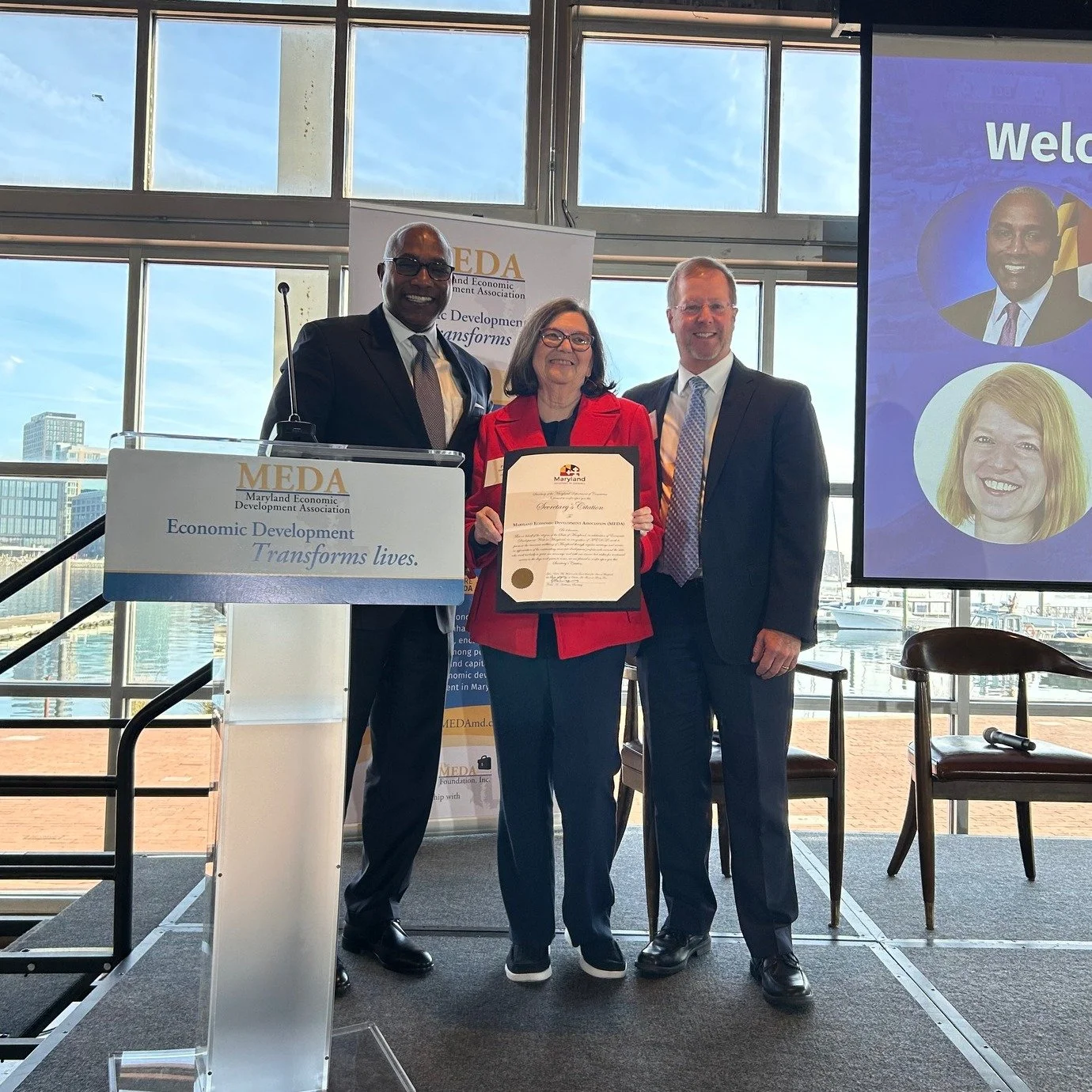
The City of Frederick played a central role at this year’s conference, hosted at the scenic Hyatt Regency Chesapeake Bay. After two years at the helm, Frederick’s own Richard Griffin, Director of the City of Frederick Department of Economic Development (DED), concluded his term as MEDA President, officially passing the torch to his successor Tammi Thomas. Griffin’s leadership has been instrumental in guiding the state’s economic development conversations, particularly in advancing collaboration across jurisdictions and sectors.

Frederick's influence was visible not only in leadership but also in the programming. The Secretaries Roundtable, a major panel discussion sponsored in part by The City of Frederick, featured state agency leaders exploring economic development priorities and policy alignment across regions.

Other standout sessions included:

  • “Regional Industries in Focus”, which addressed economic shifts and sector-based strategies across Maryland.

  • “Resource Adequacy: How Utilities Support Economic Growth and Sustainability in an Electrifying Era,” which examined how energy infrastructure must evolve to support business attraction and climate goals.

Frederick representatives from DED, Frederick County Office of Economic Development, Office of Agriculture, and the Department of Commerce connected with peers from across the state throughout the conference, taking part in networking receptions, collaborative sessions, and informal exchanges that help cultivate and strengthen the relationships necessary for long-term growth. positions Frederick as a contributor to broader efforts across Maryland in bolstering and advancing economic innovation, collaboration, and growth.

To stay updated on how Frederick continues to lead regional economic development, visit businessinfrederick.com.

Photo credit: Tom McCall Photography & DED staff

'Go Maryland, Go MEDA, Go Frederick:' Reflections from Former MEDA President Richard Griffin

After two years, the City of Frederick’s Department of Economic Development (DED) Director, Richard Griffin, completed his impactful term as President of the Maryland Economic Development Association (MEDA). MEDA, a statewide organization representing economic development professionals, business leaders, and elected officials, plays a critical role in shaping Maryland’s economic landscape. Griffin’s leadership reflected not only his dedication to Frederick’s growth but also his commitment to strengthening communities throughout Maryland. As his term concludes, Richard shared his reflections on what inspired his passion, the challenges and accomplishments of the last two years, and what he envisions for the future of economic development in the state.

Why are you passionate about economic development throughout the state? 

I am a people person and have always been moved by the human condition.  Having traveled to places both in and out of the country where there were few job opportunities, high poverty, and crumbling infrastructure, it is so clear to me how important it is for communities to strive to attract private investment and jobs.  I am very proud and humbled that Frederick leaders have given me the opportunity to do that work here.  I got my first job with a paycheck when I was 15 years old delivering the Raleigh Times afternoon newspaper in my neighborhood making $1 per customer per month, I was driving a school bus at 16 for $3.10/hour (min wage),* and joined the Army at 18 which later paid for my college education.   Jobs provide people with dignity, health care, and a paycheck to cover housing, food and so much more (although we know that not all jobs are equal in terms of pay and benefits).  I was mentored by key professionals like Marie Keegin, CEcD who helped shape my understanding of the profession and encouraged me to learn and become certified which I did early on in my tenure.   I’ve learned what motivates business owners to invest in a community, and how important skilled workforce, zoned land with utilities, and a predictable and speedy permitting system is to attract those private dollars.  I joined the Maryland Economic Development Association (MEDA) in 2003 and have learned much about top economic development practices through conferences, professional training, and networking.  Though not from Maryland originally, I’ve really grown to love the state and all its beauty and blemishes.   My children were all born, raised, and educated in Frederick and call Maryland home.  I want them and others young professionals to have great opportunities to work, live, and play close to home.   So yes, I am passionate about economic development across the state and support continued investment.

*(In NC where I grew up school buses were all driven by high school students for many years)”

What were your key accomplishments? 

During my tenure as the President of MEDA, we increased membership to nearly 600 - professionals, elected officials, and business representatives -  from the eastern shore to the Cumberland mountains.   MEDA has incredible leadership with a 21-member Board of Directors, active committees, and talented staff.   As a profession and organization, we navigated the post-COVID inflation, supply-chain issues, and workforce challenges.   But perhaps most notable was helping unify the economic development professionals from across the state when the Francis Scott Key Bridge in Baltimore collapsed last year following a collision from a cargo ship.  This unforeseen and tragic incident caused loss of human life, closure of the Port of Baltimore, major supply chain issues, transportation quagmire, and worker layoffs.  It could have been far worse in terms of its impact had it not been for the swift action of the US Government, State of Maryland including the Department of Commerce, and economic development professionals across the state setting up job hot lines, business assistance programs to help businesses coordinate supply chain issues, and much more.  Many of these individuals are MEDA members, and MEDA took immediate action to offer coordination assistance and to promote state and local efforts to limit economic distress.   I am also proud of the efforts MEDA undertook through BEACON at Salisbury University to analyze the impact of economic development investment by Maryland counties and ultimately announcing that $8.81 is returned for every $1 invested on average across the state. 

What would you like to see in MEDA's future? 

I am really proud of MEDA’s Young Leader’s committee and programs.   I am totally stoked about Maryland and MEDA’s future leaders from across the state.   Their innovation, passion, and work to move the needle for their home communities as well as MEDA is commendable and I look forward to seeing some of these individuals leading the organization and direction of the profession.  I am also very hopeful that MEDA continues to support the needs of Maryland’s largest city – Baltimore as it becomes the economic powerhouse we all know it is capable of achieving.   Maryland’s 157 cities and towns are economic generators for their host counties and indeed the entire state.  Selfishly, I also am looking forward to Frederick hosting a MEDA event at the new Downtown Frederick Hotel and Conference Center on Carroll Creek Park in downtown Frederick when completed in 2027. 

As President of MEDA for the last two years, what was your favorite part about the job? Hardest?

This is easy – I love the MEDA members and learning about them personally as well as the opportunities and challenges in their home communities.  MEDA is super diverse, with members from across the state - each bringing a unique skill and story.   I enjoyed the conversations and discussions at every meeting, conference, and event.  I learned so much and brought so many ideas back home to my own community – Frederick.   I was sad for the MEDA family when we lost a member to illness – like most recently Dick Story in Howard County.   We all shared in the happiness through family events, promotions, and life’s opportunities.  I also was afforded the opportunity to join Governor Wes Moore on the MEDA stage along with many of his cabinet secretaries and share his enthusiasm for Maryland and the economic development work being done my MEDA members.   I was truly humbled by the faith and trust of my colleagues to allow me to serve as President of the organization.   Go Maryland, Go MEDA, Go Frederick.

Richard Griffin’s presidency of MEDA was marked by unity, progress, and an unwavering commitment to people and place. From navigating statewide economic recovery efforts to elevating the next generation of leaders, his tenure reflected the very heart of economic development: resilience, innovation, and service. As he continues his work in Frederick, Griffin leaves behind a stronger MEDA and a legacy of collaboration that will shape Maryland’s economic future for years to come. And with exciting upcoming activities like hosting a future MEDA event in downtown Frederick, his vision for economic growth remains firmly rooted in both local and statewide progress.

Not Your Grandpa's SCORE: A New Era in Business Mentorship

When most people hear the name "SCORE," they might imagine a network of retired executives offering advice to mom-and-pop shops. But today, that image couldn’t be further from the truth. SCORE has undergone a transformation, from a traditional advisory group into a modernized hub for entrepreneurs from all backgrounds. This evolution hasn’t happened in a vacuum but has been powered by strong partnerships. One example is the working relationship between SCORE and the City of Frederick Department of Economic Development (DED).  
The DED often refers current and future businessowners to SCORE as a trusted resource for business planning, mentorship, and support. But with its renewed commitment to meeting people where they are, that trust has only deepened. Tereance Moore, a forward-thinking SCORE mentor who has played a key role in that transformation, explains how the organization is leading change and why it’s more relevant than ever.

How has SCORE evolved in recent years?

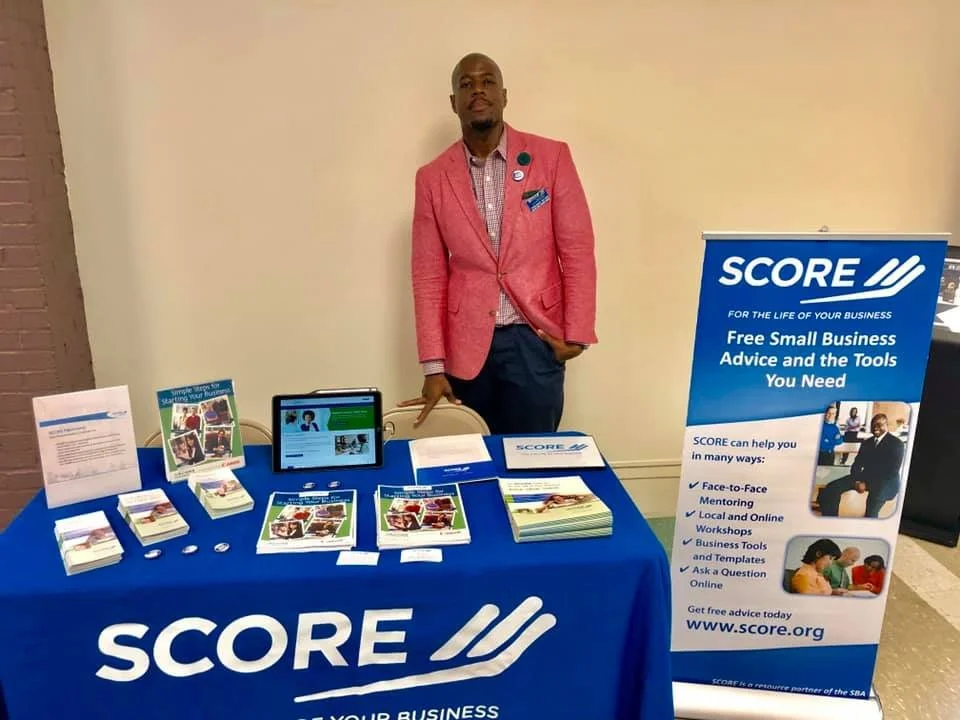
Tereance Moore tabling for SCORE at a business-related event.

In recent years, SCORE has made an intentional and impressive shift from being seen as a resource for retirees and traditional business models to becoming a dynamic, inclusive, and future-focused entrepreneurial support hub. As a mentor and ambassador, I’ve seen firsthand how SCORE’s reach now includes high-growth startups, nonprofit founders, and social entrepreneurs from underrepresented backgrounds. Today's mentorship experience is more collaborative, culturally responsive, and digitally savvy than it was a decade ago. That evolution is reflected in the diversity of the mentors and the entrepreneurs we serve.

What are some of the biggest misconceptions about SCORE?

One of the most persistent misconceptions is that SCORE is only for older, brick-and-mortar businesses or “just for retirees.” In reality, many of us bring deep, current expertise from tech, finance, manufacturing, and startup ecosystems, and we’re still active in those industries. Another common myth is that SCORE services come with a catch. They don’t. The advice is genuinely free. No strings, no sales pitch, just a shared commitment to helping entrepreneurs succeed.

How are you reaching younger or first-time entrepreneurs?

Through the SCORE for All initiative, we’ve leaned into community partnerships, peer-to-peer mentorship models, and events that meet emerging entrepreneurs where they are both geographically and culturally. Whether it’s pop-up pitch clinics at coworking spaces, webinars on creative capital, or social media campaigns featuring client wins, we’re bridging the gap with relevance and authenticity. SCORE mentors today are just as likely to share Google Drive templates and AI tools as they are to walk through a traditional business plan.

What’s the current energy in the SCORE community?

It’s exciting. There’s a renewed sense of purpose, especially among newer mentors, who are here to give back and build bridges. Mentorship relationships feel more like collaborations; our clients are often co-creators. That shift from “sage on the stage” to “guide on the side” has been transformative for everyone involved.

Several exciting developments reflect the momentum of SCORE DC and our broader commitment to equitable access:

Tereance Moore and another SCORE mentor at a SCORE event.

  • SCORE for All has become more than a banner—it’s a framework we’re applying to recruit mentors, engage communities, and ensure our resources are culturally relevant and accessible to women, veterans, people of color, and rural entrepreneurs. It’s making a real difference in who feels seen and supported.

  • We’re also undergoing a digital transformation, making it easier than ever to access mentorship and resources virtually. Our library of on-demand webinars, interactive templates, and new mentor matching system is streamlining how clients get timely and targeted support. That’s especially important for busy entrepreneurs balancing multiple demands.

  • Western Maryland has now been integrated into the Washington, DC chapter. As someone based in the region, I can attest that this alignment has expanded capacity and connection. It’s allowing us to deliver more cohesive support across the state and spotlight rural and small-town business innovation in ways that weren’t possible before.

  • Lastly, partnerships are driving our reach. Whether working with local chambers of commerce, the SBA, universities, or private-sector allies, SCORE is building a collaborative ecosystem where small businesses can thrive. These relationships bring additional resources, funding opportunities, and exposure to the companies we mentor.

There’s a renewed energy in the air. We’re growing, adapting, and—most importantly—meeting people where they are with the tools they need to succeed.

With mentors like Tereance Moore helping to guide the next generation of entrepreneurs, the future of SCORE is in good hands. This isn’t your grandpa’s SCORE — it’s yours.


To learn more about SCORE and other business planning resources, click here to schedule a visit with the City of Frederick’s Department of Economic Development.